


Understanding the Texas-Mexico Automotive Supercluster Initiative
Weslaco, Texas – Economic development leaders in the Rio Grande Valley recently attended an informative session on the Texas-Mexico Automotive Supercluster (TMASC) initiative, a groundbreaking project aimed at bolstering economic growth along the Texas-Mexico border by harnessing the power of the automotive industry.
The Birth of TMASC
Initiated by the Bexar County Commissioners Court in 2023, TMASC is a public-private partnership designed to enhance the economic landscape of the region. This initiative seeks to stimulate diversification and development by creating a powerful automotive corridor that runs from Dallas down to Monterrey, Mexico, primarily along the I-35 route.
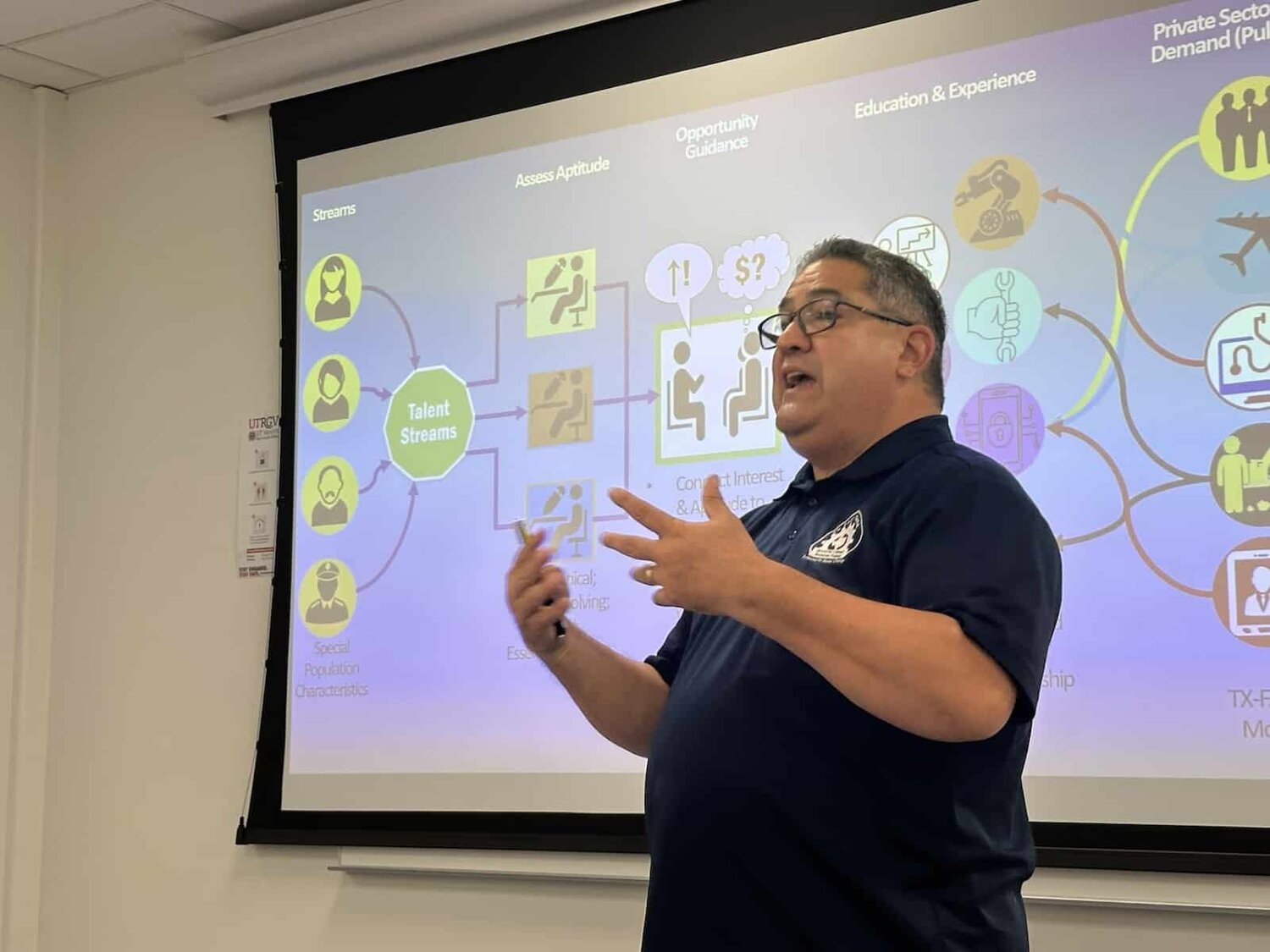
David E. Marquez, the executive director of economic and community development for Bexar County, presented key insights about TMASC during a recent meeting at the Center for Innovation & Commercialization at UT-Rio Grande Valley in Weslaco. Key figures in economic development, including Hidalgo County Judge Richard Cortez, Cameron County Economic Development Director Ramiro Aleman, and UTRGV Associate Vice President Ron Garza, attended to learn more about the initiative’s goals and strategies.
Insights from the 2024 Accenture Report
Marquez’s presentation highlighted a report compiled by Accenture in 2024, which pinpointed the significance of the automotive corridor. The report underscores how major automotive players have established roots in various Texas cities. For instance, the Dallas-Fort Worth-Arlington region is home to companies like Toyota, GM, and Caterpillar, while Austin is the location of Tesla. Additionally, Monterrey and Saltillo in Mexico host companies such as Daimler Truck and KIA.
Previously, the Rio Grande Valley was somewhat overlooked in earlier discussions. However, the 2024 report recognizes the area as strategically positioned between San Antonio and Saltillo/Monterrey, with rapid income growth. The report posits that despite not housing any Original Equipment Manufacturers (OEMs), the Valley’s modest Tier 1 presence could play a crucial role in TMASC’s future.
Community Engagement and Future Partnerships
The meeting, organized by RioPlex, was encouraged by Mario Lozoya, a notable figure in government relations who previously worked in external affairs for Toyota. Following the presentation, Lozoya emphasized the necessity for the Rio Grande Valley to actively engage with TMASC.
During an interview, Lozoya articulated the value of creating partnerships: “The interest of Bexar County Economic Development to help us grow our footprint and participate in their Supercluster is a win-win for everybody,” he stated. He believes that collaboration across the entire region is essential for success.
Conclusion
As the Texas-Mexico Automotive Supercluster initiative gains momentum, the Rio Grande Valley stands at a pivotal point for economic development. With strategic partnerships and a focus on leveraging the automotive sector, the region has the potential to significantly enhance its economic footprint and contribute to the larger TMASC vision. Stakeholders from both Texas and Mexico are encouraged to engage and support this initiative for mutual benefit.
For additional insights into economic development in the region, visit Accenture’s Report and explore the collaborative possibilities with TMASC.
