


Rio Grande Valley: Community-Centric Solutions to the Climate Crisis
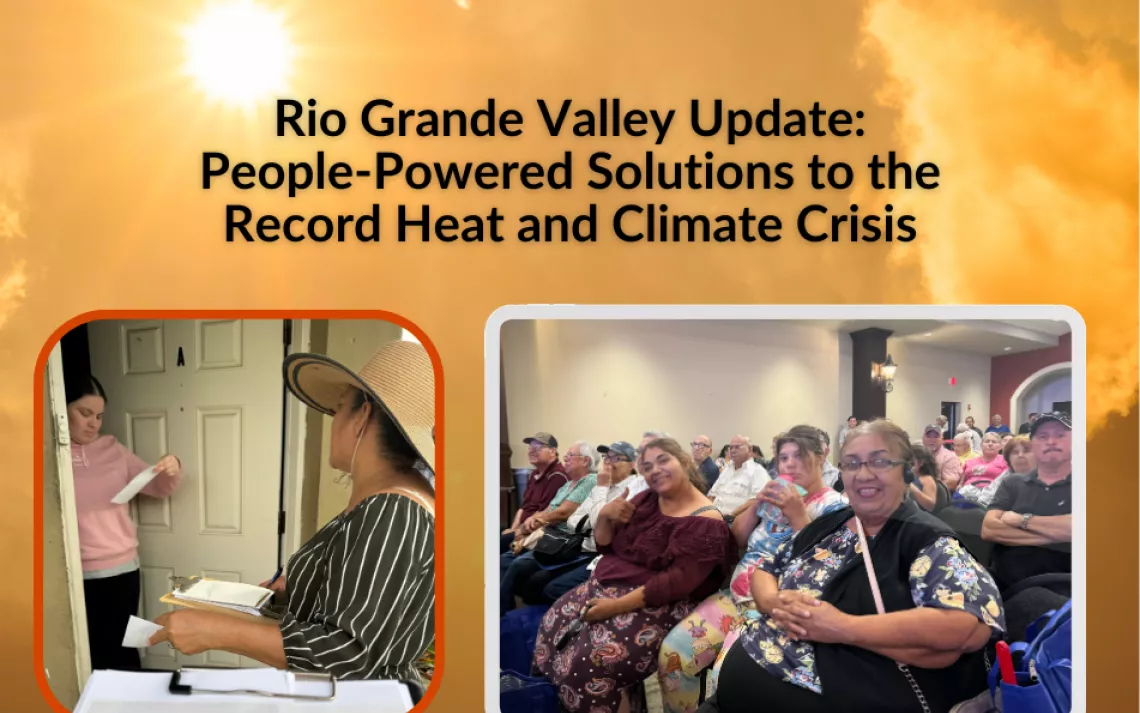
Photo of a woman in a wide-brimmed hat holding a clipboard and speaking to a woman at her front door. A conference room filled with people, featuring a row of smiling Latina women in front. Text: “Rio Grande Valley Update: People-Powered Solutions to the Record Heat and Climate Crisis.” Background photo via bgfoto on Canva Pro.
Rising Temperatures and the Urgent Need for Action
The Rio Grande Valley (RGV) in South Texas, along with adjacent communities in Mexico, is experiencing unprecedented heat this summer, with temperatures soaring as high as 118 degrees Fahrenheit. These extremes reflect the ongoing impact of global warming, which has put immense pressure on local communities.
As energy demands skyrocket during this scorching period, residents are grappling with soaring electricity bills due to increased air conditioning usage. This is primarily exacerbated by a phenomenon known as a heat dome, which creates prolonged high-pressure systems that lead to hot and dry weather over extended periods.
Understanding the Heat Dome Effect
According to Accuweather, a heat dome can be likened to an oven, causing elevated temperatures that pose challenges to both the power grid and residents’ financial well-being. As the demand for cooling rises, those living in homes without adequate weatherization often find themselves at a disadvantage, leading to inflated electric bills. Compounding this issue are rising fuel prices, which have made energy costs increasingly prohibitive for many families.
The situation has become so dire that water conservation measures are being implemented in some areas as lakes in Mexico dry up, and severe storms threaten to disrupt power in towns across Texas.
A Community-Driven Response
In the face of these challenges, residents of the Rio Grande Valley are mobilizing to propose local, people-powered solutions. Many are member-owners of cooperatives like the Magic Valley Electric Cooperative (MVEC), a democratic energy provider that allows community members to influence its governance. In Texas, 76 rural electric cooperatives serve approximately 3 million members, making them essential players in energy distribution and policy.
Engaging Local Communities
Members from cities such as Brownsville, San Benito, Harlingen, and San Juan recently convened for the MVEC annual meeting in Mercedes, Texas. Their goal was to push for cleaner energy options and better utility management practices. In preparation for this major event, volunteers canvassed local neighborhoods, including La Paloma and Reid Hope King, to raise awareness among co-op members about their ownership and voting rights within the cooperative framework.
Many attendees were surprised to learn they could actively participate in cooperative governance, benefiting from the principles of democratic member control that empower each member. The cooperative emphasizes capital credits and the local ownership model, further engaging members to take part in decision-making.
The Annual Meeting: A Platform for Change
Upon arriving at the annual meeting, members were greeted by MVEC staff and treated to snacks while checking in with their electric bills for membership verification. The meeting featured presentations on project updates and statistics about service delivery, but perhaps the most critical portion of the event involved elections for the cooperative’s governing board.
At this meeting, one community advocate voiced a call for increased involvement from members during these annual gatherings, highlighting a need for greater transparency and dialogue between the board and community members. Following the meeting, attendees handed the board a community letter outlining specific improvements they wish to see implemented within the cooperative.
Addressing the Broader Climate Crisis
The climate crisis manifests not just in rising temperatures but also in fluctuating seasonal extremes, leading to potential grid failures during peak demand periods. Families are increasingly finding it difficult to keep their homes comfortable due to skyrocketing energy costs. The growing strain on electric reliability underscores the fact that ensuring affordable energy access is crucial for families across Texas.
Taking Action and Building Connections
As cooperative member-owners, residents have a unique opportunity to influence the decisions impacting local energy policies. By building stronger relationships with MVEC board members and staff, community members can collaborate on solutions tailored to address the region’s energy challenges.
Those interested in learning more or engaging with other rural electric co-ops across Texas are encouraged to explore their roles as member-owners. Initiatives for more sustainable, affordable, and reliable energy sources depend on active community participation.
For additional resources or to get involved with clean energy solutions, please connect with local cooperative networks and share your experiences. Your voice can be instrumental in shaping a sustainable future for Texas.
Learn More About Rural Electric Cooperatives: National Rural Electric Cooperative Association
Stay Informed on Climate Initiatives: Climate Reality Project
For inquiries regarding how to become actively involved or to learn more about energy issues affecting the Rio Grande Valley, community members can reach out to local advocacy groups. Working together, we can forge a path towards environmental and economic resilience.
