


Global "No Kings" Protests Erupt Against War in Iran and Trump’s Policies
On Saturday, crowds took to the streets in a widespread demonstration against the ongoing war in Iran and the contentious policies of President Trump. Dubbed "No Kings" rallies, these protests unfolded across numerous cities in the United States and Europe, mobilizing what organizers describe as millions of voices demanding change.
Record-Breaking Participation
The "No Kings" rallies have seen escalating participation, with estimates indicating that the recent demonstrations drew at least 8 million participants across 3,300 events worldwide. Such figures reflect the growing discontent with governmental policies, especially those concerning military actions and immigration practices. Previous rallies attracted 5 million in June and 7 million in October, showing a consistent increase in public engagement.
Spotlight on Minnesota
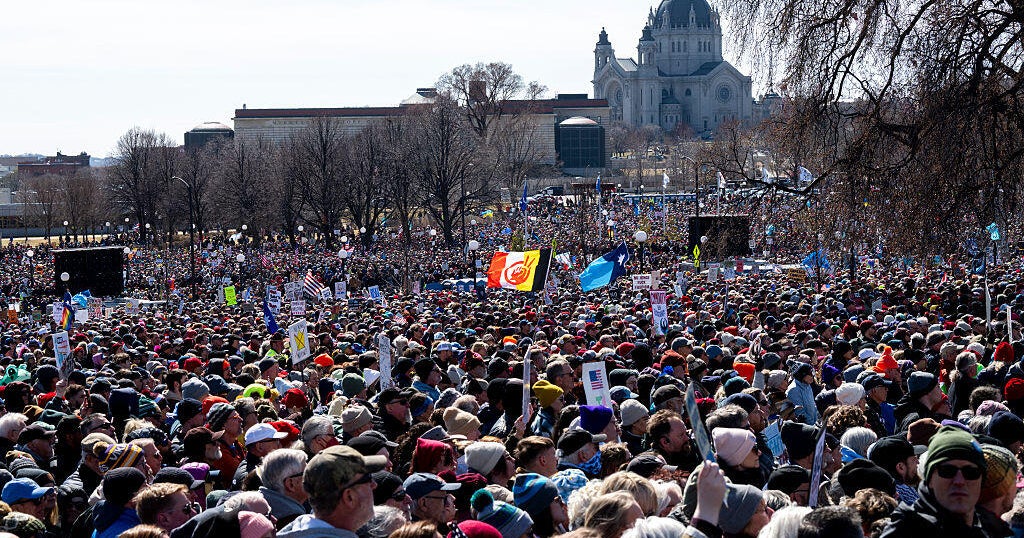
Among the influential venues for this movement, St. Paul, Minnesota emerged as a significant focal point. Thousands packed the Capitol lawn, brandishing upside-down U.S. flags—a historical symbol of distress. The event featured performances by notable artists, including Bruce Springsteen, who delivered a powerful rendition of "Streets of Minneapolis." His song was a response to federal agent shootings that stirred local protests over immigration enforcement.
Springsteen’s presence underscored the emotional weight of the occasion as he acknowledged the struggles faced by victims of aggressive immigration policies, stating, “Your strength and your commitment told us that this was still America.” The rally in Minnesota was designated as the national flagship event, representing the state’s pivotal role in the resistance against federal immigration actions.
Demonstrators gather for a "No Kings" protest outside the State Capitol building in St. Paul, Minnesota.
Photo by Stephen Maturen / Getty Images
A Diverse Coalition of Voices
The "No Kings" event boasted a diverse lineup of speakers, including renowned civil rights activists like Joan Baez, Jane Fonda, and prominent legislators such as Sen. Bernie Sanders. Their collective presence highlighted a united front against various social injustices—from immigration policies to civil rights setbacks.
In St. Paul, police prepared for the anticipated crowds by shutting down several streets, with estimates suggesting that attendance surpassed 200,000, a number that eclipsed the turnout during the Women’s March in 2017.
Nationwide Protests With Local Resilience
Protests were not confined to major cities. Smaller communities across the nation, including Driggs in Idaho and urban centers like New York City and Chicago, joined the movement. From the densely populated boroughs of Manhattan, where thousands rallied, to more conservative regions in states like Texas and Michigan, the message was clear: dissatisfaction with the current administration transcends geographical and political lines.
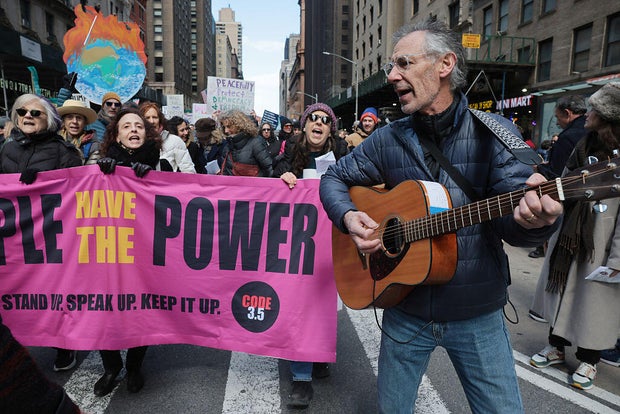
Thousands of people participate in a "No Kings" protest in Manhattan on March 28, 2026, in New York City.
Photo by Spencer Platt / Getty Images
In Chicago, local organizations such as Indivisible Chicago and the ACLU of Illinois mobilized substantial gatherings, emphasizing an expansive national movement characterized by grassroots activism.
A Global Response
The call for change resonated beyond the United States, with similar rallies occurring in over a dozen countries, including significant gatherings in Rome, London, and Paris. In these locations, protesters vocalized their dissent against both U.S. and international policies, underlining a broader anti-war sentiment.
In Rome, demonstrators aimed their chants at their own leaders while criticizing the U.S. involvement in foreign conflicts. They carried banners calling for a "world free from wars" amidst global unrest. In Paris, participants, including Americans residing abroad, gathered to express their opposition to “Trump’s illegal, immoral, reckless, and feckless wars,” according to organizer Ada Shen.
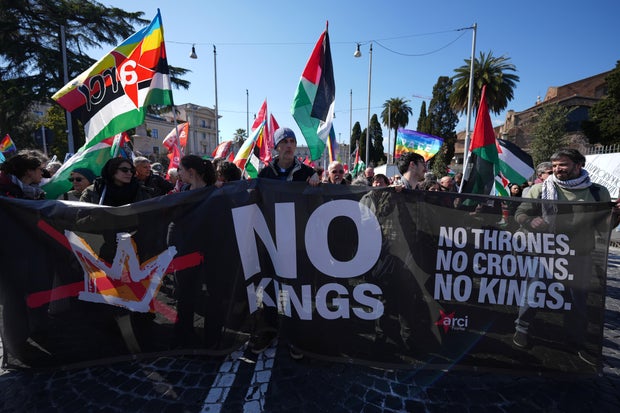
People take part in a national anti-war demonstration organized by "No Kings Italy movement" in Rome.
Photo by Andrew Medichini / AP
Conclusion
The "No Kings" rallies have emerged as a potent statement against the war in Iran, aggressive immigration policies, and broader social issues. The significant turnout and passionate participation highlight a growing movement that connects various communities in a collective call for justice and equality—a clear indication that the fight for change continues both domestically and globally.
For further insights into these protests and their implications, visit CBS News for ongoing coverage.
