


Rewrite a fully new long article using the information from
By Dayna Reyes, Reporter
WESLACO, Texas — Federal policy changes to the Supplemental Nutrition Assistance Program (SNAP) have triggered a mounting hunger crisis across South Texas, systematically dismantling the regional safety net and siphoning millions of dollars out of the local economy.
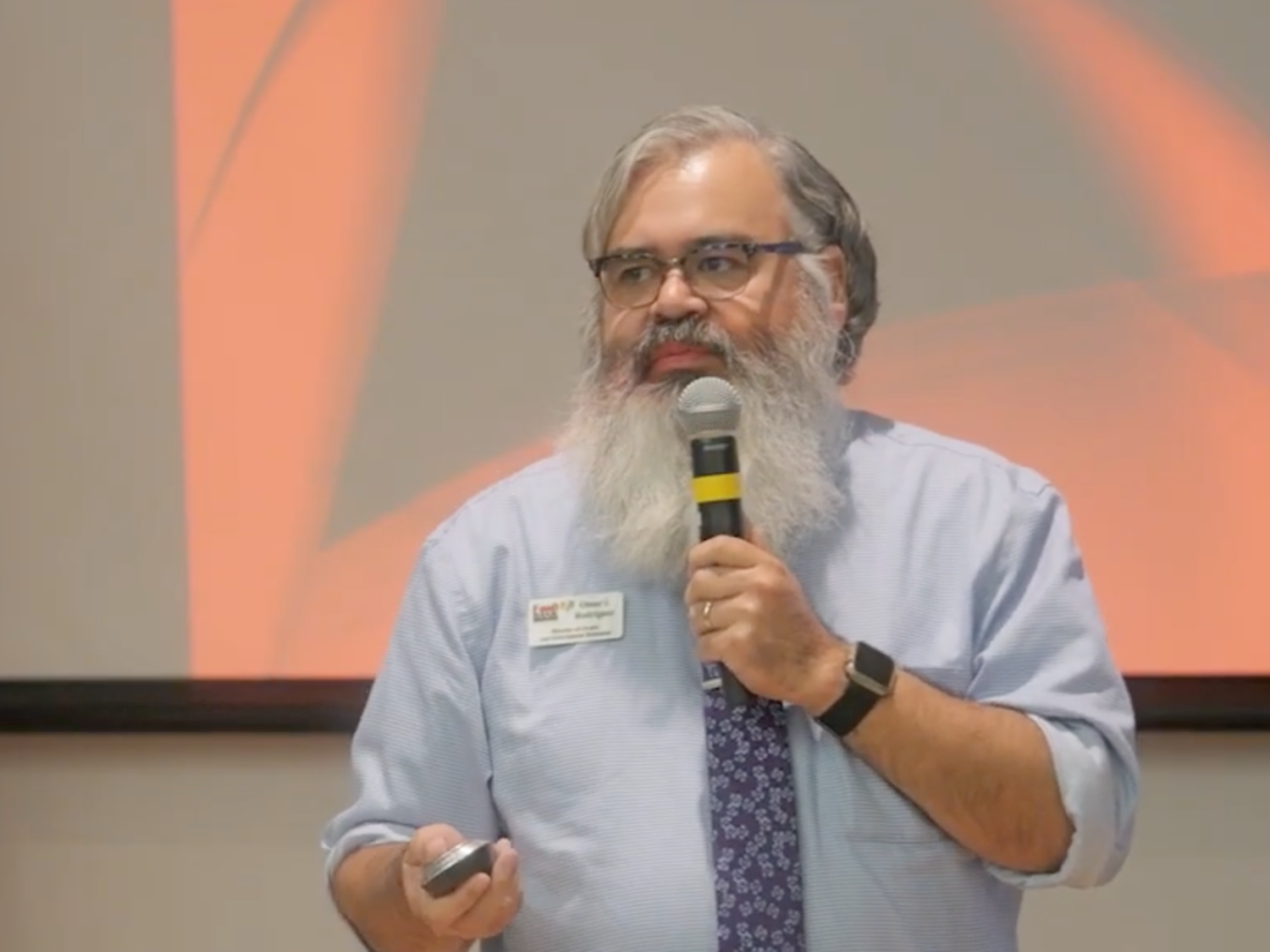
Speaking at the “Hunger in the RGV: A Call to Action” regional forum at South Texas College’s Mid-Valley campus, Omar Rodriguez, director of grants and government relations for the Food Bank of the Rio Grande Valley, warned that federal rollbacks under last year’s federal legislation are pushing vulnerable families past their breaking points.
“This is a hunger crisis that is smoldering and it’s getting worse every month,” Rodriguez told attendees at the event, co-hosted by the Office of Hidalgo County Judge Richard F. Cortez, Bread for the World, and STC.
To illustrate the fragile state of local households, Rodriguez used a game of Jenga on stage. Assisted by volunteers Martha and Manuel representing local families, Rodriguez directed them to pull wooden blocks from the stack as he detailed each federal cut—visualizing a safety net collapsing under policy pressure.
Expanding Work Mandates and Eligibility Restrictions
Among the most impactful changes, Rodriguez noted, are expanded work mandates for adult recipients. The age limit for exemptions applied to Able-Bodied Adults Without Dependents (ABAWDs) rose from 54 to 64.
“Now you have another 10 years where you are not exempt anymore,” Rodriguez said. “You must work at least 20 hours a week in order to keep up with your benefits.”
Caregiver exemptions were similarly restricted, lowering the child age threshold from 18 down to 14. The shift forces caregivers of older teenagers to meet strict work requirements or seek additional childcare. Additionally, statutory eliminations of SNAP Education (SNAP-Ed) funding ended community nutrition classes across the nation, resulting in job losses at regional food banks.
Statutory restrictions on certain legal immigrants removed an estimated 25,000 residents across the region from SNAP benefits through phased-out or immediate rollbacks.
Economic Ripple Effects and School Meal Programs
The contraction of federal aid reaches beyond dinner tables, inflicting significant harm on the broader Rio Grande Valley economy.
“For every $1 of SNAP that is spent in your local economy, that could provide up to $1.80 of economic activity,” Rodriguez said, highlighting the loss to local grocers, freight carriers, and store employees. “Whenever there’s a cut, whenever there’s less people participating in SNAP, that’s going to hurt your local economy.”
Since late 2025, regional SNAP injections dropped by $18 million per month. Total regional participation fell by 13 percent—displacing roughly 43,000 people, a population equivalent to the entire city of Weslaco. Average monthly family benefits slipped from $404 to $373.
The drop in SNAP enrollment creates severe administrative friction for public school districts. Because automatic eligibility for universal free school lunch programs relies heavily on active SNAP enrollment, school systems must now expend extra staff and resources to individually verify low-income student applications.
Food Bank Operations Strained
When Rodriguez joined the Food Bank of the Rio Grande Valley in 2010, the organization assisted 25,000 residents weekly across Hidalgo, Cameron, and Willacy counties. Today, the food bank and its network of frontline partner pantries—including churches, shelters, and community groups—feed 96,000 people per week.
“The food bank works very much like Amazon or a retail distribution hub,” Rodriguez explained. “We rarely buy food. It’s impossible to buy the amount of food that we need to feed people here.”
With pending state cost-share mandates threatening to require Texas to cover up to $700 million annually to maintain benefit levels, regional advocates emphasize that local relief capacity is stretched thin.
“This is a red Valley, and you keep on taking out a little piece here and there—it’s going to affect families, schools, retailers, and businesses,” Rodriguez concluded. “It’s kind of scary.”
make sure the article is SEO-optimized following all the SEO Guides, from Focus Keyword to H2 and H3 titles and so on.
the article must explain all the details in a very clear and engaging structure.
very important: Use external links for keywords and sentences inside the article you will generate to boost the SEO.
Avoid writing any author related or donation related texts.
Avoid writing what you did in the articles because the article is published for visitors to read.
