


Rewrite a fully new long article using the information from
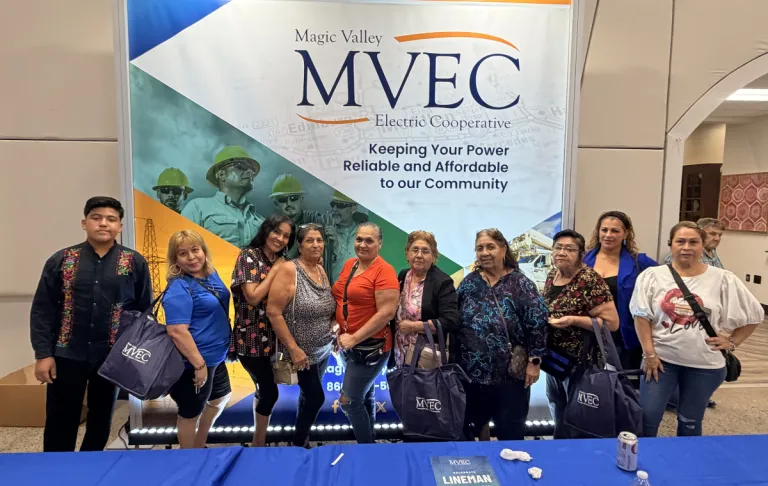
In the Rio Grande Valley, community members spent months preparing for the Magic Valley Electric Cooperative (MVEC) Annual Meeting, a meeting that brings together elected board members and member-owners – often for the only time each year. Topics of discussion include board nominations, electricity costs, general updates, and a handful of prize giveaways. This meeting was particularly important to member-owners, as plans were underway to nominate a community member and local organizer to the board of directors – an action that would significantly impact the current imbalance of power.
With worsening extreme weather, the takeover and destruction of public spaces by billionaires like Elon Musk, the difficulties mixed status families face, and the rising cost of living, life in the Valley is hard for many. To make matters worse, energy burden (the percentage of a household’s gross income spent on energy bills) is on the rise. In 2025 Cameron County was given a rating of 2.2 on the Energy Vulnerability Index Scale (EVI) and Hidalgo County was rated 2.3, placing both counties on the high vulnerability scale on the TEPRI’S Community Voices in Energy Survey.
But the community is resilient, and people support each other in hard times
In fact, what started as small conversations about the upcoming Annual Meeting grew into something much larger.
MVEC member-owners came together to talk about rising electricity costs, unreliable service, and a shared feeling that decisions were being made without them.
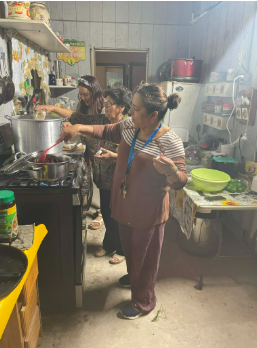
“Nosotros nos juntamos en mi bodega con las vecinas para aprender más de Magic Valley y de la luz, ya no queremos que suba la luz.”
“We gather in my bodega with our neighbors, to learn more about Magic Valley and energy. We don’t want any more price increases in our light bill,” said Doña Beba as she stirred the pot of homemade pozole she and coop members prepared for their neighborhood meeting.
The work then expanded into organizing meetings, educational workshops, phonebanking, and canvassing. People took time to understand how their electric cooperative was supposed to function and what it meant to be a member-owner. Community members learned about the MVEC co-op board. Board members are decision-makers and influential voices at the cooperative. Often, although MVEC is a formal co-op, the imbalance of power favors board members over member-owners. A goal of the ongoing organizing work was to engage board members, schedule meetings with them, and, someday, get a community member elected to the board itself.
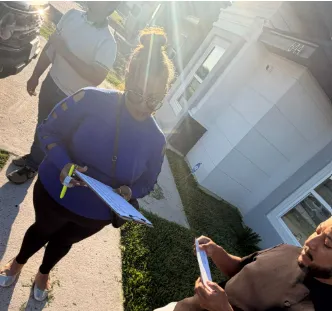
“We are walking in my neighborhood and making phone calls because we want a new board member, right now we need around 14 more signatures for our goal.” said Carmen R. as she held a clipboard full of signatures.
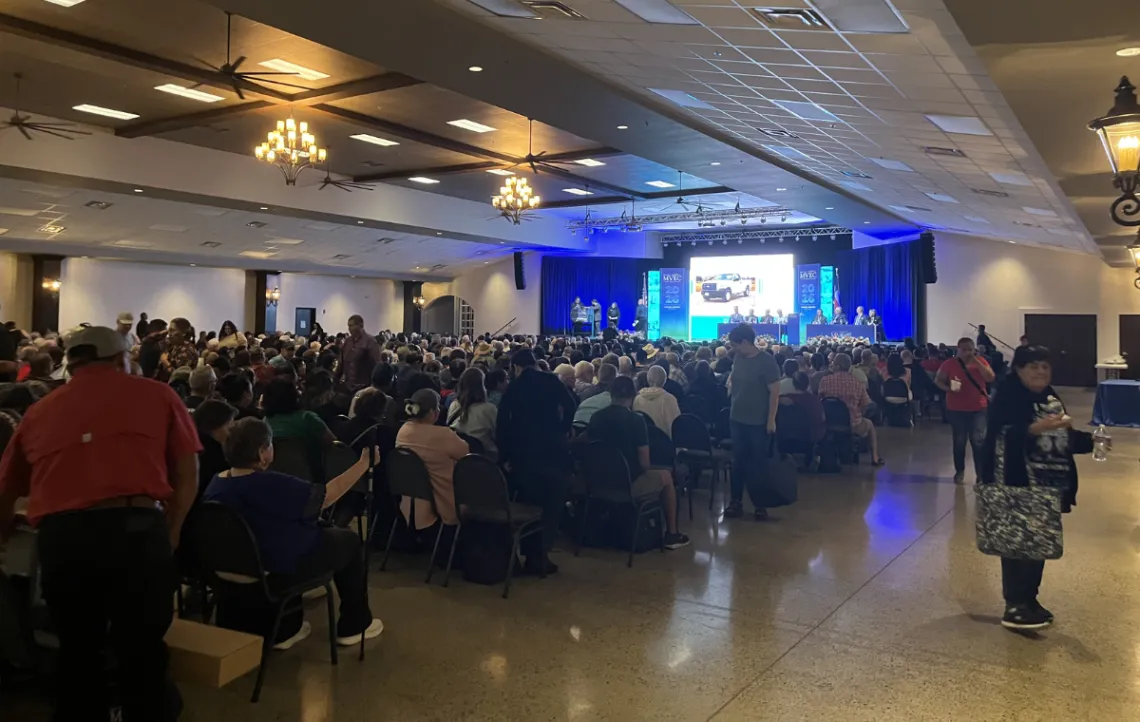
Magic Valley Electric Co-op Annual Meeting
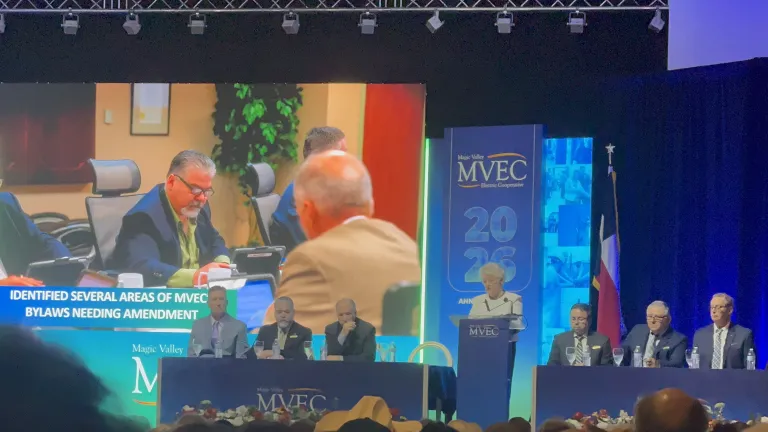
By the time the MVEC annual meeting arrived, that effort had turned into real momentum. Community members showed up ready to participate and engage in the governance of a system that directly impacts their daily lives. Organizers arrived at the meeting with over 200 signatures in support of a community-backed candidate for the co-op board. And then, in a matter of moments, that opportunity was taken away.
The event center room was full with more people than usual, many of them attending because of the organizing efforts that had taken place in the weeks leading up to the event. Staff kept bringing out chairs as people were standing looking for a place to sit. Shockingly, the agenda no longer included a clear opportunity for public comment. The ability to nominate candidates from the floor – something organizers had prepared for – was gone.
“It caught me off guard,” one participant said. “It’s like they knew what we were going to do.”
Confusion spread as the meeting moved forward. Motions were introduced and approved without the kind of discussion or transparency that many members expected. Some attendees described not even being able to tell who was voting or how decisions were being counted. For those who had spent months preparing to nominate a candidate, the realization was immediate and disorienting: the rules had changed, and the community had not been fully informed. When the community backed candidate stood up and started reading our community letter we wrote for the Magic Valley board, president Barbara Miller said, “Please hand that over to our secretary, now we’re moving to new business”
“Give her the mic! Give her the mic!” a member shouted as the candidate with 200 signatures was being ignored by the board when she stood up during the now nonexistent 1 minute allotted time for members to nominate themselves for the board. Every previous year the agenda included 1 minute for members to nominate themselves, but suddenly, without any advance notice, this year members were no longer allowed to nominate themselves.
“They didn’t even let her speak! And what happened to the signatures we collected?!” Carmen Rios exclaimed in disappointment.
“Y las firmas que agarramos? Esas no cuentan?” “And the signatures we collected? Those don’t count anymore?” said Esmeralda T. Esmeralda T. was part of the group of members that volunteered to collect signatures and phonebank members.
In what felt to many as an act of member-owner suppression, the board ruled that there would be no additional nominations, stifling the voices of the 200+ supporters who signed on in support of a board member that represented the best interests of the community.
A System Out of Touch, and Out of Reach
At the center of the decision were bylaw changes – technical, difficult to interpret, and not clearly communicated. These changes were approved, going so far as to retroactively take effect starting last fall during the same meeting with no opportunity for discussion. For many attendees, the technical, legal jargon created a barrier. The bylaws were written in formal, complex terms that made it difficult for community members to fully grasp what was happening in real time. Without clear explanations or accessible materials, participation became limited to those with the time, resources, or expertise to navigate the system.
The structure of the meeting was inherently exclusionary.
Attendees noted that votes were called and passed without meaningful debate or vote counting, leaving little room for members to question or engage with the process. In a cooperative – an entity that is supposed to be owned and governed by its members – this raised serious concerns.
The Work Beyond One Meeting
What happened at the MVEC annual meeting reflects a broader issue playing out across Texas. When decision-making processes are difficult to access or understand, participation becomes limited. When rules change without clear communication, trust erodes. And when communities are unable to fully engage in systems that affect their lives, those systems begin to serve fewer and fewer people.
In the Rio Grande Valley, where many families are already navigating economic challenges, these barriers carry real consequences. Community members spoke about rising energy costs and the difficult choices households are forced to make to keep the lights on. No one should have to choose between life-saving medication, or food on the table. No one should have to choose between school supplies for their children, or paying their electricity bill.
The ability to participate in decisions about energy isn’t just a governance issue. It’s about access, accountability, and fairness – values that are lacking across decision-makers and power structures in Texas and supposed to be centered in cooperatives.
Moving Forward: What Comes Next for Energy Democracy in Texas
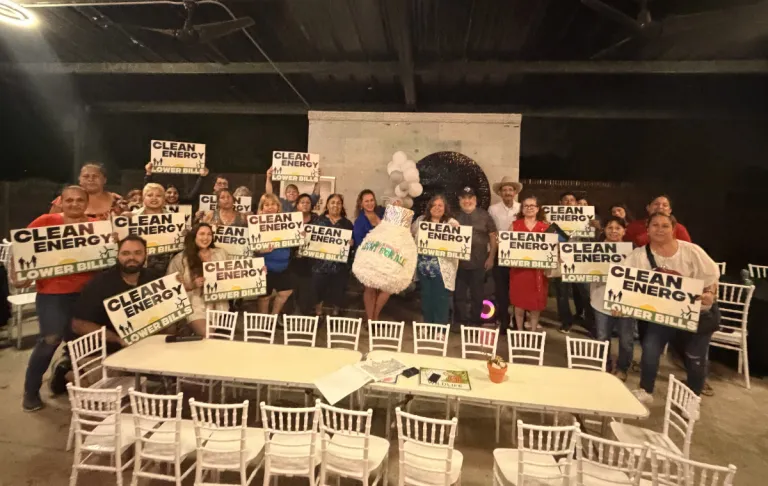
Despite what happened at the meeting, the organizing work did not end there. If anything, it revealed just how much potential exists when people come together. The turnout itself was a reflection of months of outreach and relationship-building. After the meeting, dozens of attendees continued the conversation at a member after party, sharing what they experienced, asking questions, and discussing what comes next.
“We’re not going to stay quiet, they didn’t let us choose a new board member, ” one participant said.
“Next year we are going to say NO! When they say AYYE!” another member shouted at the member party.
“We better bring more people next year!” said
The community’s candidate may not have been placed on the ballot this time, but the effort itself was not lost. The relationships, the awareness, and the momentum remain, and they are already shaping what comes next.

This work is continuing in the Valley, and it is part of a larger effort across Texas to ensure that communities have a real voice in decisions about energy, and the resources we rely on.
The next steps are already underway, and, with more people informed, engaged, and ready to participate, the path forward is clearer than it was before.
Right now we are looking for researchers, data entry, and artists. If you are a student, a professional or someone who would like to get involved as a volunteer and help Rio Grande Valley families understand more about energy please fill out this form.
Seguiremos luchando!
make sure the article is SEO-optimized following all the SEO Guides, from Focus Keyword to H2 and H3 titles and so on.
the article must explain all the details in a very clear and engaging structure.
very important: Use external links for keywords and sentences inside the article you will generate to boost the SEO.
Avoid writing any author related or donation related texts.
Avoid writing what you did in the articles because the article is published for visitors to read.
