


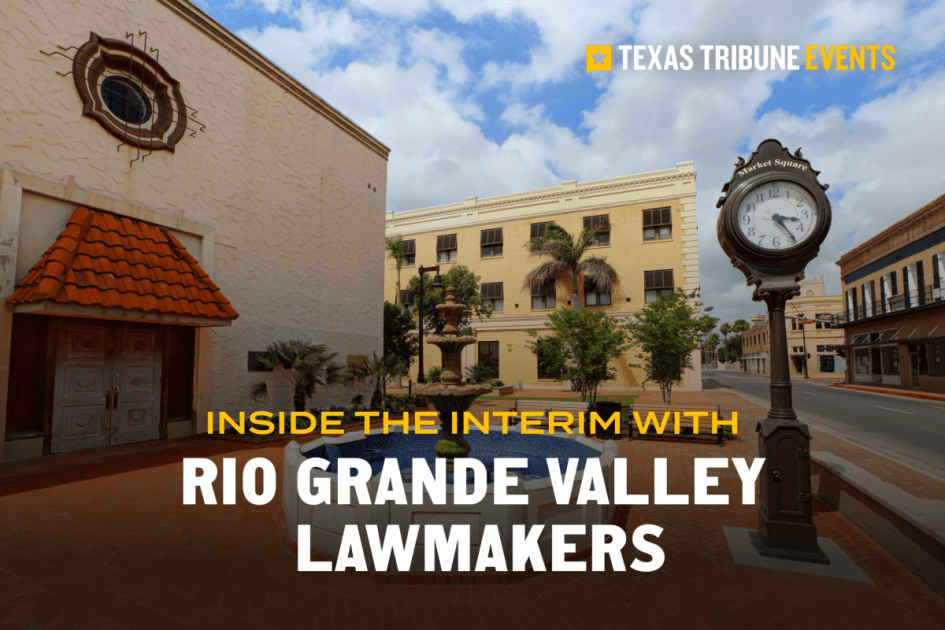
The Shifting Political Landscape of the Rio Grande Valley
The Rio Grande Valley (RGV) has historically served as a Democratic bastion within Texas, but recent shifts suggest a more complex narrative is evolving. Stakeholders in the region, including prominent lawmakers, express concerns that the Democratic Party may be taking its Hispanic constituents for granted. This article explores the nuanced political dynamics, key issues facing residents, and what these changes might mean for future elections.
A Call to Action from Local Leaders
State Senator Juan "Chuy" Hinojosa of McAllen articulates a pressing message for national Democratic leaders: the core values of his constituents diverge significantly from the party’s overarching national narrative. He emphasizes that topics like police defunding, gas regulations, and border security do not resonate with the needs of RGV residents. "The national Democratic Party has never invested here; they take us for granted," Hinojosa asserted at a recent event hosted by Texas Tribune.
Misunderstood Voter Politics
Key political figures, including State Representatives Oscar Longoria from Mission and Armando Martinez from Weslaco, echo Hinojosa’s sentiments. They argue that many state officials misinterpret the unique political landscape of Hispanic voters in South Texas. These lawmakers aim to prioritize topics that are crucial for their constituents in the next legislative session.
Republicans Gaining Ground
The RGV is becoming a battleground that reflects changing voter loyalties. Politicians such as U.S. Rep. Mayra Flores have begun to make significant inroads in what used to be considered a Democratic stronghold. Flores champions stronger border enforcement and Second Amendment rights, effectively appealing to a growing demographic of conservative voters in the area.
Cultural Values and Political Choices
Hinojosa acknowledges the intersection of culture and political views. He notes that while many families in the RGV identify as Catholic and may oppose abortion, there is a significant concern about the overturning of Roe v. Wade. "The majority of people do not support abortion, but there’s a contradiction built in," Hinojosa explains, suggesting that constituents may support some abortion rights despite their religious beliefs.
Longoria, who also identifies as Catholic, emphasizes that his voting decisions ultimately reflect the desires of his constituents. He notably opposed recent legislation that sought to impose strict abortion bans in Texas.
Addressing Gun Violence
The issue of gun violence remains paramount among local voters. Hinojosa calls for criminal background checks and raising the legal age for firearm purchases to 21, stressing that "they want sensible gun safety laws." This legislative push is critical in light of recent tragic incidents, such as the school shooting in Uvalde, which has reignited discussions around gun safety measures.
Martinez expressed his disappointment toward Governor Greg Abbott for not convening a special session to address these pressing issues, citing inaction as a failure to protect the public.
Healthcare Concerns
The state’s healthcare landscape also warrants attention, as Texas, despite being the ninth-largest global economy, ranks last in healthcare quality. All three lawmakers advocate for renewed discussions over expanding Medicaid, a proposal that failed to pass in previous sessions. Martinez reflects on this disparity, questioning why Texas would forgo potential federal funding: "We did not want to receive $2 billion from our federal government because we were too afraid that it was tied to the Obama administration."
Conclusion
As the Rio Grande Valley gears up for upcoming legislative sessions and elections, it’s crucial for political leaders and parties to engage with the region’s specific needs and values. The evolving political dynamics indicate that the traditional voting patterns may be shifting, and both parties must adapt to avoid alienating voters. Understanding and addressing these local issues—ranging from healthcare expansion to gun safety—will play a crucial role in shaping the future political landscape of the Rio Grande Valley.
For those interested in the Texas Tribune’s spotlight on regional politics, more discussions around these themes can be found at their official website.
