


Unsettled Weather Patterns Persist Across the Nation
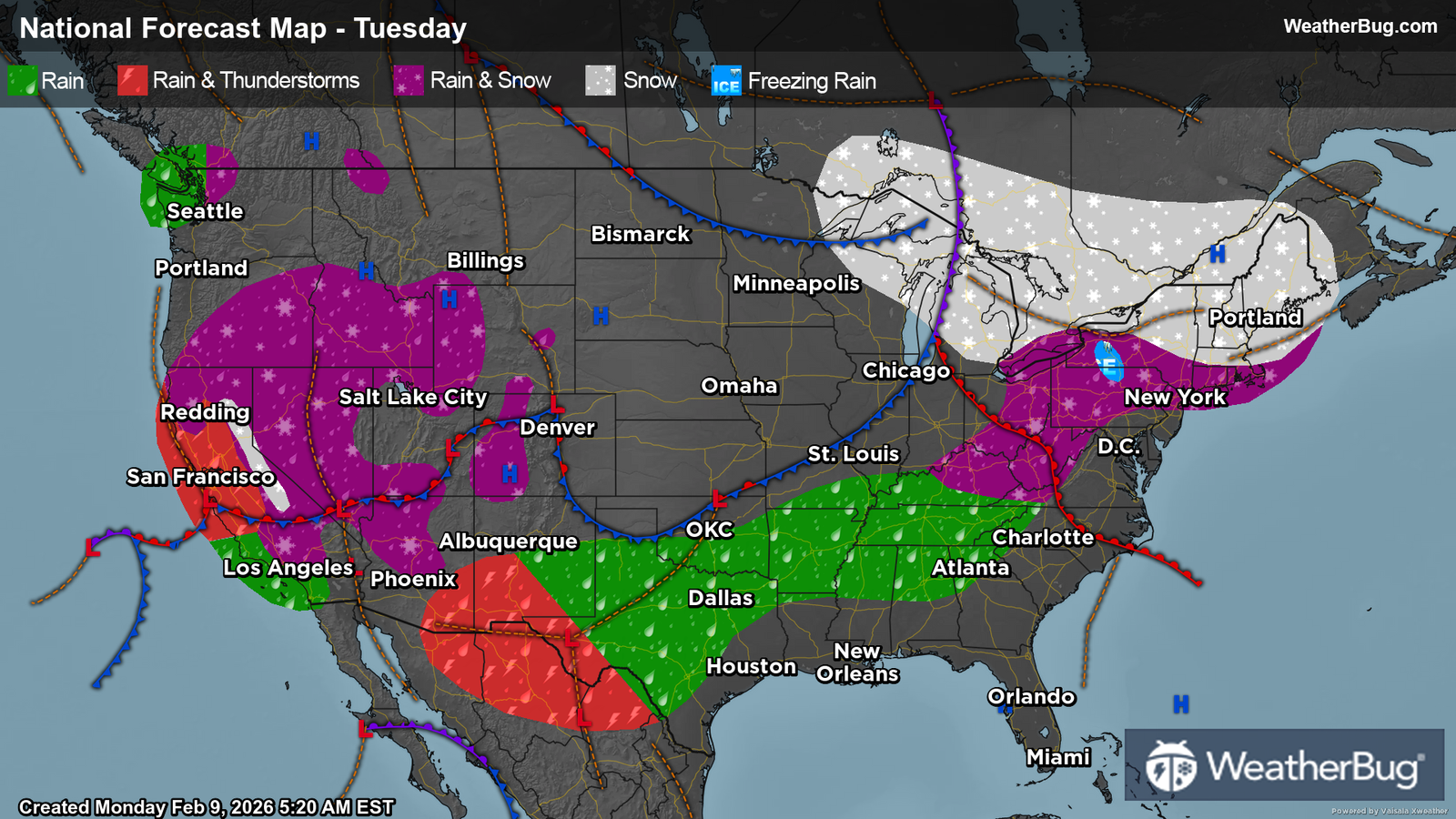
As the country continues to navigate through a chilly and damp weather season, various systems are sweeping across multiple regions, bringing a mix of wintry conditions and persistent rainfall. This article provides an in-depth overview of the current weather patterns affecting the Northeast, Mid-Atlantic, Southeast, Midwest, Mountain West, Great Basin, Sierra Nevada, and Pacific Northwest.
Northeast: A Wintry Mix with Icy Threats
In the Northeast, a dismal combination of rain and snow is impacting most areas. States such as Maine, New Hampshire, Vermont, and parts of northern Massachusetts and northern New York are expected to experience snow throughout the afternoon and evening. Meanwhile, Icy conditions may arise in western Connecticut, southern New York, northern New Jersey, and northern Pennsylvania as temperatures dip and mixed precipitation occurs after dark. Key highways like I-86, I-88, and I-99 may see hazardous driving conditions, while central New Jersey and Pennsylvania will remain relatively dry.
Mid-Atlantic: Dry Conditions With Localized Precipitation
The Mid-Atlantic region anticipates mostly dry weather throughout the day, particularly east of the Appalachians. However, the western side of the central Appalachians is expected to witness a mixed precipitation pattern. In the southern Appalachia, particularly areas stretching from North Carolina to Georgia, rain will dominate.
Southeast: Striking Dryness with Southern Rainfall
Continuing the trend observed in the Mid-Atlantic, the Southeast benefits from coastally dry weather extending from the Atlantic to Gulf coasts. However, northern parts of the Mid-South will experience rainfall, especially along the Tennessee Valley. Texas will see ongoing rain, with the potential for thunderstorms developing in the western region of the state.
Midwest: Varied Weather Patterns Across the Plains
The Midwest shows considerable variability in weather patterns. Generally, the Plains, from the Northern to Central Plains, will remain dry while precipitation will be concentrated around the Great Lakes. Snow is anticipated in regions surrounding the northern and eastern Great Lakes, while the Chicago metropolitan area stands to enjoy clear days free from damp weather.
Mountain West: Snowy Peaks and Dry Lowlands
The Mountain West is predicted to show a mix of precipitation, dominated by drier conditions at lower elevations while snow makes its way up into the mountains. While snowfall on higher peaks is good news for winter enthusiasts, ski resorts may not benefit from optimal conditions this time around.
Great Basin: A Blend of Rain and Snow
Developments in the Great Basin area will see mixed precipitation, with higher altitudes experiencing snow and lower regions receiving rain. Further west, the Sierra Nevada mountains will accumulate more snow, beneficial for regional water supplies, while California’s Central Valley could be treated to rain and isolated thunderstorms.
Pacific Northwest: Precipitation on the Horizon
The Pacific Northwest will be no stranger to varied weather, with the southeastern parts expecting a mix of rain and snow. Coastal areas, including Oregon’s coastal regions and southern Washington, will remain dry. However, rain is forecasted for the Olympic Peninsula, with snow covering the higher elevations of the northern Cascades.
Temperature Trends Across the States
Remarkably, bitterly cold temperatures have retreated, making way for milder weather. Highs in the 20s can be anticipated in the regions surrounding the Great Lakes, while northern New England, aside from its coasts, and the high mountain peaks of the Rockies and Sierra Nevada will also see similar temperatures.
Regional Temperature Highs
- 30s: Coastal areas of New England, northern Mid-Atlantic, Michigan, foothills of the Mountain West, and elevated areas in the Great Basin.
- 40s: Central Appalachians, northern Plains, and lowland regions in both the Great Basin and Pacific Northwest.
- 50s: Expected in Virginia, West Virginia, southern Indiana, and parts of Colorado.
- 60s: Mainly seen in the Tennessee Valley, Desert Southwest, and California’s Central Valley.
- 70s: The Southeast and Gulf Coast will bask in warmer temperatures, with regions in the Desert Southwest also enjoying high temps, especially in arid areas.
With fluctuating weather conditions and temperature changes ahead, staying informed is essential. For more detailed forecasts tailored to your location, explore current weather updates here.
As regions prepare for various weather challenges, residents are encouraged to stay vigilant and make appropriate travel and safety decisions. Observing these patterns will offer insights into the broader climatic shifts taking place across the nation.
