


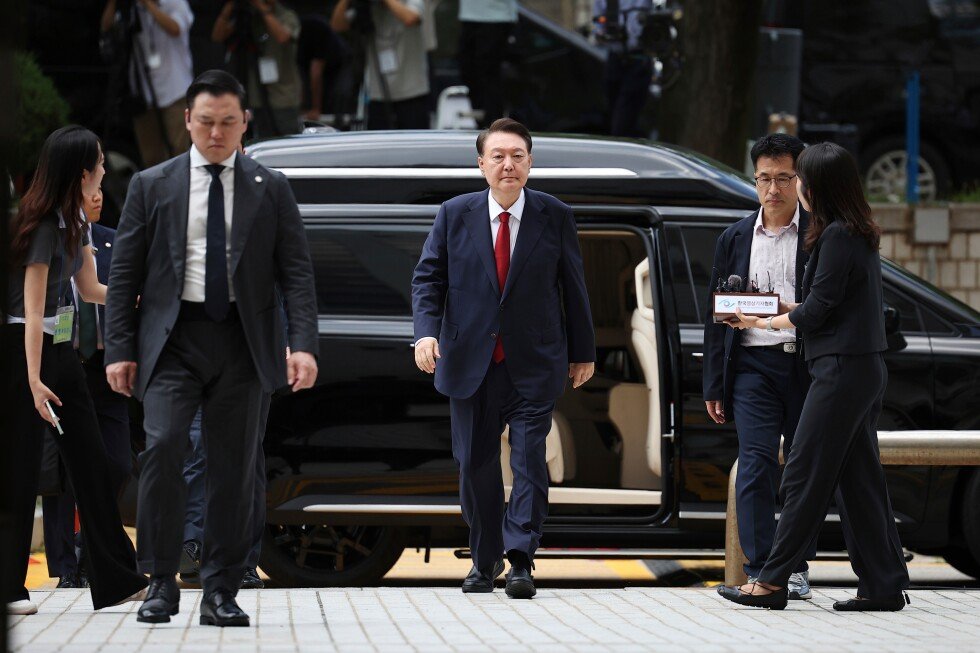
Former South Korean President Yoon Suk Yeol Sentenced to Life Imprisonment Amid Martial Law Controversy
SEOUL, South Korea (AP) — In a groundbreaking legal decision, former South Korean President Yoon Suk Yeol has been sentenced to life imprisonment following his controversial imposition of martial law. This event marks a pivotal moment in South Korea’s political history, reflecting the nation’s struggles with democratic governance over the past several decades.
The Martial Law Incident That Shook a Nation
On December 3, 2024, Yoon’s controversial attempt to assert control over an opposition-dominated legislature led him to declare martial law. Troops were dispatched to encircle the National Assembly, creating a tense and dramatic standoff as lawmakers sought to gather and conduct their business. The response from the judiciary was swift, as Judge Jee Kui-youn of the Seoul Central District Court issued a ruling of rebellion, stating Yoon’s actions sought to dismantle the democratic processes ingrained in South Korean law.
A Stark Reminder of South Korea’s Authoritarian Past
Yoon’s imposition of martial law was unprecedented in over four decades, echoing earlier periods of military-backed governments in South Korea. During those times, authorities frequently announced emergency mandates to counter civil unrest, effectively using the military to suppress dissent. The martial decree Yoon issued included sweeping powers to suspend political activities, control media narratives, and authorize arrests without warrants.
Ultimately, this decree lasted a mere six hours. Lawmakers managed to break through military blockades and unanimously voted to repeal Yoon’s proclamation. His eventual suspension from office on December 14, 2024, followed an impeachment led by dissenting lawmakers, with the Constitutional Court formally removing him in April 2025.
Legal Proceedings and Defiant Stance
Yoon has been embroiled in multiple criminal trials since his suspension, facing severe charges that included rebellion. His legal defense claimed the court’s verdict was predetermined and criticized the proceedings as a collapse of the rule of law. Yoon himself argued that his martial law declaration was a misguided attempt to draw public attention to legislative paralysis caused by the opposition.
In stark contrast, prosecutors contended that Yoon’s actions were calculated attempts to undermine the legislature, significantly exceeding any constitutional authority he might have had, even under martial conditions. Judge Jee underscored that it was Yoon’s decision to deploy troops around the National Assembly that solidified the court’s determination to convict him of rebellion.
Public Reaction and Protests
As the verdict was announced, a mixture of emotions permeated the atmosphere outside the courtroom. Supporters of Yoon gathered to rally in his defense, while critics clamored for justice, with some even calling for the death penalty. Although a special prosecutor initially sought the death penalty—citing the existential threat to democracy represented by Yoon’s actions—the court opted for a life sentence instead. Death sentences have not been executed in South Korea since 1997, indicating a cultural shift toward opposing capital punishment.
Broader Implications and Sentencing of Co-Conspirators
The court’s decision was not limited to Yoon alone. Several military and police officials who played roles in enforcing his martial law decree were also convicted. Notably, former Defense Minister Kim Yong Hyun received a harsh 30-year sentence for orchestrating the martial law measure, while other officials faced varying sentences for their complicit actions.
Yoon’s administration faced a significant reckoning, as further indictments extended to including cabinet members like Prime Minister Han Duck-soo, who received a 23-year prison sentence for his actions surrounding the decree.
A Historical Context of Legal Accountability
With Yoon’s life sentence, a historical precedent has been set within South Korea. He is the first former president to receive such a severe punishment since Chun Doo-hwan, the military dictator who faced various charges in the late 1990s. Chun’s legacy continues to haunt South Korean politics, as many citizens remain vigilant against the resurgence of authoritarianism.
In conclusion, the heavy repercussions faced by Yoon Suk Yeol reflect a continued commitment from South Korean institutions to uphold democratic principles and legal accountability. As the nation progresses, this ruling is likely to influence future political landscapes and civil rights within South Korea.
For further insights into South Korea’s political landscape, visit AP News.
