


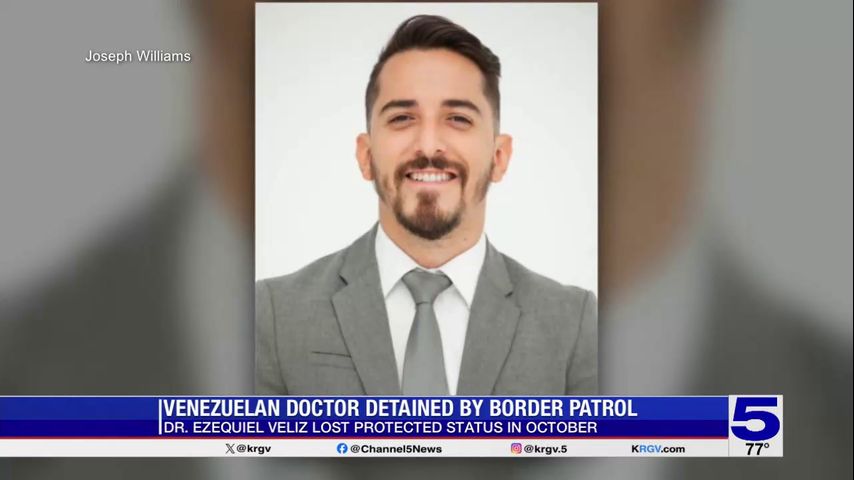
Rio Grande Valley Doctor Detained at Border Patrol Checkpoint
A recent incident has raised concerns about immigration enforcement in the United States, highlighting the challenges faced by those navigating the complex immigration system. Dr. Ezequiel Veliz, a dedicated physician from the Rio Grande Valley, was detained at a Border Patrol checkpoint while traveling to Houston with his husband, Joseph Williams. This event has spotlighted the precarious nature of immigration status, especially for those seeking to contribute positively to society.
Background on Dr. Ezequiel Veliz
Dr. Veliz, who hails from Venezuela, has been committed to advancing his medical career in the U.S. He had been working diligently to complete his medical residency at the Knapp Medical Center in Weslaco, Texas, under the University of Texas Rio Grande Valley (UTRGV) program. His desire to make a difference is evident, focusing on critical health issues like diabetes management.
In 2019, Williams and Veliz met, and they married earlier this year. Williams describes his husband as a person who “loves saving lives,” emphasizing his unwavering commitment to patient care. However, the couple’s journey took a troubling turn in late 2022 when Veliz lost his job due to the expiration of his employment authorization linked to Temporary Protected Status (TPS). Changes in policy under the Trump administration led to the termination of this status for Venezuelans, rendering Veliz undocumented.
Detainment at the Sarita Checkpoint
While traveling to Houston, the couple encountered the Sarita Border Patrol checkpoint, where Veliz was questioned and subsequently detained. Williams recounted the moment he learned of his husband’s detainment, expressing his distress: “He said ‘they’re detaining me…’ I started crying. I’m like ‘no! This can’t be happening.’” After a five-hour wait, Williams received confirmation of Veliz’s situation.
Following his detainment, Veliz was transported to McAllen for processing and is expected to appear before an immigration judge to determine his future in the country. Immigration attorney Carlos Garcia, who works with clients facing similar challenges, noted this incident exemplifies a broader trend within the immigration landscape. “We’ve seen people in all phases of their immigration process being detained, and that’s extremely concerning,” he stated.
The Path Forward
Garcia advises against traveling through Border Patrol checkpoints, especially for those whose visa status has lapsed. He emphasized the high likelihood of detention under such circumstances. For Veliz, whose aspirations of obtaining a green card are ongoing, there is hope that this status may facilitate his release from detention.
Williams remains hopeful about Veliz’s situation, acknowledging that the immigration judge will play a crucial role in the couple’s future, deciding whether Veliz can remain in the U.S. or face deportation. “He’ll have to see a judge there, and there they’ll decide if he’s going to either stay in the country or be deported,” Williams explained.
Conclusion
Dr. Ezequiel Veliz’s story underscores the urgent and often nightmarish reality for countless individuals in similar predicaments. As immigration laws continue to evolve, the experiences of those like Veliz and Williams highlight the need for compassionate solutions in the U.S. immigration system. Their situation raises important questions about protection and the rights of those who seek to contribute to society through their work.
For more information on immigration issues and resources, please visit American Immigration Lawyers Association and Immigration and Customs Enforcement.
