


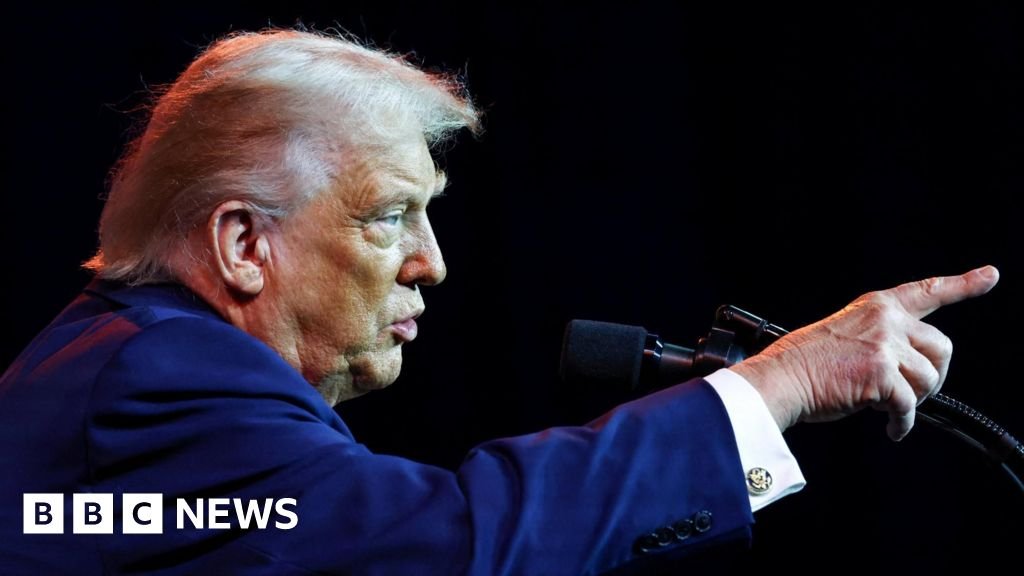
US President Donald Trump’s Threat of Airstrikes in Nigeria Amidst Rising Anti-Christian Violence
In a recent interview, US President Donald Trump expressed his willingness to escalate military action against Nigeria if assaults on Christians continue. This statement follows recent airstrikes that targeted Islamist militants in Nigeria’s northern Sokoto state, raising concerns over the intricate security dynamics in the region.
Context of Airstrikes in Nigeria
Trump’s remarks come after he connected the ongoing violence against Christians in Nigeria to actionable military responses, stating, “I’d love to make it a one-time strike. But if they continue to kill Christians, it will be a many-time strike.” These comments emerged after the US military executed airstrikes targeting factions associated with jihadist groups, notably amid escalating tensions that have seen numerous civilians, including Christians, fall victim to violence.
Nigeria’s Official Stance on Violence
Nigeria’s government has pushed back against Trump’s accusations, asserting a commitment to protecting all citizens, regardless of faith. Alkasim Abdulkadir, a spokesperson for Nigeria’s foreign minister, emphasized that the government aims to address violence affecting Muslims, Christians, and other faiths alike. In a statement, he conveyed, “Nigeria remains committed to protecting all citizens… without discrimination.”
Understanding the Dynamics of Religious Violence in Nigeria
Recent assertions highlighted claims of genocide against Nigeria’s Christian population, predominantly circulated in certain US conservative circles. However, various organizations specializing in monitoring political violence stress that the majority of casualties in Nigeria’s ongoing conflicts involve Muslims, not exclusively Christians.
Trump acknowledged the complexity of the situation, agreeing that Muslims also suffer violence but insisting, “But it’s mostly Christians.” This reflects the contentious narrative surrounding religious violence in Nigeria, where different communities face significant security challenges.
Security Challenges in Nigeria
Nigeria’s 230 million populace is roughly split between Christians, who primarily reside in the southern region, and Muslims, mostly found in the north. The northeastern part of Nigeria has particularly suffered due to a prolonged Islamist insurgency, led predominantly by groups like Boko Haram and offshoots linked to the Islamic State (IS).
Multifaceted Nature of Violence
The violence in Nigeria isn’t limited to religious discourse. The nation grapples with complexities such as criminal kidnapping rings, land disputes, and separatist unrest alongside the ideological and sectarian strife. These elements compound the underlying tensions already rife in a country rich in cultural diversity but challenged by deep-rooted disparities.
Overview of Recent Airstrikes
In late December, the US initiated airstrikes on settlements operated by the Lakurawa group, identified as a jihadist faction in the mostly Muslim Sokoto state. The specifics regarding casualties remain undisclosed as both the US and Nigerian governments have yet to release definitive numbers.
The strikes were framed as part of a broader strategy to mitigate threats posed by Islamic extremist groups in the region. However, Nigerian Foreign Minister Yusuf Maitama Tuggar clarified that this military action was a “joint operation” and emphasized that it was not representative of any particular religion, despite Trump referring to it as a "Christmas present."
Implications for US-Nigeria Relations
As the situation evolves, the dialogue between the US and Nigerian governments remains critical. Ongoing military cooperation hinges on mutual respect for Nigeria’s sovereignty and acknowledgement of diverse constituents. Both nations face the task of balancing their military strategies with humanitarian concerns, striving to protect populations amid conflicting narratives about religious violence.
Final Thoughts
The unfolding scenario highlights the necessity for deeper engagement with Nigeria’s multifaceted security landscape. While the focus remains on responding to specific threats, appreciating the broader context of violence between various communities is crucial. The intricate balance between military intervention and diplomatic efforts will shape Nigeria’s socio-political landscape in the years to come.
For further reading on Nigeria’s security issues, you can explore resources from organizations monitoring these crises, such as Human Rights Watch and Amnesty International.
By employing clear subject headers, engaging content, and relevant external links, this article aims to improve its visibility on search engines while providing comprehensive insights into the complex issues surrounding violence in Nigeria.
