


Key Insights into the Texas Supreme Court Elections
The Texas Supreme Court, as the highest civil appellate court in the state, plays a pivotal role in shaping the law by determining which cases warrant review. With a recent surge in public interest, understanding the candidates and their qualifications is essential for informed voting.
What Does the Texas Supreme Court Do?
The nine elected justices of the Texas Supreme Court establish their own agenda, deciding which of the hundreds of petitions for review will receive a hearing. Only cases presenting significant legal issues make the cut, reflecting the court’s focus on high-stakes legal matters. In 2022 alone, the court received 981 petitions for review, approving only 9% and publishing 109 opinions.
Current Landscape of Candidates
As we approach the 2024 Democratic primary, four of the nine justices’ seats, including that of the Chief Justice, are up for election, while Republican candidates are running unopposed.
Chief Justice Position
Among the contenders, Amy Clark Meachum emerges as a strong candidate for Chief Justice. Serving as a Travis County civil district court judge, Meachum has valuable appellate judicial experience, handling most appeals from state agencies, boards, and commissions. Her innovative approach aims to enhance access to legal services for middle-income litigants, addressing the financial barriers that many face.
Her opponent, Jerry Zimmerer, currently serves on the 14th Court of Appeals in Houston. While his qualifications in health law and international law are commendable, there are concerns regarding his decision to pursue higher office within a year of taking the bench.
Place 6 and Place 7 Candidates
For Place 6, Larry Praeger is recommended, albeit with reservations. Possessing extensive experience as a former Bell County attorney, Praeger is certified in family law and has appeared across various civil court levels. However, it is noted that he is transitioning from criminal to civil practice, which raises questions about his civil law expertise.
Kathy Cheng, Praeger’s opponent, brings 19 years of legal experience, yet the lack of extensive appellate background among both candidates raises concerns about their readiness for the position.
For Place 7, Brandy Voss is another recommended candidate. Based in McAllen, she has 17 years of legal practice and previously interned at the Texas Supreme Court. Her role as an adjunct professor at the University of Texas Rio Grande Valley highlights her dedication to education while advocating for pro bono assistance for asylum-seekers.
The other contender, Staci Williams, a Dallas district judge, has not been reachable for comment, casting uncertainty over her campaign.
Place 8 Contestants
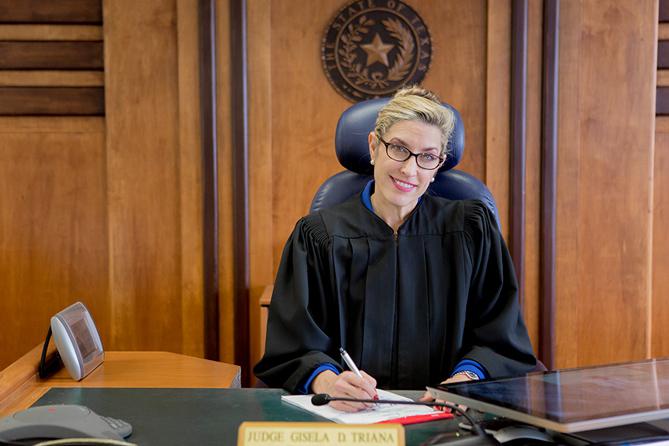
In Place 8, Gisela D. Triana is noted for her extensive judicial service, with 31 years in the field. Notably, she has familial ties to the legal system, previously serving as a prosecutor and as a staff attorney in election management.
However, her past arrest for DWI in 2015 raises concerns, despite the charge being dismissed and only a speeding violation resulting in deferred adjudication. Triana’s experience vastly outweighs that of her opponent, Peter M. Kelly, who lacks prior judicial experience.
Conclusion: Making an Informed Choice
As voters prepare for the upcoming primary, thorough knowledge of the candidates and their qualifications is crucial. With the future of Texas’s legal landscape at stake, recognizing the unique experiences and perspectives that each candidate brings will enrich the electoral process. Prospective voters can find more about the candidates and their platforms on Texas Supreme Court’s official website and Ballotpedia.
Understanding the dynamics of these elections not only empowers voters but also shapes the ongoing evolution of civil justice in Texas. Ensure your voice is heard by staying informed and casting your vote wisely.
