


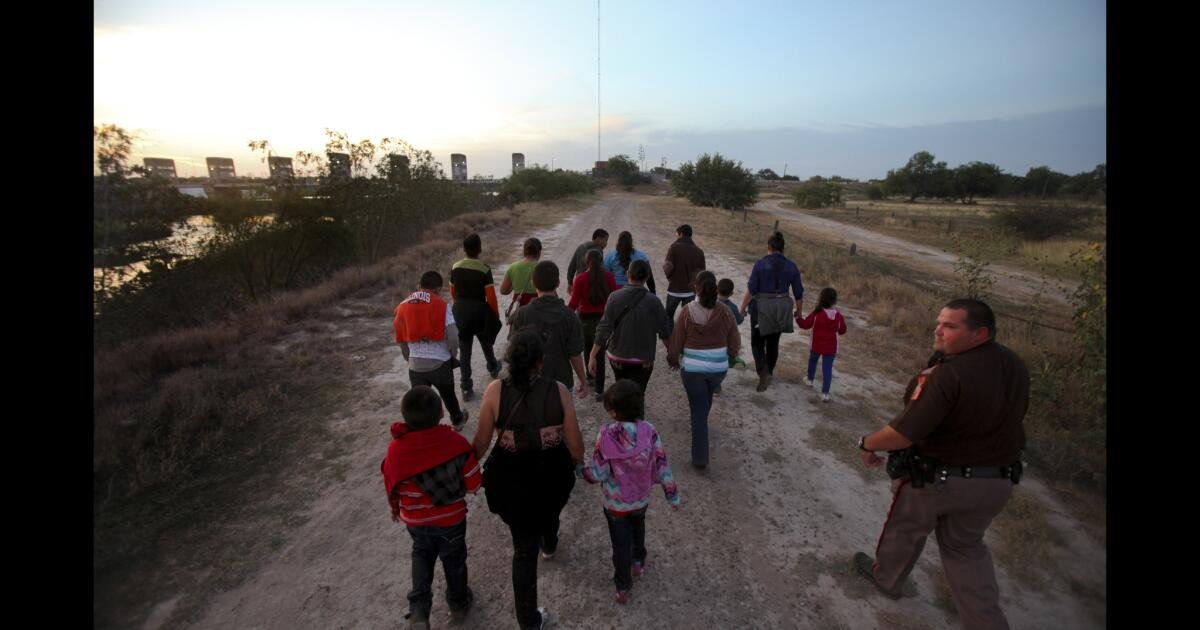
The Story of Undocumented Immigrants: A Family Narrative
A Dream for a Better Life
The journey of many undocumented immigrants in the United States is often rooted in a desire for a better life, similar to the aspirations of young individuals protected under DACA (Deferred Action for Childhood Arrivals). This narrative echoes through families like my own, revealing a rich tapestry of hope and resilience that spans generations.
From Guanajuato to Texas
My grandfather’s story began in a small agricultural community in Guanajuato, Mexico. Faced with the harsh realities of severe drought, he and my grandmother made the difficult decision to relocate to Mexico City in search of more stable employment. After a stint working in a soda bottling factory, they soon realized that financial struggles persisted.
In 1945, driven by the need to provide for his family—his wife and their three young daughters—my grandfather ventured to Texas, seeking opportunities for work.
The Bracero Program: A New Hope
This period marked the inception of the Bracero Program, a bilateral agreement facilitating the entry of Mexican seasonal workers into the United States. Though my grandfather did not participate as a "bracero," information from friends led him to believe there were ample job opportunities in Texas.
Upon crossing the border, my grandfather took a bold step: he began to work for a farmer in South Texas without any remuneration. His strategy was simple yet effective—by demonstrating his work ethic, he hoped to secure a paying job, which he successfully did.
The Family Reunion
After one year laboring to prove his worth, my grandfather arranged for his family to join him. In an audacious nighttime crossing of the Rio Grande, my grandmother and three oldest daughters journeyed across the river, with the little girls concealed under a blanket in a small boat.
A Journey Through Challenges
While navigating challenges, including scarce resources during the crossing, they managed to reach the other side—safely asking for food during their journey, as they emerged like little birds seeking refuge.
The Political Landscape: A Double-Edged Sword
The 1940s and 1950s were tumultuous for undocumented immigrants, especially with the government’s heightened crackdowns through initiatives like Operation Wetback in 1954. As the Border Patrol intensified its presence, many argued that such measures only intensified undocumented immigration.
Balancing Act: Farm Lobbyists and Legalization
Simultaneously, the agricultural sector’s worry about labor shortages led powerful lobbyists to advocate for more stable workforces. This resulted in selective legalization processes, often referred to as "drying out." In regions like South Texas, exceptions were periodically granted by the Immigration and Naturalization Service (INS) to legalize agricultural workers—including my grandfather and his daughters.
Although my grandmother faced delays in gaining legal status due to health issues, this path ultimately allowed the family to prosper within a complex political and economic landscape.
A Changing Landscape
My mother’s birth in Texas offered her the status of a natural-born citizen. This mixed-status family dynamic became common among immigrant families, with some members undocumented while others enjoyed citizenship benefits.
The political atmosphere of the 1950s was markedly different; it was conducive to legal adjustments for many families. Today, advocating for similar reforms for migrant workers invites controversy, despite the known economic benefits and humanitarian needs.
The Legacy of Undocumented Immigration
Fast forward to my own experience; born in California two decades after my family’s legalization, I grew up enjoying the privileges of citizenship. Yet, the narrative of my grandfather reminds me of how fragile such opportunities can be. Had the political climate shifted differently, the prospects for my family—and my own life—could have been drastically altered.
Education as a Pathway
My academic journey, which led me to Stanford and eventually to a professorship at the University of California, underscores the transformative power of legal status. I’ve encountered many undocumented students striving for a brighter future through education, similar to the activists rallying for DACA today.
These individuals, navigating both challenges and ambitions, often live in fear for their families’ safety while yearning for stability. They acknowledge that like my grandfather, their parents are the original Dreamers, striving relentlessly for a better tomorrow.
Conclusion
The experiences of undocumented immigrants are often intertwined with complex political and socioeconomic factors. Understanding these narratives not only illuminates the human aspect behind immigration statistics but also highlights the struggles, dreams, and resilience that define families like mine.
For further insight into the broader immigration landscape, you can explore these resources on DACA and undocumented immigration.
Keywords: undocumented immigrants, DACA, Bracero Program, immigration reform, mixed-status families, economic impact of immigration
Expanding our understanding of these stories can inform policies and foster empathy, ultimately leading to more humane and effective approaches to immigration in the United States.
