


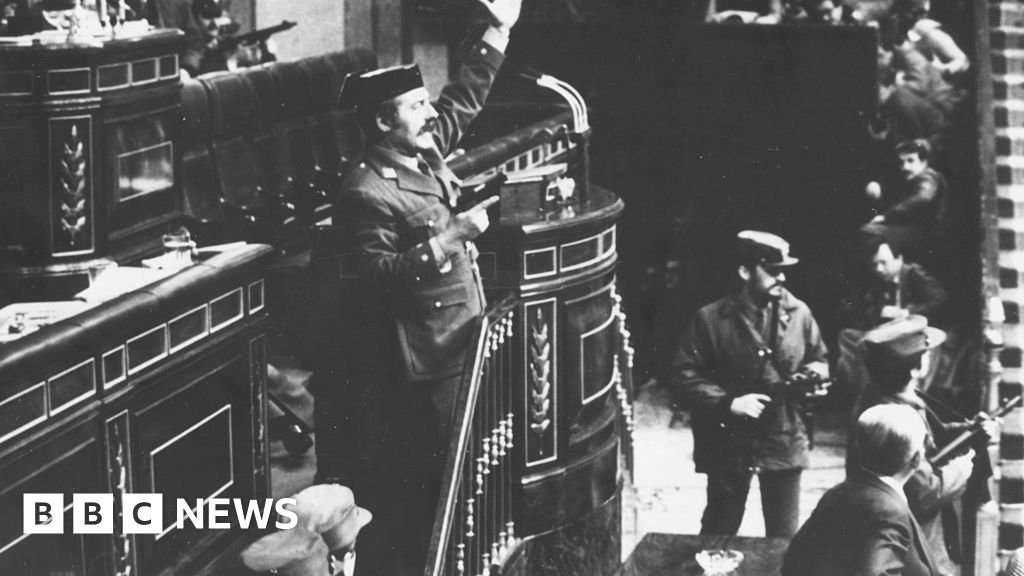
The 1981 Spanish Coup: A Turning Point in Democracy
On February 23, 1981, Spain witnessed a dramatic moment in its recent history when a coup attempt shook the foundations of a nascent democracy. This incident, often referred to as the 23-F, remains a pivotal event that highlights the country’s struggle between authoritarianism and democratic governance.
Background: The End of Franco’s Dictatorship
Spain’s transition to democracy began after the death of Francisco Franco in 1975, marking the end of a nearly four-decade-long dictatorship. The subsequent years saw significant political reform, including the establishment of a parliamentary democracy in 1978, which granted citizens rights and freedoms long suppressed under Franco’s regime. However, this transition was fraught with challenges, as various factions within the military and conservative sectors yearned for the authoritarian rule of the past.
The Coup Attempt: A Day of Tension
On that fateful day in February, a group of military officers, spearheaded by Lieutenant Colonel Antonio Tejero, stormed into the Spanish Parliament (Cortes Generales) just as a new government was being sworn in. Armed with automatic weapons, the rebels held members of parliament hostage, demanding the reinstatement of an authoritarian regime. This audacious display of force was aimed at reversing the democratic strides made since Franco’s death.
The Immediate Reaction
As news of the coup spread, panic ensued across the nation. Citizens watched live broadcasts of the unfolding drama, showcasing the resilience and determination of both the military and the political powers involved. King Juan Carlos I, aware of the potential implications of the coup, took a decisive stand. He addressed the nation in a televised speech, calling for resistance against the coup and reaffirming his commitment to democracy.
The Aftermath: A Victory for Democracy
Within hours, the coup attempt began to falter. Public and military support for Tejero’s actions dwindled as King Juan Carlos’ speech galvanized the country’s citizens. The coup ultimately collapsed, leading to the arrest of its orchestrators. This pivotal moment served as a powerful affirmation of Spain’s commitment to democracy and the rule of law.
Significance of the Failed Coup
The failed coup had several long-lasting effects on Spain’s democratic landscape. First, it solidified the resolve of political leaders to ensure that a dictatorship would never again take hold. Moreover, it led to increased public confidence in democratic institutions and served as a wake-up call for military factions that might have entertained similar thoughts of intervention in the future.
Conclusion: Lessons Learned from 23-F
The events of February 23, 1981, stand as a testament to Spain’s journey toward a stable democratic society. The collective response from the King, political leaders, and citizens acted as a bulwark against authoritarianism, ensuring that the legacy of Franco would not re-emerge.
The 23-F remains a critical chapter in Spain’s history, reminding us that the fight for democracy can be fraught with peril but ultimately leads to a strengthened commitment to the principles of freedom and governance by the people.
For more information on Spain’s democratic transition after Franco, consider visiting History.com and BBC News for comprehensive analyses and resources.
