


Senate Democrats Push for Immigration Reforms Amid DHS Funding Talks
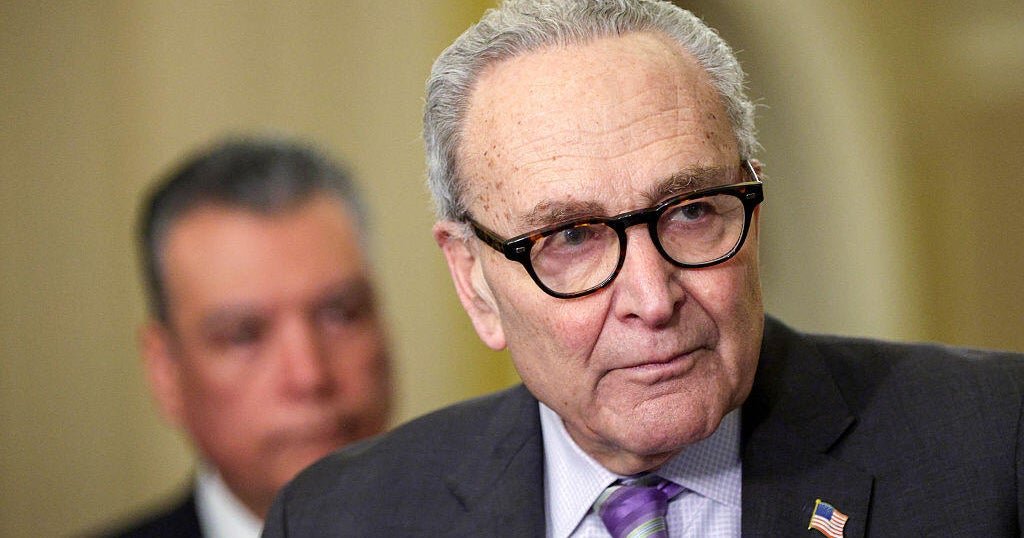
Washington, D.C. – The ongoing negotiations to reopen the Department of Homeland Security (DHS) have become increasingly complicated as Senate Democrats insist on major reforms to Immigration and Customs Enforcement (ICE) as part of any funding agreement. Senate Minority Leader Chuck Schumer expressed strong concerns about the current state of ICE, stating, “We have to rein in ICE and stop the violence. We need reform.”
GOP Proposals and Democratic Resistance
On Tuesday, Senate Republicans presented a formal offer aimed at resolving the funding deadlock. Following a meeting with President Trump on Monday, GOP senators returned to Capitol Hill optimistic about potential progress. “We do have a solution,” said Sen. Katie Britt from Alabama, suggesting that the Republicans had a plan in mind.
However, during a caucus meeting on Tuesday, Senate Democrats remained adamant that their demands for reforms to ICE could not be overlooked. In response to the GOP proposal, Schumer noted that it “does not have any reforms” for the immigration agency and reiterated that significant reforms would be included in their counter-offer. “Negotiations are ongoing,” he added, emphasizing that Democrats are committed to pushing for changes that can be enacted into law.
Details of the GOP Funding Proposal
Senate Republicans have proposed to fund 94% of the DHS budget, deliberately withholding $5.5 billion designated for ICE’s deportation division, known as Enforcement and Removal Operations. This proposal follows previous funding allocations that allowed ICE to continue its operations amid the shutdown. GOP Senate Majority Leader John Thune articulated the complexities of the negotiations, stating, “A lot of the reforms are contingent on funding for ICE.” He questioned how meaningful reforms could be enacted without accompanying funding.
In contrast, top Senate Democrat Patty Murray confirmed that lawmakers are dedicated to securing modest reforms to ICE. “Reforms must make it into law,” she asserted, underscoring the critical nature of these discussions.
Challenges and Complications in Negotiations
The backdrop of these negotiations has been marked by misconceptions and public statements from both sides. President Trump raised concerns that Democrats had betrayed an earlier agreement and have since insisted that any funding deal be linked to the controversial SAVE America Act. This bill, which includes provisions requiring proof of citizenship for voter registration, has faced staunch opposition from Democratic lawmakers.
In a statement, Trump expressed dissatisfaction with any deal that didn’t align with his vision, cautioning Congress, “Any deal they make, I’m pretty much not happy with it.”
Exploring Budget Reconciliation
The current GOP funding proposal covers essential DHS agencies, such as FEMA and the TSA, while leaving the requested ICE funding and elements of the SAVE America Act for future negotiation through budget reconciliation. This method would enable Republicans to push legislation through with a simple majority, bypassing the traditional 60-vote requirement, provided those elements significantly impact the budget.
However, some GOP members have voiced skepticism about successfully using reconciliation for the SAVE America Act, suggesting that its main components may not adhere to strict budgetary guidelines. “It’s hard to imagine how the SAVE America Act could be passed through reconciliation,” said Utah Sen. Mike Lee. Even within their party, dissent regarding these procedures highlights divisions that could hinder the effectiveness of proposed legislation.
Next Steps for Negotiations
As negotiations evolve, GOP senators have indicated that they are mindful of the consequences of inaction, particularly as many Americans continue to experience long wait times at airports due to TSA staffing shortages. Sen. Lindsey Graham warned Democrats against modifying the GOP proposal: “You’re not changing this now. I didn’t go down there and spend two hours with the president to get him to where the deal was to only have it changed.”
Senators from both parties continue to meet with key administration officials to navigate these discussions. While reports of productive dialogues have emerged, the path to an agreement remains fraught with challenges.
These ongoing negotiations will determine critical funding and reform measures affecting not just immigration enforcement, but the everyday operations of essential services within the Department of Homeland Security.
For further insights into the implications of these negotiations, check out resources like CBS News’ coverage on the DHS funding stalemate.
