


Transforming the Global Economy: A Call to Action Against Pollution and Inequality
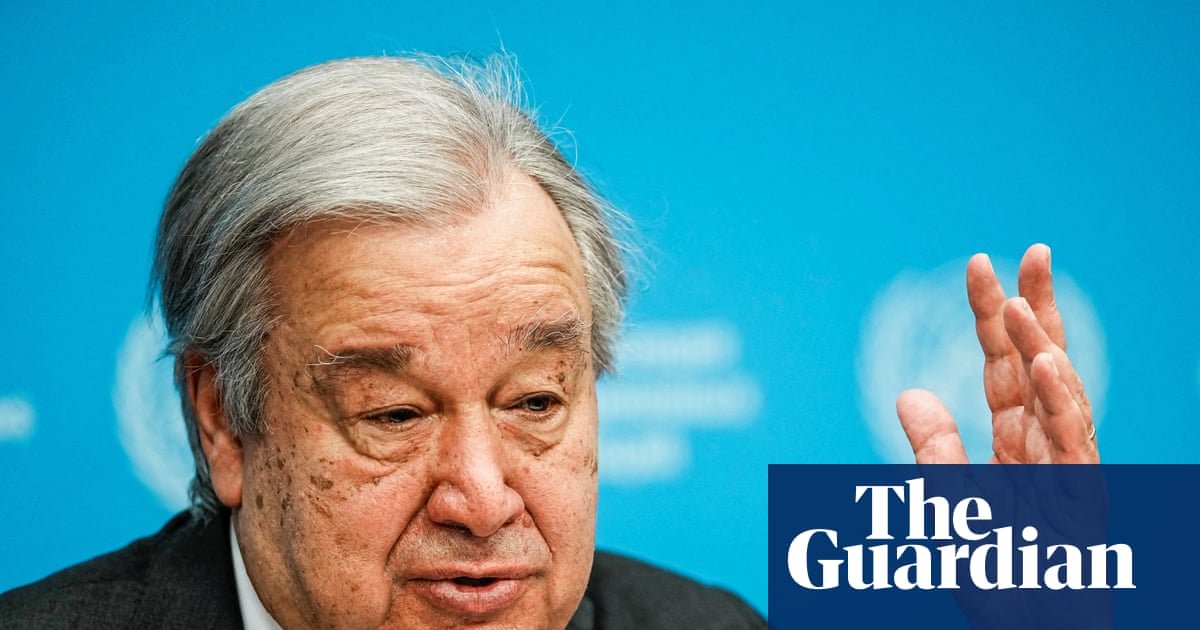
The UN Secretary-General, António Guterres, has issued a stark warning: the global economy must undergo a radical transformation to stop incentivizing pollution and waste. In an exclusive interview, Guterres emphasized the urgent need to rethink current economic accounting systems, which he believes are leading humanity towards collapse.
Why the Shift is Necessary
For decades, economic growth has been measured predominantly by Gross Domestic Product (GDP), a metric that, while useful in some respects, fails to account for environmental degradation and social inequality. Guterres pointed out the paradox of GDP—activities that harm the environment, like deforestation and overfishing, can still drive economic growth. He stated, “When we destroy a forest, we are creating GDP. When we overfish, we are creating GDP.”
A Flawed Economic Blueprint
Critics argue that an unwavering focus on GDP is misguided, especially in a world with finite resources. This relentless pursuit of growth contributes not only to climate change and biodiversity loss but also exacerbates social inequality. Guterres asserted, “GDP tells us the cost of everything, and the value of nothing.” He believes that assessments of economic performance should focus on what genuinely matters to individuals and communities, advocating for a paradigm shift in how success is measured.
The "Beyond GDP" Initiative
The UN’s "Beyond GDP" initiative aims to address these pressing issues. During a conference held in Geneva earlier this year, leading economists—including Nobel laureate Joseph Stiglitz—came together to work on a new framework for measuring economic success that emphasizes "human wellbeing, sustainability, and equity." This multidisciplinary team seeks to create a composite index that complements GDP, allowing for a more nuanced understanding of economic health.
Urgency in Transformation
A report released by the initiative highlighted the urgency for economic transformation in light of the myriad global shocks faced over the past two decades—ranging from the 2008 financial crisis to the COVID-19 pandemic. These events have exposed the vulnerabilities in the current economic model, which is further complicated by the "triple planetary crisis" of climate change, loss of biodiversity, and pollution.
A Collaborative Approach
Professor Kaushik Basu, who co-leads the UN group, emphasized that many nations are obsessed with outpacing each other in GDP growth, often at the cost of citizen wellbeing and environmental sustainability. He cautioned that when wealth is concentrated in a few hands, economic growth can mask severe social issues, increasing polarization and inequality.
The Limitations of GDP
The continued reliance on GDP as the primary benchmark of success raises critical questions. Professor Nora Lustig pointed out that GDP was never designed to measure human progress but nonetheless remains the dominant yardstick for evaluating economic performance. This situation fosters a misleading perception of prosperity, overlooking serious violations of human rights, violence, and exclusion that occur alongside economic growth.
Rethinking Economic Structures
The UN initiative comes in response to a growing acknowledgment that existing economic models are fundamentally flawed, as they inadequately assess the impact of climate shocks and catastrophes. This has led to increasing support in academia and civil circles for new economic structures that prioritize greater equality and sustainability. Various schools of thought have emerged, from green Keynesianism to doughnut economics, all advocating for a post-growth framework.
The Rise of Degrowth
The concept of degrowth is gaining traction. Advocates argue for a planned reduction in harmful production, especially in wealthier nations, focusing instead on socially beneficial sectors such as renewable energy, public transit, and care industries. Political economist Jason Hickel noted a recent survey revealing that 73% of climate policy researchers support post-growth approaches, highlighting a shift in academic trends.
A Call for Systemic Change
While Guterres’s call to move beyond GDP is a significant step, experts argue that it alone won’t suffice. Hickel insists on the need for deeper systemic changes, advocating for democratized control over production. This would enable societies to redefine their priorities and better align production with the needs of all citizens, rather than solely capital interests.
Conclusion
The pressing need to rethink economic structures is more urgent than ever. By prioritizing human wellbeing, sustainability, and equity over mere GDP growth, the global community can pave a way for a more just and sustainable future. As the conversation around redefining success continues to evolve, it’s essential that policymakers, economists, and citizens collaborate to create a resilient and equitable economy capable of withstanding future challenges.
For further insights, explore Beyond GDP and delve into reports that discuss new economic frameworks that prioritize sustainability and equity.
