


Texas Shift: How Donald Trump Reclaimed the Lone Star State
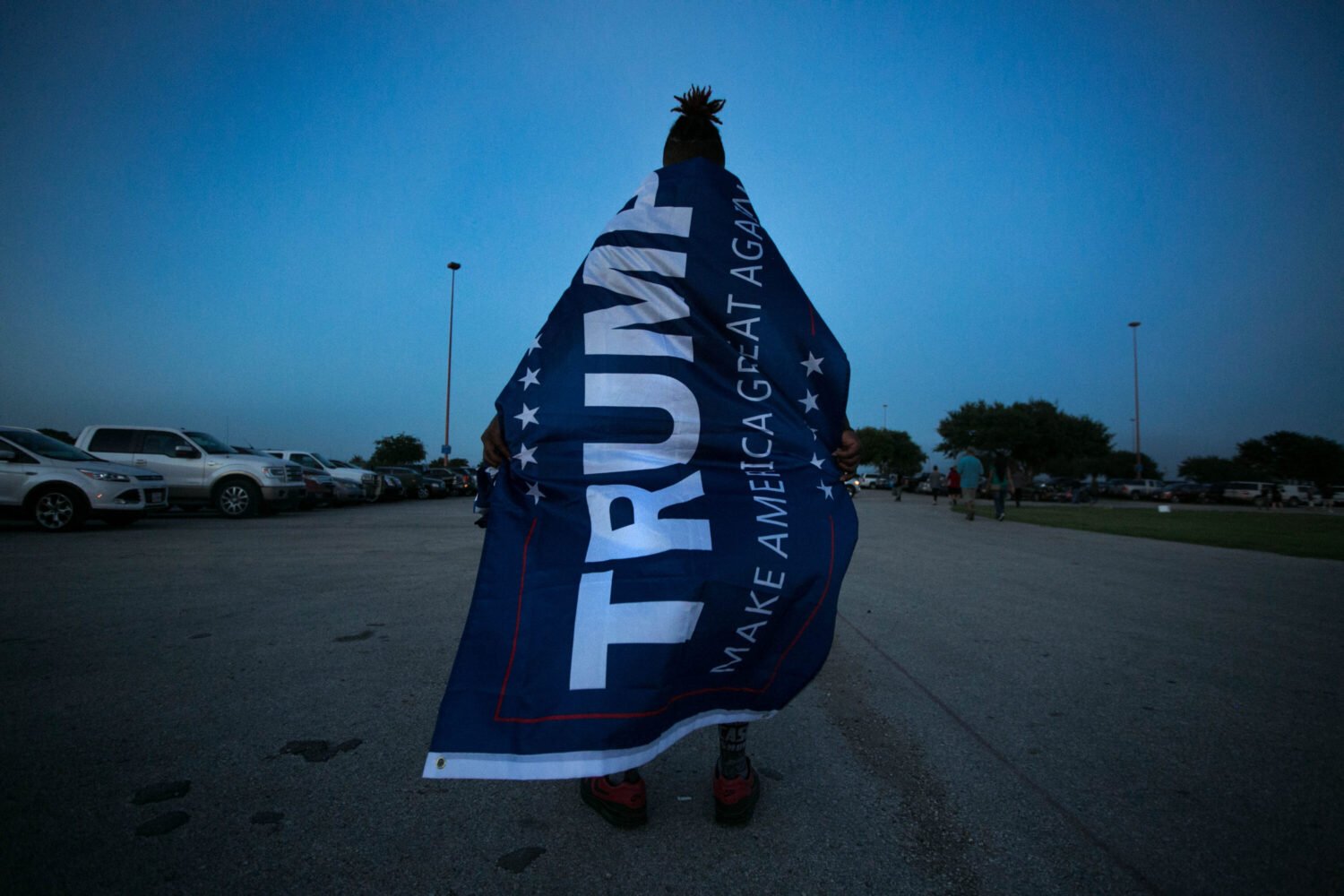
Supporter of Donald Trump outside the Travis County Exposition Center in Austin, Texas, during a rally in 2016. Gabriel Cristóver Pérez/KUT News.
The recent election results have further solidified the belief that Texas is evolving into a stronghold for the Republican Party. Former President Donald Trump’s decisive victory in the state has raised eyebrows given that his margin of victory increased significantly compared to previous elections. Texas was called for Trump on the night of the election, where he captured over 56% of the vote, marking a substantial gain of 14 percentage points over Democratic nominee Kamala Harris. In contrast, only four years prior, Trump’s lead over then-President Joe Biden was merely 6 percentage points.
A Strategic Shift: The Groundwork of Republican Gains
Many political analysts and leaders within the Texas GOP assert that this dramatic transformation is not merely a coincidence but the result of years of dedicated groundwork. Abraham George, the Texas GOP Chairman, highlighted the strategic initiatives undertaken to penetrate previously blue regions, particularly South Texas. George noted, "We did go work really hard on the South Texas area… one of my campaign promises was that we will be flipping South Texas."
This effort yielded tangible results, as Republicans managed to flip 16 counties since the 2016 elections. Political scientists, such as Kevin Kearns from Texas A&M University at Corpus Christi, observed a noticeable uptick in Republican engagement in regions such as Corpus Christi, reinforcing the commitment of figures like Governor Abbott and Senator Cruz in promoting Republican values in South Texas.
The Demographics Driving Change
Understanding the demographic shifts is crucial to grasping the evolving political landscape of Texas. According to Joshua Blank from the Texas Politics Project at the University of Texas at Austin, the appeal to non-college educated and often rural Hispanic voters has played a significant role in these Republican gains. He asserts that many of these voters likely leaned Republican long before recent shifts came into play.
Traditionally, the Democratic party was perceived as the champion for working-class voters. However, Blank pointed out that the party’s current focus often aligns more with the interests of college-educated individuals. For example, Kamala Harris’ housing initiative aimed at first-time homebuyers drew criticism for its impracticality for working-class families, especially given the current housing market’s exorbitant prices.
Economic Concerns as a Catalyst for Change
The shifting political allegiances in Texas can be closely tied to economic concerns that resonate deeply with voters. According to University of Houston political scientist Brandon Rottinghaus, many rural regions are gravitating toward the Republican Party due to perceived threats against the oil and gas industry. This sentiment has propelled communities that once favored Democratic policies to reconsider their loyalties.
In Starr County, the ramifications of this shift became clear when Biden’s win over Trump in 2020 transformed into a 16-point victory for Trump over Harris in the recent election—an astonishing turnaround illustrating how economic issues can transcend traditional partisan lines.
Realizations and Policy Alignments
Craig Goldman, a former Texas House GOP caucus chair now serving as a congressman-elect, commented on the awareness among voters in South Texas and the Rio Grande Valley regarding the Democratic party’s policies. He stated that many residents are beginning to recognize the alignment of Republican policies with their interests, something that previously may have gone unnoticed.
Interestingly, prior attempts by Democrats to make inroads in Texas now appear to be slipping away, with Goldman asserting, "Texas is not getting more blue. Texas is getting more red," especially following the shifts in the Rio Grande Valley.
Conclusion: The Future of Texas Politics
The outcome of the most recent election offers a glimpse into the evolving dynamics of Texas politics. As the Republican Party continues to gain ground in areas traditionally leaning Democratic, the implications of these shifts will resonate well beyond state lines, influencing national politics as well. With socioeconomic factors playing a crucial role in voters’ decisions, the Texas landscape serves as a barometer for understanding broader trends in American political affiliations.
For further insights into Texas’ evolving political climate, visit Texas Politics Project and explore their analysis on the 2024 elections.
