


Year After Devastating Wildfires: A Community’s Struggle to Rebuild in Los Angeles
LOS ANGELES — As the first anniversary of one of the most destructive wildfires in the Los Angeles area approaches, the stark contrast between rebuilding efforts and the still-scarred landscapes is becoming increasingly apparent. The Palisades and Eaton fires, which ignited on January 7, 2025, led to the tragic loss of 31 lives and the destruction of approximately 13,000 homes and properties, leaving a trail of devastation that is still being felt today.
The Rebuilding Challenge: A Disheartening Reality
In the wake of these catastrophic wildfires, fewer than a dozen homes have been successfully rebuilt in Los Angeles County. For many homeowners, the insurance payouts have fallen short of covering the extensive costs required for reconstruction. Despite the involvement of relief organizations, progress has been agonizingly slow.
One notable exception to the struggle is 67-year-old Ted Koerner, whose Altadena home was reduced to nothing more than ashes and two chimneys. Faced with his insurance payout tied up in limbo, Koerner made the difficult decision to liquidate around 80% of his retirement savings to secure contractors and expedite his home’s reconstruction. With a sense of urgency, driven in part by concern for his aging golden retriever, Daisy Mae, he was able to rebuild his home, completing the task shortly before Thanksgiving.
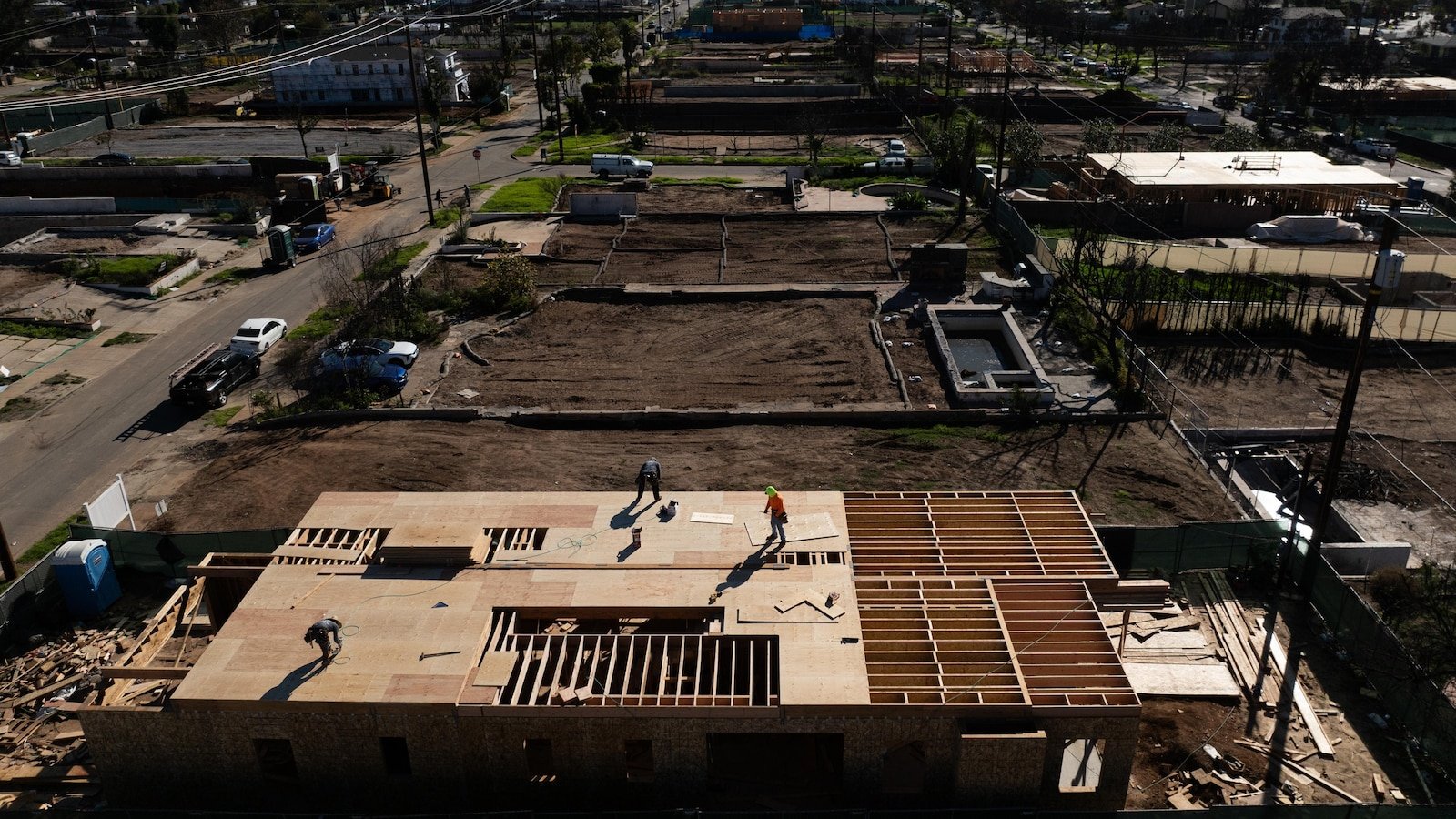
However, Koerner’s experience is all too rare among his neighbors. In areas like Pacific Palisades and the foothills of Altadena, dirt lots remain, punctuated only by unfinished foundations and debris. The once-bustling beachfront homes of Malibu now only have concrete remnants, leaving communities eerily dark at night due to the absence of operational streetlights. Many surviving homes remain uninhabited as families attempt to address the toxic contaminants left by the fires.
Insurance Woes and Financial Struggles
One significant barrier to swift recovering for many homeowners is the complexity and inadequacy of insurance claims. Joy Chen, executive director of the Eaton Fire Survivors Network, highlights alarming gaps between insurance payouts and the actual costs of rebuilding. By December, less than 20% of individuals affected by total home loss had managed to finalize their claims. Many people have expressed dissatisfaction with their insurers, citing unhelpful processes and lowball estimates.
A civil investigation into the practices of State Farm, Los Angeles County’s largest private insurer, has been initiated due to these troubling patterns. Chen notes that this inquiry has triggered increased payouts for some, but many households still struggle to move forward without sound financial guarantees.
For Jessica Rogers, a Pacific Palisades resident, her problems compounded when she discovered her insurance coverage had been canceled. Following a grueling application process for a low-interest loan from the Small Business Administration, Rogers finally received $550,000 in funding for her rebuild, yet she remains uncertain about sustaining the additional costs. “Do I empty out my 401(k)?” she contemplates while trying to grasp how she’ll manage the rebuilding expenses.
A Glimpse of Hope Amidst Despair
Despite these substantial hurdles, about 900 homes are currently under construction and are expected to be completed this year. Nevertheless, many residents find themselves in limbo, grappling with whether they can afford to begin rebuilding their dream homes. The fear of financial constraints looms large, leaving families hesitant to start projects that could run over a million dollars.
A concerning trend has emerged: many residents, particularly from marginalized communities, have left their neighborhoods permanently. Notably, real estate data reveals that over 600 properties where single-family homes were lost in the fires have been sold.
This issue is particularly acute in Altadena, an area historically significant for Black homeowners facing discrimination elsewhere in the Los Angeles area. Recent research from UCLA’s Latino Policy & Politics Institute indicates that roughly 70% of homeowners in Altadena whose properties suffered severe damage have yet to initiate any rebuilding or selling processes, with Black homeowners lagging significantly behind.
Community Stories: Resilience in the Face of Adversity
Stories of individual resilience also provide insight into the community’s spirit. Al and Charlotte Bailey, whose home was wiped out, have taken up temporary residence in an RV on the lot where their home once stood. They are financing their reconstruction through a combination of insurance and loans while awaiting potential financial aid from Southern California Edison—a utility company implicated in lawsuits related to the fire’s cause.
"Our community means everything to us," Al Bailey, 77, reflects on the life he and his family built over 41 years.
As the communities begin navigating the challenges nearly a year after the devastating wildfires, it becomes increasingly essential to unite resources and support systems to ensure that no one is left behind in the rebuilding process. The journey to recovery will continue to reveal inequalities, challenging the very essence of community resilience and the ability to rebuild amidst overwhelming adversity.
Looking Ahead: What the Future Holds
As these communities move forward, experts suggest that the next year will be crucial in determining who benefits from rebuilding efforts and who continues to struggle. The long-term implications of the reconstruction process will reshape not only physical landscapes but also the socio-economic fabric of communities.
For those affected by the Palisades and Eaton fires, the path to recovery is fraught with challenges, but also hope. Collective action, policy changes, and community support will be vital in healing not just homes, but lives forever altered by tragedy.
For further information on recovery efforts and resources, visit the Eaton Fire Survivors Network and California FAIR Plan.
