


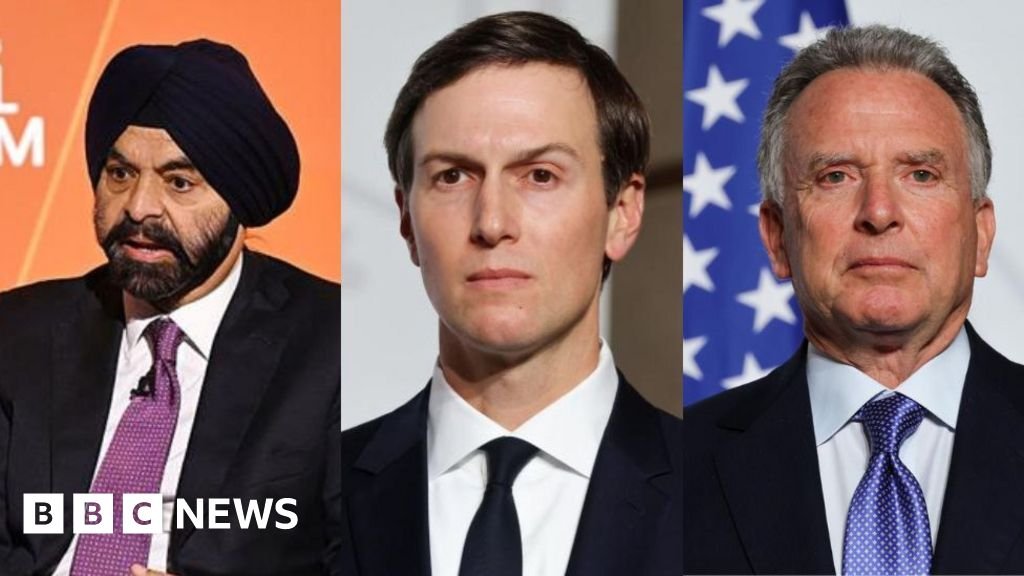
The New Board of Peace: Key Figures Overseeing Gaza’s Reconstruction
The White House has unveiled the members of the newly formed Board of Peace, which will play a pivotal role in the governance and reconstruction of Gaza. This board, chaired by President Trump, will lead a committee of Palestinian technocrats in their efforts to stabilize the region following ongoing conflicts. Notably, the board does not include any women, raising questions about the representation within this significant body.
Who’s Who on the Board of Peace?
1. Sir Tony Blair
Former UK Prime Minister Sir Tony Blair has been a notable addition to the Board of Peace. Blair, who led the UK from 1997 to 2007 and was embroiled in the controversial Iraq War, previously served as Middle East envoy for the Quartet of international powers: the United Nations, European Union, US, and Russia. His expertise in the region is significant, although some view his involvement as contentious.
Link: For more information about Tony Blair’s Middle East involvement, read this.
2. Marco Rubio
As US Secretary of State, Marco Rubio is central to the Trump administration’s foreign policy initiatives. Previously opposed to an Israel ceasefire, Rubio has recently praised a ceasefire deal, indicating a shift in his stance. His insights into Middle Eastern diplomacy will be vital for the board as it navigates the complexities of Gaza.
Discover more on Rubio’s position here.
3. Steve Witkoff
Steve Witkoff, a real estate magnate and golf partner to Trump, serves as the US Special Envoy to the Middle East. He is instrumental in the current phase of reconstruction efforts in Gaza, highlighting the importance of disarming Hamas as part of the peace process. Witkoff is also known for his involvement in broader diplomatic negotiations between Russia and Ukraine.
For more details about his role, please see this article.
4. Jared Kushner
A key figure in the administration’s foreign policy discussions, Jared Kushner has a history of mediating conflicts in the region, particularly between Ukraine and Russia. He has met with prominent Israeli leaders to address key issues affecting Gaza’s stability. Kushner’s insights into economic rehabilitation efforts may prove essential as the board moves forward.
Learn more about Kushner’s diplomatic initiatives here.
5. Marc Rowan
Marc Rowan, the CEO of Apollo Global Management, is another influential member of the board. His business acumen positions him to potentially spearhead economic initiatives critical for Gaza’s long-term recovery. Rowan was considered a candidate for Treasury Secretary as Trump prepares for his next term.
For additional information regarding Marc Rowan, check this.
6. Ajay Banga
Ajay Banga, the president of the World Bank, brings a wealth of experience from his career, including his previous role as CEO of Mastercard. His expertise in international development and advising politicians may prove beneficial for economic recovery efforts in Gaza.
For details on Banga’s contributions, please visit this link.
7. Robert Gabriel
Robert Gabriel, a US National Security Adviser, rounds out the founding executive board. Gabirel’s longstanding relationship with Trump positions him well to advocate for strategies that align with the administration’s goals for the region.
8. Nickolay Mladenov
Lastly, Nickolay Mladenov, a Bulgarian politician and former UN Middle East envoy, will represent the board in Gaza. He will oversee the National Committee for the Administration of Gaza (NCAG), which is tasked with managing the day-to-day governance of the region post-conflict.
For more on Mladenov’s role, see this article.
Conclusion
The Board of Peace holds a significant responsibility as it looks to establish order and facilitate reconstruction in Gaza. Composed of influential leaders from various sectors, their collective expertise is expected to guide effective governance strategies and development initiatives in this troubled region. As events unfold, the effectiveness of this board in achieving its aims will remain under scrutiny.
