


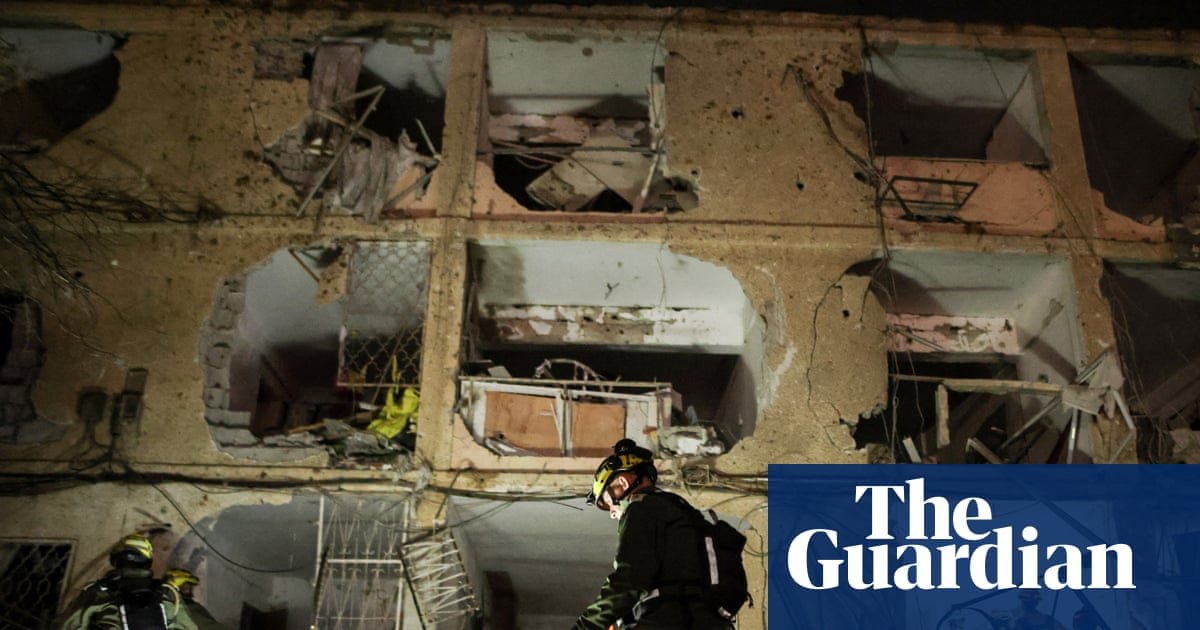
Escalating Tensions: Iranian Missile Strikes Israeli Town of Dimona
In a significant escalation of regional hostilities, an Iranian missile struck the Israeli town of Dimona, known for housing a nuclear facility. This attack has been explicitly described by Iranian state media as retaliation for prior strikes on Iran’s Natanz nuclear site. This unfortunate incident raises serious concerns about security and stability in the Middle East.
Understanding Dimona: A Nuclear Hotspot
Dimona is home to Israel’s nuclear facility, believed to be the only one in the Middle East. While Israel has never officially confirmed its nuclear arsenal, the site is widely recognized as a focal point for regional tension. Following reports of the missile strike, the Israeli military confirmed that a building in Dimona was directly hit. Emergency responders, Magen David Adom, reported treating a total of 33 individuals, including a 10-year-old boy who sustained severe shrapnel wounds.
Immediate Aftermath of the Missile Attack
The attack resulted in significant chaos and damage. Eyewitness accounts describe extensive disruption. Paramedic Karmel Cohen mentioned, "There was extensive damage and chaos at the scene." This incident revived fears about the security vulnerabilities facing Israel, especially as the military acknowledged efforts to intercept incoming missiles. Visuals from Israeli media depicted the missile entering the atmosphere at astonishing speed before making contact with Dimona.
Iran’s Justification and Allegations
Iran’s state television announced the missile launch as a "response" to the earlier strike on the Natanz facility. Iranian authorities have accused the U.S. and Israel of orchestrating attacks that damage its nuclear capabilities. However, the UN nuclear watchdog has stated that there has been "no leakage of radioactive materials reported" following these recent strikes.
Context: The Natanz Nuclear Facility
The Natanz facility has historical significance in Iran’s nuclear program, hosting underground centrifuges designed for uranium enrichment. This facility sustained damage in a prior conflict last June, accentuating its ongoing vulnerability. Despite Iran’s accusations, the Israeli military has publicly stated it was "not aware" of any strike on Natanz.
Broader Implications: Regional Response and International Involvement
Following the missile attack, tensions have escalated not only between Iran and Israel but also among other Middle Eastern nations. The United Arab Emirates reported experiencing aerial attacks after Iran warned against allowing strikes from its territory on disputed islands near the Strait of Hormuz, a crucial channel for global oil shipping.
Military Actions Against Iran
In response to the rising threats, U.S. forces have been actively targeting Iranian military assets. U.S. Central Command (CENTCOM) reported that American warplanes successfully destroyed a significant underground facility along Iran’s coastline, hindering Tehran’s capacity to pose threats in the vital waterway. "We not only took out the facility but also destroyed intelligence support sites and missile radar relays that were used to monitor ship movements," stated Adm. Brad Cooper, head of U.S. Central Command.
The Economic Fallout: Oil Prices Surge
The tumultuous geopolitical situation has had immediate economic consequences, with crude oil prices soaring. North Sea Brent crude has witnessed over a 50% increase in the past month, exceeding $105 per barrel. This surge is indicative of the broader repercussions of ongoing unrest in the region, particularly surrounding the strategic Strait of Hormuz.
International Reactions and Developments
In light of the escalating conflict, a coalition of European nations, including the UK, France, and Germany, have condemned the "de facto closure of the Strait of Hormuz" by Iranian forces. They expressed readiness to ensure safe navigation through this critical maritime route. The international community is closely monitoring the situation, with previous U.S. administrations urging allies to support measures for securing this vital passage.
Domestic Reactions in Iran: A Turbulent Time
Tehran has faced profound domestic challenges alongside international tensions. As the conflict approaches its fourth week, Iranian citizens find themselves in a dual state of uncertainty. Observations indicate a mix of apprehension and resilience, as they navigate through the fallout of both leadership changes and ongoing military confrontations.
Cultural Reflections Amidst Conflict
Interestingly, the end of Ramadan was marked in Tehran amid the ongoing turbulence. While traditionally, the supreme leader guides Eid al-Fitr prayers, a recent change in leadership has seen Mojtaba Khamenei, the newly appointed leader, maintain a low profile. This shift has resulted in citizens feeling a poignant mix of observance and worry, with citizens like Farid and Shiva reflecting on a painful atmosphere that permeates their celebrations.
Conclusion: The Path Forward
The situation surrounding the missile strike on Dimona illustrates the volatile landscape of Middle Eastern geopolitics. With escalated military actions, shifting alliances, and concerns over nuclear safety, the region remains on edge. Continuous monitoring of these developments will be crucial for understanding future trends in both international relations and global energy markets. The collective hope remains that diplomatic efforts can mitigate further escalations and promote stability in a historically fractured region.
For further insights and updates on the evolving situation, consider exploring resources from credible news outlets and official international organizations.
This article encompasses various dimensions of the ongoing conflict, shedding light on its complexities while aiming to provide clarity for interested readers.
