


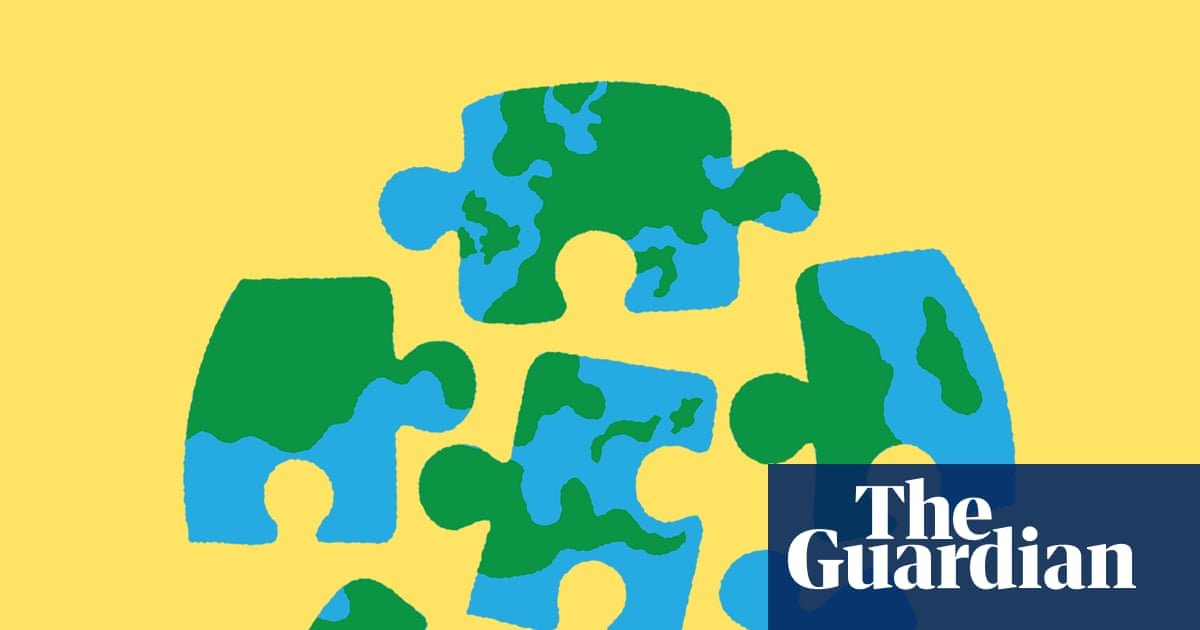
The Changing Landscape of Global Alliances: A New Era of International Relations
In January, Canadian Prime Minister Mark Carney made waves at the World Economic Forum in Davos, where he boldly announced that the postwar global order spearheaded by the United States has reached its end. His remarks echoed a growing sentiment among leaders worldwide that the principles established through decades of U.S. leadership have been compromised, leading to a pressing need for nations to rethink their diplomatic strategies.
The Dismantling of a Century-Old Framework
The foundational idea behind the post-1945 world order was that mutual interdependence among nations would foster peace and prosperity. However, Carney emphasized that the U.S. has transformed this concept into a weapon of coercion, asserting that countries can no longer rely on an architecture built around shared interests when such integration becomes a tool for dominance.
The Break from Traditional Alliances
Carney’s message struck a chord with world leaders. Notably, German Chancellor Friedrich Merz echoed these sentiments at the Munich Security Conference, stating that the "international order based on rights and rules is currently being destroyed." This highlights the mounting concern among U.S. allies about America’s waning influence and its implications for global stability.
The Call for a New Global Architecture
In the face of these challenges, Carney urged nations to either form an alliance that surpasses existing superpowers or risk perpetual competition for favor. French President Emmanuel Macron’s remarks in Munich reinforced this notion, where he affirmed that Europe must evolve into a geopolitical powerhouse capable of standing independently from the U.S.
Pragmatism Over Ideology
The emerging consensus appears to pivot towards pragmatic approaches to international relations, where political ties may become transactional rather than ideologically driven. Leaders from various nations are beginning to recognize that enhancing their military and economic capabilities is crucial in this new landscape.
The Imperative for Alternative Orders
Yet, a pertinent question arises: Can nations collaborate to establish a new global order that respects liberal values while countering the influences of both the U.S. and China? Carney’s challenge resonates as nations weigh their options between building constructive alliances or remaining at odds.
The Difficulty of Institutionalizing Change
However, the prospect of constructing a cohesive third path appears daunting. Efforts to establish collaborative frameworks often run into roadblocks. The increasing number of unilateral agreements and trade pacts highlights a troubling trend toward fragmented alliances that prioritize immediate gains over long-term stability.
Rethinking the Role of Global Powers
Jorge Castañeda, former foreign minister of Mexico, expressed skepticism over the feasibility of a collective break from Washington’s trajectory. While some nations are attempting to create alternative paths through various uncoordinated efforts, it remains uncertain if they can establish robust defenses against an aggressive U.S. stance.
A Thicket of Competing Interests
Countries, even those with similar values, struggle to create lasting alliances. For example, while the European Union recently signed a long-awaited trade deal with South American nations, internal pressures risk derailing these agreements, demonstrating the fragility of such collaborative efforts.
The Implications of Losing U.S. Leadership
The loss of American leadership is undeniably significant. Historically, the rules-based order that the United States engineered provided invaluable public goods, from economic stability to security assurances. However, the past few years have exposed underlying hypocrisies that have led many nations to reconsider their alignments.
The Fight for Strategic Autonomy
Countries like Japan and members of the European Union remain dependent on U.S. security guarantees, complicating their efforts to assert autonomy. This dependency casts doubt on the feasibility of new alliances capable of consistently resisting U.S. pressures.
A Global Power Vacuum
China’s position as a rival does not necessarily translate into a willingness to inherit the mantle of global leadership. Its prioritization of economic self-interest over an ideological commitment to global governance suggests that the road forward may be equally treacherous.
The Rise of Transactional Politics
With the decline of a cohesive international order, countries may increasingly turn to transactional relationships, focusing on short-term advantages rather than collaborative long-term objectives. This could breed instability as nations scramble to navigate a shifting landscape, making ad-hoc agreements based on immediate needs.
The Future: A Disorderly Global Environment
Alexander Stubb, President of Finland, describes the current climate as a "new world of disorder." He posits that the next decade will fundamentally shape global relations for decades to come. The absence of a guiding global power to wire new institutional frameworks risks leading to a fractured geopolitical landscape.
The Need for New Mechanisms
To counterbalance this chaotic environment, there’s a pressing need for rejuvenated global institutions—like the United Nations, IMF, and World Trade Organization—to accommodate emerging economies, particularly in the Global South. However, achieving this without U.S. involvement remains a monumental challenge.
Navigating a Complicated Future
In this unpredictable new era, nations like Brazil and India may find themselves in positions to assert their interests successfully. However, many developing nations will likely struggle to maintain agency, caught in the power struggles between larger states.
Conclusions: A Cautious Outlook
As the world continues to fracture and evolve, the ramifications of abandoning a cooperative global order will be profound. While historical frameworks facilitated growth and cooperation, the current trajectory seems set to usher in a landscape dominated by power dynamics devoid of shared ethical considerations.
The implications of this future could echo the sentiments of Thucydides, where "the strong can do what they can, and the weak must suffer what they must." As nations reconceptualize their place on the global stage, it remains to be seen whether this tumultuous journey can foster peace or will be characterized by conflict and instability.
