


Controversial Border Buoys Threaten the Rio Grande and Local Communities
An Experiment on the Rio Grande
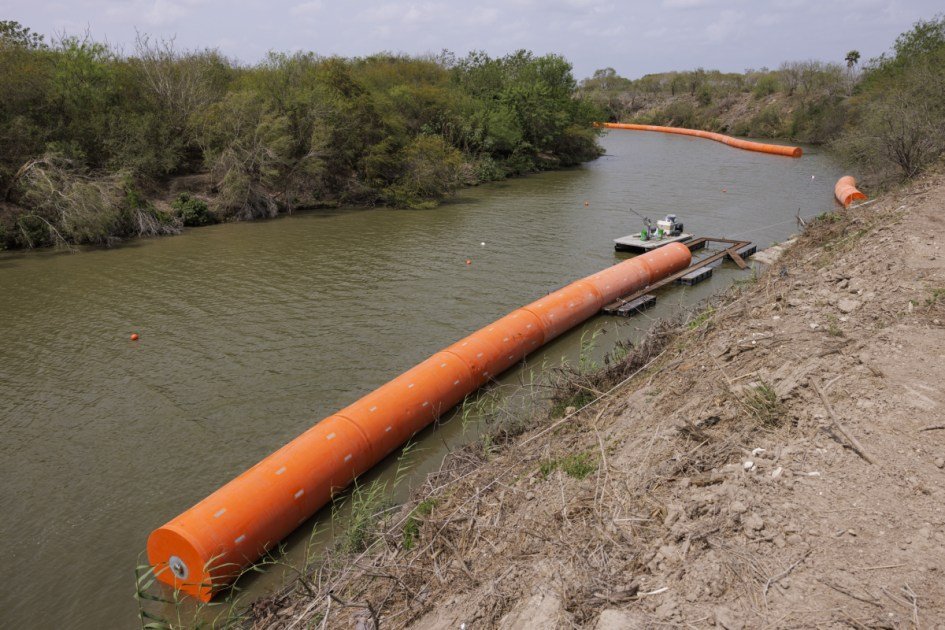
In a significant development at the southern edge of Texas, the U.S. government is advancing a controversial initiative involving the installation of a 17-mile stretch of industrial buoys in the Rio Grande. This initiative aims to deter illegal crossings from Mexico and forms part of a broader plan to deploy a total of 536 miles of buoys stretching from the Gulf of Mexico into South Texas. These robust, cylindrical structures, measuring over 12 feet in length and roughly 4 to 5 feet in diameter, have raised substantial concerns among local residents, environmentalists, and authorities alike.
The U.S. Department of Homeland Security (DHS) has allocated more than $1 billion to private firms for this project, bypassing various environmental regulations in the process. Alarmingly, no public environmental assessments or flood modeling data regarding the buoys have been made available, prompting criticism from experts who warn that these buoys could exacerbate flooding, alter the river’s natural channel, and potentially violate international treaties with Mexico.
Lack of Transparency Raises Concerns
Experts such as Mark Tompkins, a geomorphologist studying river flows, argue that the absence of public documentation regarding this massive project is troubling. In Laredo, where many buoys are set to be installed, city officials are scrambling to obtain critical engineering and design information from federal agencies. Local communities are especially wary given the lack of precedent for such an endeavor on a dynamic river globally. Concerns have been raised that these buoys could increase flooding risks in an area already prone to overflow, as well as alter sediment deposits that could lead to new land formations—potentially creating diplomatic strife with Mexico.
A Customs and Border Protection (CBP) spokesperson assured that the buoys are engineered to withstand anticipated flood conditions, emphasizing the project’s operational reliability during extreme weather events. However, they withheld specific technical details about the design standards.
The Legacy of Previous Administration Initiatives
The origins of this buoy project trace back to the Trump administration’s initiatives to bolster border security. In 2020, the U.S. Army Corps of Engineers sought proposals for a "buoy barrier system," and while the project did not materialize at that time, it resurfaced in July 2023 when Texas installed buoy segments in Eagle Pass. These buoys sparked diplomatic tensions with Mexico and raised concerns over safety, as there were reports of at least one person found dead after becoming entangled in the buoy system.
Despite opposition, the DHS has pushed forward with plans for the current buoy project, citing a "capability gap" in managing illegal activities along border waterways. The regulations waived to expedite construction include critical protections from the National Environmental Policy Act and the Endangered Species Act.
Local Impact and Public Outcry
As contractors continue to place buoys along the Rio Grande in Brownsville, public dissent is growing. Local environmental advocates, such as Elsa Hull from Zapata County, emphasize that the buoys threaten not only the ecological integrity of the river but also local recreation opportunities. "This is an experiment on a continental scale," Hull remarked, highlighting the illogic of the initiative when commonsense solutions are available.
The construction limits access for boating, fishing, and other recreational activities. On February 24, Cameron County commissioners voted to oppose the buoys, emphasizing the project’s potential short- and long-term impacts that remain largely unexplored.
Technical Risks and Environmental Concerns
Tompkins’ analysis presented to the Rio Grande Riverfront Coordination Advisory Committee underscored the potential for "unpredictable, damaging, and potentially catastrophic" consequences from the buoy system. Flood debris could accumulate around the buoys, exacerbating flood conditions, while any structural failures could lead to severe repercussions for both the environment and local communities. Echoing this sentiment, geomorphologists expressed concerns about how the proposed buoy configurations could alter water flow and sedimentation patterns in the river.
With drought conditions influencing water levels, the buoys may rest on sandbars at low flow, promoting vegetation growth which could eventually form new islands in the riverbed.
Legal Implications and Treaty Violations
Despite federal waivers, the U.S. remains bound by international treaties, particularly those governing shared waterways with Mexico. The U.S. International Boundary and Water Commission has historically implemented these agreements, yet has remained silent on the current buoy initiatives. These treaties prohibit any construction that could obstruct the river’s natural flow, and concerns have been raised that the current projects may already be violating these agreements.
As discussions unfold about compensating Mexico for potential damages caused by these structures, experts warn that taxpayers may ultimately bear the financial burden of both the construction and any necessary restorations.
Community Response and Activism
In response to the buoy installations, local activists have rallied to bring awareness to the issue. Communities near Brownsville are actively protesting the buoys, advocating for the preservation of the Rio Grande as an essential regional resource rather than reinforcing it as a barrier. Those protesting believe, fundamentally, that rivers should unite people rather than serve as lines of division.
As contractors continue to install buoys along the length of this important waterway, residents are left to grapple with the long-term ecological and social implications of this unprecedented federal initiative.
Communities are beginning to recognize the intrinsic value of the Rio Grande as a shared asset, one that fosters cultural and economic connection—an asset that risks being severed in the name of security.
