


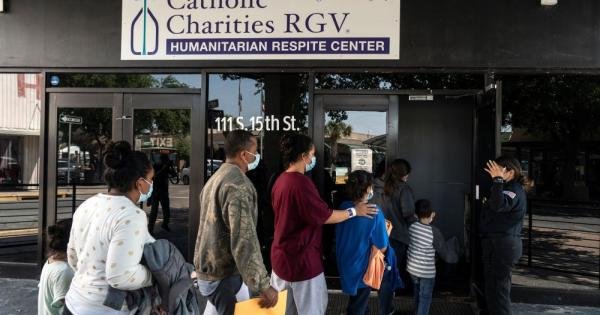
Catholic Charities of the Rio Grande Valley Faces Funding Suspension: What You Need to Know
Catholic Charities of the Rio Grande Valley (CCRGV) has recently come under scrutiny from the federal government, facing suspension of federal funding due to allegations of "incomplete and inaccurate" record-keeping. This situation is significant, as it could severely impact the agency’s operations, particularly its vital services for migrants in Brownsville, Texas.
Overview of the Suspension
On November 20, 2023, the U.S. Department of Homeland Security (DHS) conveyed its decision to suspend CCRGV’s eligibility for federal funds via a formal letter. This letter also proposed debarment—a serious measure preventing entities from receiving federal funds, often linked to allegations of misconduct such as fraud or corruption.
CCRGV’s Commitment to Compliance
In response to the suspension, Sr. Norma Pimentel, the president and CEO of CCRGV, emphasized the organization’s serious commitment to every dollar entrusted to it. The agency declared its intention to work closely with federal authorities to rectify any issues. Pimentel stressed the organization’s dedication to complying with federal grant requirements, indicating that they would act swiftly to resolve the mounting concerns.
Impact on Migrant Services
The suspension poses a significant challenge to CCRGV, particularly given its role in operating a respite center for migrants. The agency has garnered recognition from the Vatican and various U.S. church leaders for its humanitarian efforts. Nonetheless, it has also attracted criticism from conservative factions that argue that such organizations contribute to illegal immigration.
A politically conservative nonprofit, CatholicVote, accused CCRGV of contributing to disorder at the U.S.-Mexico border, illustrating the tension surrounding immigration issues in Texas politics. This culminated in Texas Attorney General Ken Paxton seeking to investigate CCRGV and halt its services aimed at assisting migrants.
Ongoing Investigations and Allegations
The DHS’s scrutiny arises amidst a broader crackdown on illegal immigration, which has characterized recent administrations. In its November 20 letter, the DHS indicated that it had undertaken a comprehensive review of CCRGV’s federal grant funds, analyzing whether the funds were being utilized to enable illegal immigration practices.
As part of this review, it was revealed that CCRGV had submitted "incomplete and inaccurate data" related to its use of Federal Emergency Management Agency (FEMA) grants. The DHS cited troubling findings, noting instances where the organization continued to assist migrants beyond the eligibility period defined by FEMA.
The inquiry revealed that CCRGV allegedly billed federal authorities improperly for services during a timeframe exceeding the permissible 45-day window allowed by FEMA grants. Joseph Mazzara, acting general counsel at DHS, articulated that whether these discrepancies stemmed from mismanagement or an intentional effort to facilitate unlawful activities, they must cease to uphold the public’s trust.
Future of Funding and Services
Following the revelations, a letter from FEMA on November 19 communicated that the agency would remain suspended from federal funding until a thorough investigation into its data collection practices could be completed. Additionally, unless CCRGV substantiates its argument against the suspension, it may face a ban from receiving federal funds for up to six years.
For the fiscal year 2023, an audited financial statement indicated that CCRGV received about $5.85 million in federal grants, constituting the bulk of its total revenue of $7.58 million.
CCRGV’s Defense and Humanitarian Mission
In its recent communications, CCRGV maintained that all funding provided by DHS primarily serves to assist migrants entrusted to the organization by U.S. Customs and Border Protection. The group emphasized its mission to provide humanitarian aid, reinforcing its focus on restoring human dignity to thousands in need.
Pimentel reiterated that the organization’s humanitarian outreach is vital, asserting that it helps restore dignity among vulnerable populations. Despite the ongoing investigations, she remains committed to defending the agency’s essential work.
Conclusion
The suspension faced by Catholic Charities of the Rio Grande Valley lit a spotlight on the complexities tied to immigration efforts in Texas. As the agency navigates its challenges, the situation underscores the intricate interplay between humanitarian work and federal regulations. Many are now watching closely to see how CCRGV will adapt to these developments and continue its mission to assist those it serves.
For more detailed insights on immigration and humanitarian issues, you can visit DHS and FEMA.
