


The Struggle for Abortion Access in Texas: A Post-Roe Reality
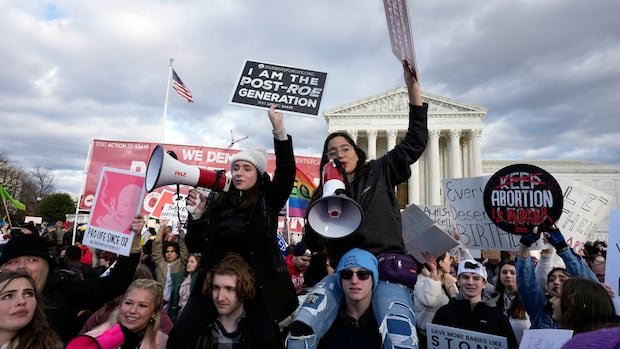
In the heart of McAllen, Texas, the ghostly outline of the "Whole Woman’s Health" sign serves as a haunting reminder of the region’s only abortion clinic, which was forced to shut its doors last summer. Now under the ownership of anti-abortion advocates, this site symbolizes the profound repercussions of the U.S. Supreme Court’s decision to overturn Roe v. Wade, stripping away a woman’s right to choose.
The Aftermath of the Dobbs Ruling
The situation escalated dramatically following the Supreme Court’s Dobbs ruling in June 2022, which nullified constitutional protections for abortion. A trigger law came into effect in Texas shortly after, effectively prohibiting nearly all abortion procedures statewide. This abrupt policy shift left many in the community, including Cathy Torres from the Frontera Fund, feeling “numb” as they witnessed a significant aspect of healthcare access vanish overnight.
Torres noted, “People have always had abortions… It’s just a matter of where and how they’re able to access them.”
As the Texas legislative session unfolds, anti-abortion lawmakers are poised to push further restrictions. Torres expresses a growing concern that they will target travel restrictions for women seeking abortion services, thus complicating an already strained situation.
The Legal Landscape and Challenges Ahead
Currently, a federal judge appointed by Donald Trump is deliberating on the legality of mifepristone, a medication commonly used in medical abortions. There’s mounting apprehension regarding future battles surrounding not only medication abortion but also basic contraceptive access. Rochelle Garza, president of the Texas Civil Rights Project, remarked on the increasing legislative confrontations ahead, stating, “Battles on medication abortion, Plan B, access to basic birth control.”
The Rio Grande Valley: An Epicenter of Abortion Access Restrictions
The Rio Grande Valley has historically been at the forefront of the abortion access discussion in Texas, previously serviced by Whole Woman’s Health, which catered to over a million residents, predominantly women of color and many undocumented individuals. Following the implementation of the trigger ban, organizations like the Frontera Fund quickly adapted, filing a federal class-action lawsuit to protect individuals navigating the new, restrictive legal landscape.
“Criminal risk is a very real concern,” Torres stated, emphasizing the fear and uncertainty surrounding those in need of assistance for reproductive health.
Emerging Networks of Support
Despite the bleak circumstances, advocacy efforts continue. Organizations like Necesito Abortar in Monterrey, Mexico, are stepping in to assist women seeking abortion services. In the months following the Texas ban, Sandra Cardona reported that over 400 women reached out for help in December alone, illustrating the increasing demand for resources across the border.
Mexico decriminalized abortion in 2021, providing a stark contrast to Texas’s restrictive environment. Cardona ensures that women can access abortion pills while navigating the complex legalities involved. Last year, her organization spent over $8,000 on misoprostol, a medication often used to manage miscarriage, further highlighting the resourcefulness and determination of those working to ensure safe access to abortions.
Crossing Borders for Care
In Nuevo Progreso, just a short walk across the Texas border, misoprostol is readily available over-the-counter without a prescription. This medication is essential for self-managed abortions and has been deemed effective and safe by the World Health Organization. Women from Texas are increasingly found purchasing misoprostol as they seek alternatives to the extreme restrictions placed on them.
However, the high-profile case of Lizelle Herrera, who faced murder charges after being suspected of inducing a miscarriage, emphasizes the frightening reality of legal repercussions that continue to loom over women navigating these scenarios.
Legislative Battles on the Horizon
As the current legislative session moves forward, advocates are tracking the numerous abortion-related bills introduced in Texas. More than 25 bills have emerged, aiming to either tighten existing regulations or, in some cases, offer attempts at reinstating abortion access. Nancy Cárdenas Peña from the National Latina Institute for Reproductive Justice notes the precarious state of legislative initiatives aimed at further criminalizing healthcare providers.
Doctors are also increasingly cautious about their legal safety while treating pregnant individuals; some even face potential felony charges. Dr. Alison Haddock from the American College of Emergency Physicians conveyed the mounting anxiety amongst medical professionals, especially when navigating high-stakes situations involving a patient’s health.
The Anti-Abortion Legislators’ Agenda
The Texas Freedom Caucus, a coalition of Republican lawmakers, continues to prioritize measures intended to roll back accessible abortion care. Representative Matt Shaheen expressed satisfaction with the progress made thus far while also highlighting targets for future restrictions, including potential prohibitions on out-of-state travel for abortion services.
Legislation aiming to recognize fetal personhood may soon be introduced, similar to laws already established in several other states. These intended measures could lead to potential criminal charges against women over pregnancy outcomes.
Conclusion: The Road Ahead
The struggle for reproductive rights in Texas remains intense and complex, with grassroots advocacy and legislative maneuvers shaping the future of abortion access. "Texas has always served as a model of conservative policy," Garza observes, indicating that the fight to restore and protect reproductive rights is far from over. "It’s clear that the anti-choice movement is relentless, and we must continue to push back robustly."
As the situation continues to evolve, those affected by these legal battles and restrictions will undoubtedly face ongoing challenges. Organizations providing support stand firm, taking important steps to navigate and mitigate the consequences of a shifting legal landscape, while empowering women to seek the care they deserve.
For additional insights and resources on reproductive rights and access to care, consider visiting The Guttmacher Institute, or Planned Parenthood, valuable sources of information and support amid evolving legislative contexts.
