


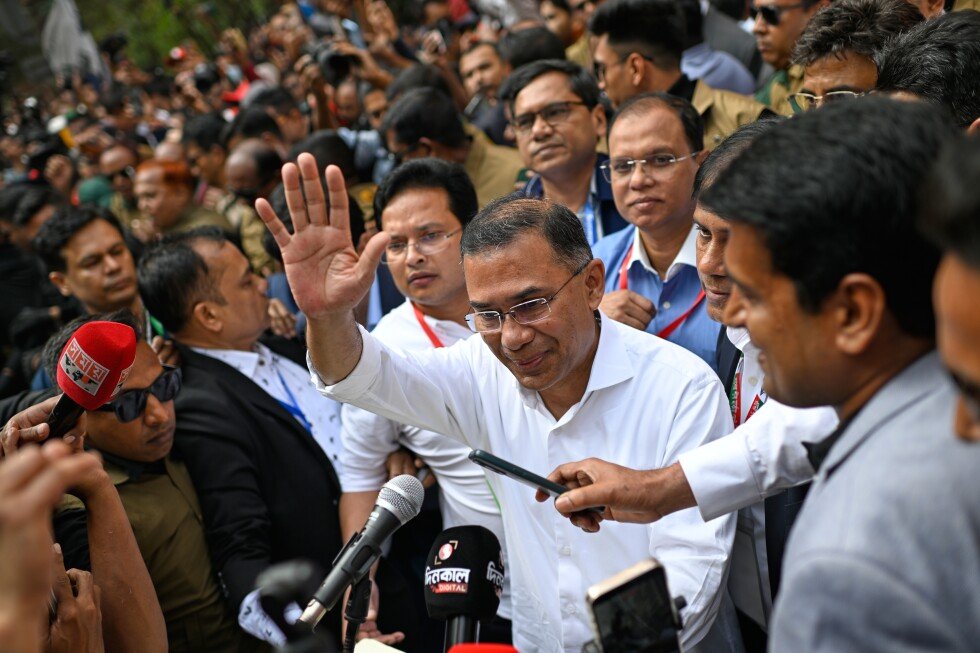
Bangladesh Nationalist Party Claims Victory in Historic Election
DHAKA, Bangladesh (AP) — In a landmark election that follows a significant uprising in 2024, the Bangladesh Nationalist Party (BNP) has declared victory as it positions itself to form the next government. This election, the first following years of intense political rivalry and conflict, could dramatically reshape the landscape of Bangladeshi politics.
Election Results and Voter Participation
The BNP announced through its media unit that it has successfully secured a majority in the Parliament, surpassing the critical 151-seat threshold in the 350-member assembly. Though the official results are yet to be released by the Election Commission, numerous local news outlets have indicated strong performance by the BNP. Approximately 59.44% of the eligible 127 million voters participated in the election, with a significant portion being women and new voters.
Leadership of Tarique Rahman
Leading the BNP is Tarique Rahman, the prime ministerial candidate and son of former Prime Minister Khaleda Zia, who recently passed away. After spending 17 years in self-imposed exile in London, Rahman returned to Bangladesh to reclaim his political role amidst allegations of corruption against him that many supporters deem politically motivated. His leadership is viewed as crucial in steering the BNP away from its legacy of political turmoil and towards genuine democratic practices.
Recognition from Foreign Leaders
The electoral victory has been recognized globally, with notable congratulations pouring in from prominent countries. The U.S. Embassy in Dhaka deemed the win a "historic victory," expressing eagerness to collaborate on mutual goals of prosperity. Similarly, the Chinese Embassy emphasized the necessity of working together to enhance China-Bangladesh relations. Leaders from India and Pakistan also celebrated Rahman’s win, acknowledging the Bangladeshi people’s confidence in his leadership and expressing a desire to foster strong democratic partnerships.
Competition from Jamaat-e-Islami
While the BNP primarily faced competition from the Jamaat-e-Islami (JI), an 11-party alliance strengthened by the influence of this conservative group, the alliance managed to secure at least 77 seats in Parliament. Despite the setbacks, JI’s leader, Shafiqur Rahman, secured a seat in Dhaka and is expected to lead the opposition. However, the group has raised concerns about the management of election results, citing unusual delays and suspicious losses in certain constituencies.
A Test of Democracy
The election served as a critical gauge of Bangladesh’s democratic integrity, occurring in a climate of heightened security and political violence. This marked the first election since the tumultuous student-led protests in mid-2024 that led to former Prime Minister Sheikh Hasina’s ousting. As part of the electoral process, a referendum concerning political reforms, including the introduction of term limits for the Prime Minister and enhanced checks on executive power, was also conducted. The outcome of this initiative remains pending.
The BNP’s Historical Context
Tarique Rahman’s BNP has a long and complex political history, marked by decades of rivalry with the Awami League party. The BNP, having spent most of the last fifteen years in opposition, has often boycotted elections, accusing Hasina’s administration of systematic electoral manipulation and oppression.
As a key member of Bangladesh’s entrenched dynastic political system, Rahman’s family has played a significant role in the country’s governance. His father, Ziaur Rahman, served as president until his assassination in 1981, while Khaleda Zia held the Prime Ministerial office for two full terms starting in 1991.
Future Challenges for the BNP
Despite this electoral win, experts caution that the BNP faces immense challenges. Michael Kugelman, a senior fellow specializing in South Asia, remarked that while the BNP’s victory might seem contrary to the spirit of the 2024 revolution, they must adapt and foster a new image, distancing themselves from past associations with corruption and dynastic politics. The party needs to demonstrate its commitment to true democratic principles to earn the public’s trust.
The unfolding political scene in Bangladesh will be closely watched, as the BNP navigates its newfound power amidst a backdrop of heightened expectations and historical complexities.
