


Rewrite a fully new long article using the information from
By Daniela Capistran, Reporter
MCALLEN, Texas — Amid ongoing federal immigration enforcement on local job sites that has slowed home construction and heightened acute regional labor shortages, the Rio Grande Valley Builders Association (RGVBA) is urging Congress to pass the Dignity Act (H.R. 4393) as a practical solution to stabilize the construction workforce while upholding border security.
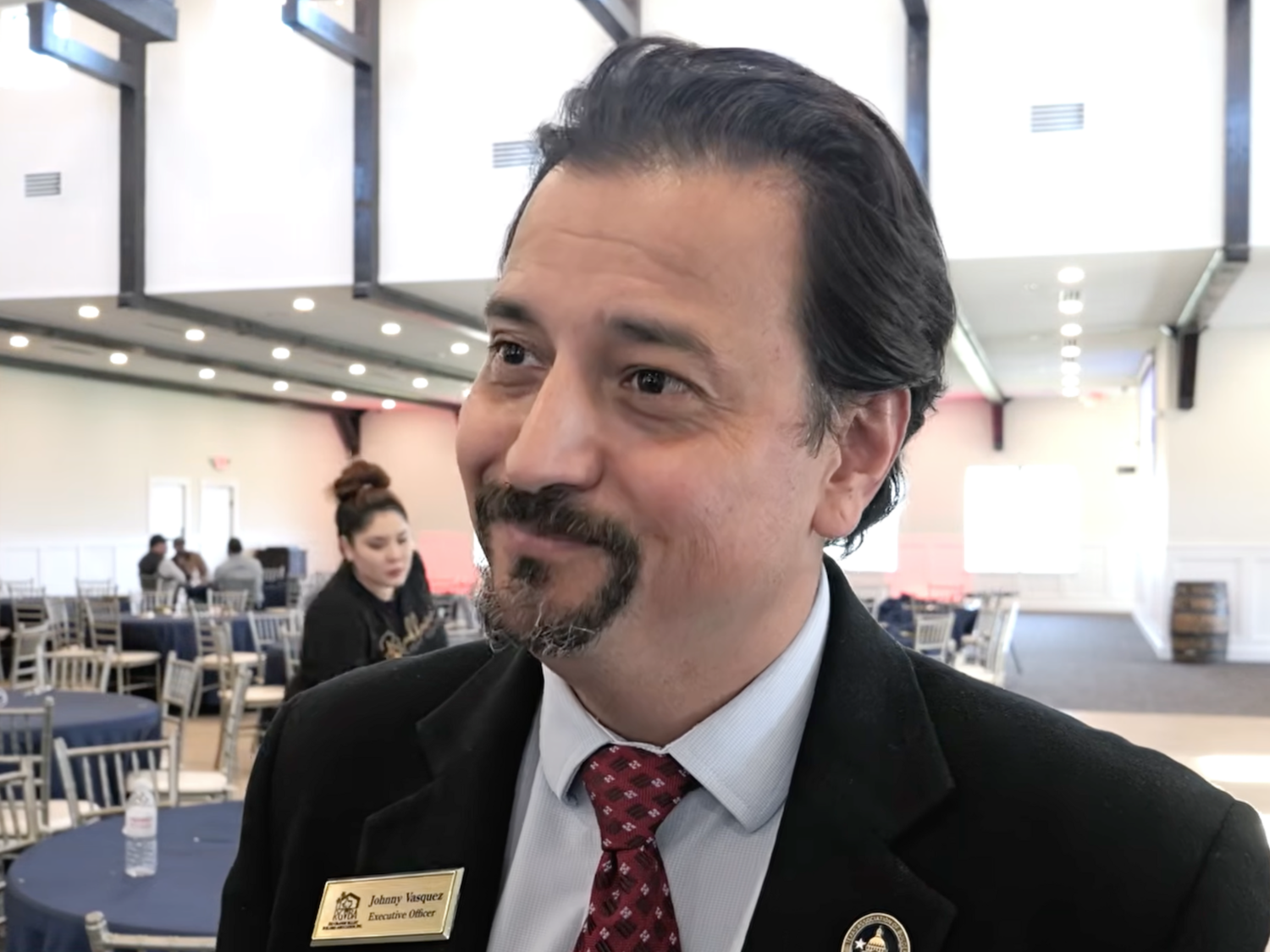
In a recent interview with the Rio Grande Guardian, RGVBA Executive Officer Johnny Vasquez voiced full support for the bipartisan legislation, championed by U.S. Rep. María Elvira Salazar (R-FL) and Rep. Veronica Escobar (D-TX), with co-sponsorship from local U.S. Rep. Monica De La Cruz (R-TX).
“We are supporting the Dignity Act,” Vasquez said. “It is an American bill. It will actually help Americans—not only immigrants who are coming here to work. It gives them a pathway to work legally, supports the American worker, and includes a border security component as well.”
The Local Impact of Construction Site Raids
The call for congressional intervention follows an uptick in Immigration and Customs Enforcement (ICE) operations on residential construction sites across South Texas that began in mid-2025.
According to Vasquez, the enforcement actions have led to severe disruption in local subdivisions. Some job sites temporarily transformed into “ghost towns” as workers avoided reporting to work due to fear of detention.
“Workers are sparse—few and far between,” Vasquez noted. “Where you would get a crew of maybe eight to 12 guys, now you have four. Build timelines that generally took three to four months are now stretching to six months.”
While acknowledging the federal government’s role in enforcing immigration law, Vasquez highlighted field reports of workers being swept up indiscriminately near job sites, driveways, or gas stations while traveling in work vehicles.
“We understand this is a government operation, and we are for the rule of law. We want our communities and our workers to be safe,” Vasquez emphasized. “But nationally, our industry is facing a deficit of over 200,000 workers, which could reach close to 400,000 under current strain. It slows everything down.”
What the Dignity Act (H.R. 4393) Means for South Texas
The Dignity Act (H.R. 4393)—officially titled the DIGNIDAD Act of 2025—is a comprehensive, bipartisan legislative package designed to modernize America’s immigration framework.
Key pillars of the legislation include:
- Legal Work Standing & Restitution: Establishes the “Dignity Program,” providing undocumented immigrants who have resided in the U.S. for at least five years a path to earn legal status. Participants must pass criminal background checks, pay federal taxes, and pay $7,000 in restitution fees over seven years. Program participants receive full work authorization but remain ineligible for federal entitlement benefits.
- Investment in American Workers: Funds a $70 billion workforce infrastructure initiatives entirely through restitution fees paid by program participants. These funds support apprenticeships, vocational training, and career technical education for U.S. citizens.
- Border Security Infrastructure: Provides enhanced physical barriers, advanced port-of-entry inspection technology, and mandatory nationwide E-Verify implementations phased in over time.
- Protections for Dreamers: Offers conditional permanent residency and an earned pathway to legal citizenship for individuals brought to the U.S. as children.
Housing Affordability and the RGV Economy
Vasquez cautioned that prolonged labor shortages carry direct economic consequences for families trying to buy a home in the Rio Grande Valley. While material tariffs have raised the floor on hard construction costs, reduced workforce availability drives up overall construction costs and limits inventory.
“It becomes an economic problem when home building slows,” Vasquez explained. “Right now, we are fortunate to have inventory on the ground in regions like McAllen and Brownsville due to major economic engines like SpaceX and LNG developments. But when that inventory dries up, prices climb, affecting home affordability for local families.”
To address long-term workforce needs locally, RGVBA—which represents 143 member companies across Hidalgo County—has partnered with organizations like RGV LEAD to connect local high school and trade school students with construction trades.
Vasquez urged elected representatives in Washington to take action on the measure: “Our message is simple: Let builders build. Keep the American Dream alive, keep rates at bay, and give hard-working people a legal way to contribute to our regional economy.”
make sure the article is SEO-optimized following all the SEO Guides, from Focus Keyword to H2 and H3 titles and so on.
the article must explain all the details in a very clear and engaging structure.
very important: Use external links for keywords and sentences inside the article you will generate to boost the SEO.
Avoid writing any author related or donation related texts.
Avoid writing what you did in the articles because the article is published for visitors to read.
