


Rewrite a fully new long article using the information from
By Clarissa Riojas
As the school year begins across the Rio Grande Valley, families prepare for familiar routines: purchasing supplies, setting early alarms, and sending children off to school. Yet beneath this back-to-school excitement, parents and educators enter the school year with an underlying concern about the future of our public schools.
During recent legislative sessions, state lawmakers passed policies affecting classrooms, including legislation focused on school safety, parental rights, and library materials, as well as a new voucher program and the creation of a new statewide Student Success Tool assessment system to be implemented in the 2027-28 school year. Although $8.5B in school funding also passed, it fell short of inflation-adjusted needs. To many educators and parents, these decisions feel increasingly disconnected from daily classroom realities. Texas currently ranks in the bottom 10 states nationally in per-pupil funding, leaving school districts across the state struggling to do more with less for our 5.4 million public school students.
At the same time, hard-working parents are facing intense economic pressure. “Their focus is survival, feeding their family, getting to work, and keeping their kids healthy,” said Noelia Barrera, a parent and public school advocate in her community. “Education gets put on the back burner for a lot of parents, not because they don’t care, but because they don’t know or might not understand the implications of these policy changes.”
Too often, families only learn about education decisions made by our state legislature when news breaks that a local campus is facing closure or consolidation. When school boards face difficult decisions about how to balance the budget amid enrollment declines and the need to make painful choices, public frustration naturally targets local leadership. However, holding local school boards responsible overlooks a structural flaw in Texas school finance.
A major misconception is that rising local property taxes automatically increase local school budgets. In reality, as local property values rise, the state share of funding declines, saving state revenue while keeping overall district funding flat. Furthermore, basic allotment funding per student rose by only $55 despite years of record inflation, and school districts have tightened their belts like the rest of us. When operational costs rise while state investment remains frozen, school districts face severe budget deficits beyond local control.
When a campus closes, a community loses far more than a building. “What happens when we lose that neighborhood school?” said Barrera. “That’s the hub. That’s the heartbeat of a community. That is where kids go to get free meals, where they make friends, where they find their first teachers, and where they attend their first career fairs.” For families without flexible transportation, local public school campuses remain an indispensable lifeline.

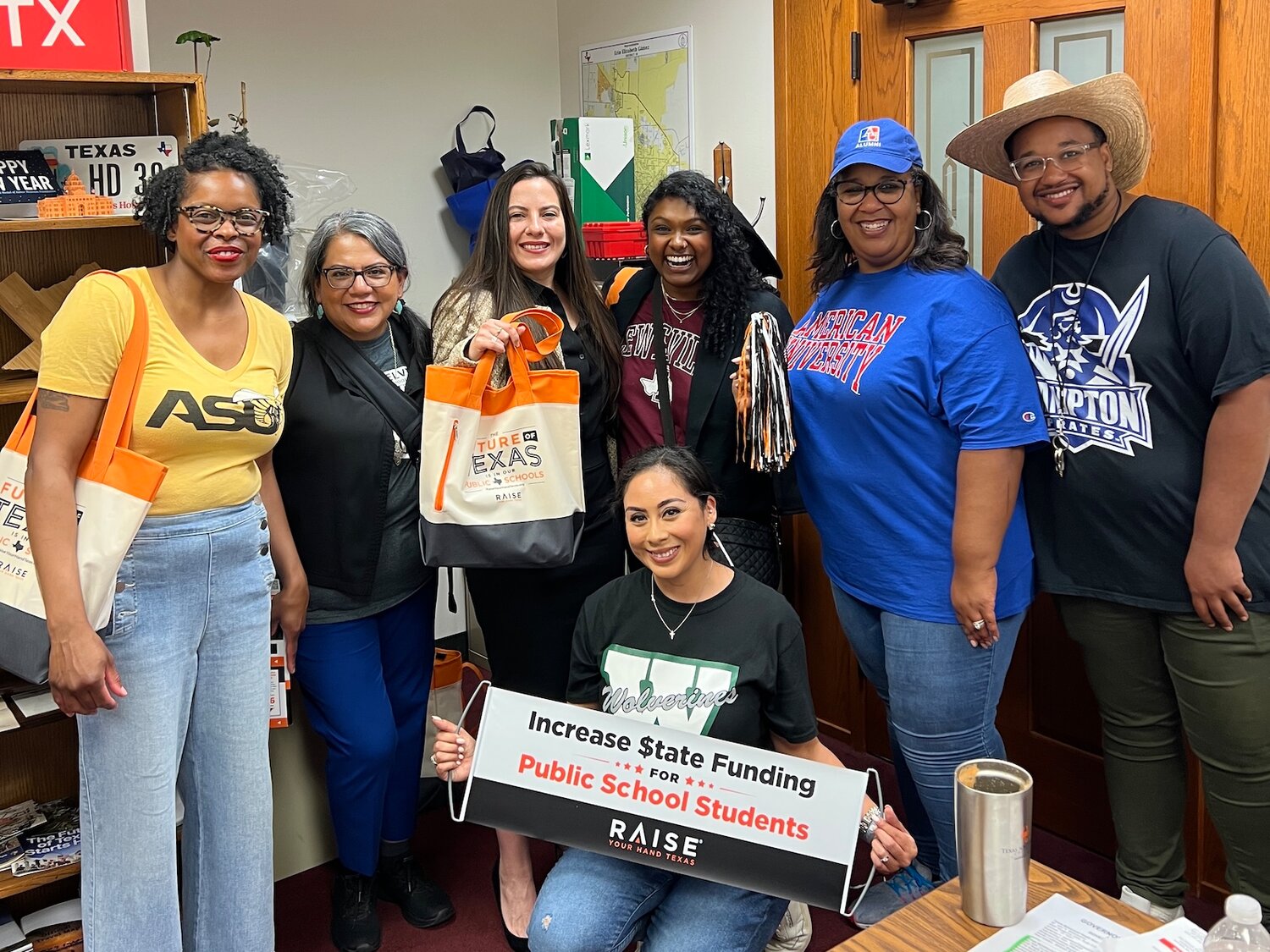
Join the Parent Teacher Association at your school, says Raise Your Hand Texas. (Photo credit: RYHT)
Supporting public education requires proactive community engagement long before closure votes occur. Raise Your Hand Texas believes an informed, engaged community builds a stronger future for every student.
RGV parents can become involved in their local communities to support their public schools:
- Show Up: Join your PTA/PTO and attend school board meetings to signal vital community support for our educators.
- Communicate Directly: Engage with teachers and administrators to stay informed about student progress and classroom needs.
- Advocate and Vote: Participate in every election to protect the programs and activities our children depend on.
“If you’re not involved or if you don’t vote or take action, the school system as we know it will go away,” said Barrera. Every child in the Rio Grande Valley deserves access to a thriving, well-funded public school close to home. By staying informed, communicating directly with schools, and voting, parents can ensure our public schools remain the heartbeat of our communities and hold the key to Texas’s future.

Clarissa Riojas, Raise Your Hand Texas’ regional advocacy director for the Rio Grande Valley.
Joel Goudeau
Editor’s Note: The above guest column was penned by Clarissa Riojas, M.Ed., the Regional Advocacy Director for Raise Your Hand Texas in the Rio Grande Valley. Connect with Raise Your Hand Texas at go.ryht.org/subscribe.
make sure the article is SEO-optimized following all the SEO Guides, from Focus Keyword to H2 and H3 titles and so on.
the article must explain all the details in a very clear and engaging structure.
very important: Use external links for keywords and sentences inside the article you will generate to boost the SEO.
Avoid writing any author related or donation related texts.
Avoid writing what you did in the articles because the article is published for visitors to read.
