


Rewrite a fully new long article using the information from
By Steve Taylor and Daniela Capistran, Reporters
EDINBURG, Texas — A sweeping regional movement to shift South Texas from a model of reactive “sick care” to proactive health and longevity is gaining significant momentum across Hidalgo and Cameron counties.
In a series of community report-outs held late last month, Methodist Healthcare Ministries of South Texas revealed the results of an exhaustive six-month feasibility assessment evaluating four major Hidalgo County cities—McAllen, Edinburg, Mission, and Pharr. The findings indicate that all four municipalities possess the readiness, leadership backing, and community infrastructure necessary to embrace a full-scale “Blue Zones” transformation.
Blue Zones, a health and longevity concept pioneered by National Geographic Fellow and author Dan Buettner, identifies regions around the globe where people live measurably longer, healthier lives—often reaching age 100 at rates up to ten times higher than in the United States. Rather than relying on individual willpower or clinical interventions, the Blue Zones approach transforms the surrounding environment. It focuses on the “Power 9″—a set of common lifestyle habits found among the world’s longest-lived populations, including natural daily movement, strong social connections, a clear sense of purpose, and a stress-conscious, plant-slant diet—making healthy choices the easiest and most accessible options for residents.
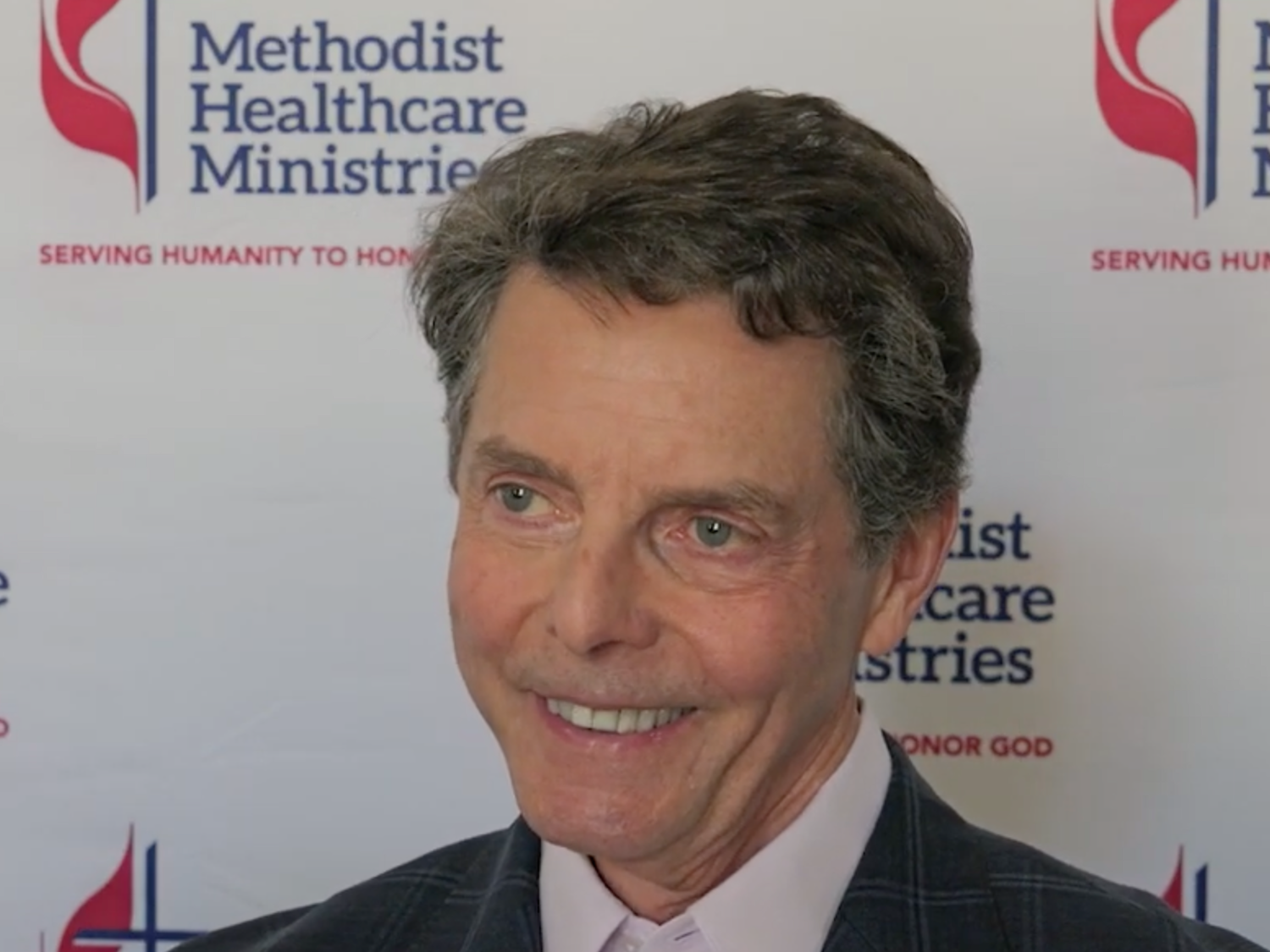
Jaime Wesolowski, president and chief executive officer of Methodist Healthcare Ministries, expressed unreserved enthusiasm following the city presentations.
“It’s been incredibly exciting,” Wesolowski said. “We did a six-month assessment starting early this year of four major cities in Hidalgo County… and the good news is that all four cities are ready to embrace a Blue Zones-type lifestyle.”
Meeting the Benchmark
To qualify for the initiative, participating cities were evaluated on a composite readiness score, with a threshold set at 4.0. Individual municipal scores reflected strong civic alignment: Pharr earned a 4.2, McAllen scored 4.0, Edinburg posted 3.9, and Mission reached 3.7.
When aggregated across the entire population, the four-city cluster comfortably meets the regional benchmark at 4.0.
“Even 3.7 is a very strong score,” Wesolowski emphasized, noting that every evaluated city proved its capability to drive environmental and lifestyle policy changes. “I’ve spent my whole life as a hospital CEO, and I am very proud of the work I did as a hospital CEO. But that was sick care. I’m so excited about this because this is an opportunity to keep people from getting sick, and it’s just improving the health and well-being of the Valley.”
The urge to pivot toward preventative community health comes amid national statistics showing the U.S. lagging in life expectancy despite spending more per capita on clinical healthcare than any other industrialized nation. High rates of chronic illnesses, including Type 2 diabetes, cardiovascular disease, and obesity, remain persistent public health challenges throughout the Rio Grande Valley.
Expanding to Seven Cities: A World-First Vision
What began as a localized study could soon evolve into the largest health transformation project ever undertaken by Blue Zones globally.
Building on the momentum in Hidalgo County, the Valley Baptist Legacy Foundation and the Knapp Community Care Foundation have stepped forward to fund assessments for three additional municipalities: Harlingen, Brownsville, and Weslaco.
If all three additional cities score high enough to move forward, the initiative will encompass seven Rio Grande Valley cities—creating an unprecedented multi-city model for community wellness.
“If all seven cities are selected to go forward in this, this would be the largest Blue Zones program that’s ever been attempted,” Wesolowski said.
To track tangible progress, outcomes will be independently audited and measured by Gallup, establishing verified metrics on public health improvements and overall well-being.
Hidalgo County leadership has embraced the regional scope from the outset. Hidalgo County Judge Richard F. Cortez was among the first officials consulted when the initiative was first conceptualized.
“Judge Cortez was the first person we met with to see what he thought about us doing this in Hidalgo County, and he said in that meeting, ‘Why don’t you just do the whole county?’” Wesolowski recalled. “As it turns out, maybe we will now.”
Tapping Regional Assets and National Attention
A key component of the strategy will involve leveraging the Rio Grande Valley’s unique economic and agricultural strengths. Pointing to Pharr—home to the Pharr International Bridge, a major international gateway for imported fresh produce and cold storage—leaders see an opportunity to collaborate with trade groups like the Texas International Produce Association, regional transport firms, and agricultural producers to tackle local food deserts and increase fresh food access.
The ambitious endeavor is already catching national and international eyes. Founder Dan Buettner has initiated discussions with national media entities, including Netflix and major broadcast networks like ABC, about documenting the Rio Grande Valley’s health transformation from its inception.
Funding and Next Steps
Methodist Healthcare Ministries invested nearly $1 million to fund the initial Hidalgo County assessment. However, executing the long-term, multi-year transformation across all seven cities will require a broad coalition of public and private funding.
While Methodist Healthcare Ministries, the Valley Baptist Legacy Foundation, and the Knapp Community Care Foundation are prepared to cover half of the total cost, leaders are issuing a call to action for major regional employers, healthcare systems, and corporate entities—such as H-E-B, DHR Health, Driscoll Children’s Hospital, Blue Cross Blue Shield, and Molina Healthcare—to step up as co-sponsors.
“It takes a village,” Wesolowski said. “We’re going to have a program that’s transformational. I can’t wait to look back 10 years to see what we have created in the Rio Grande Valley… we’re going to start teaching our families how to live healthier.”
make sure the article is SEO-optimized following all the SEO Guides, from Focus Keyword to H2 and H3 titles and so on.
the article must explain all the details in a very clear and engaging structure.
very important: Use external links for keywords and sentences inside the article you will generate to boost the SEO.
Avoid writing any author related or donation related texts.
Avoid writing what you did in the articles because the article is published for visitors to read.
