


Rewrite a fully new long article using the information from
By Steve Taylor and Dayna Reyes
BROWNSVILLE, Texas – The South Texas Environmental Justice Network sent questionnaires to all six candidates running for the Brownsville Navigation District board. Of the six, only two candidates responded.
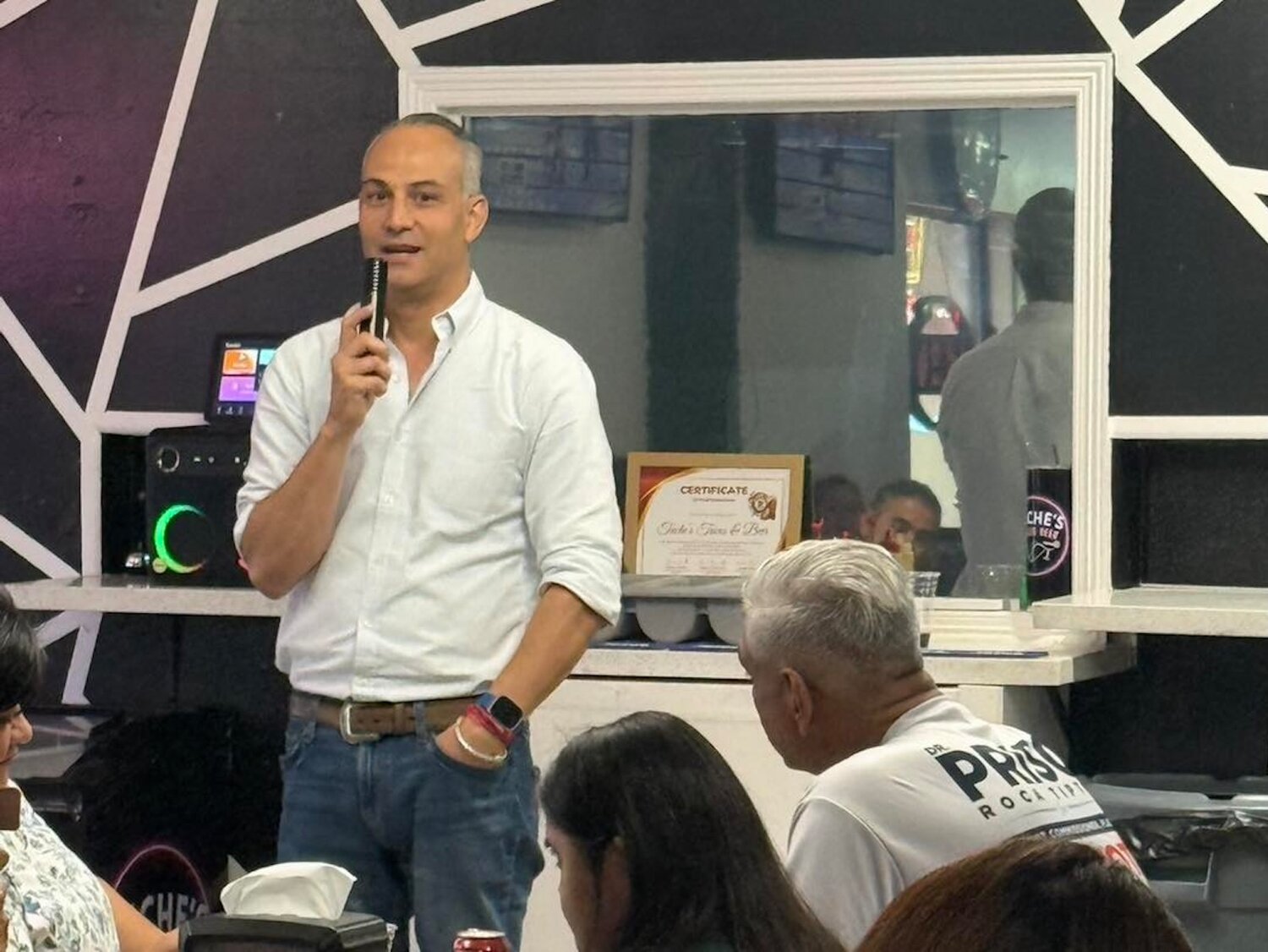
Shariff Gonnella, a candidate for Place 2, and Prisci Roca Tipton, a candidate for Place 4, were the ones that answered the questions.
David A. Garcia and Alex Najera, candidates for Place 2, and Luis Villarreal and Martha Davila, candidates for Place 4, did not respond at all.
“The development of projects at the Port of Brownsville, such as the buildout of Rio Grande LNG, Texas LNG, SpaceX, the recently announced America First Oil Refinery, and Saronic Technologies, raises urgent questions about our community’s ethics, water security, public health, and long-term resilience,” said Bekah Hinojosa, co-founder of STEJN.
“The decisions made by Port Commissioners are felt for so much longer than a four-year term; they’re felt for generations. These decisions shape our landscape and impact our water, air, and health.
“We were looking forward to learning how the Port candidates plan to address these ethical and environmental concerns. And so, we’re incredibly disappointed that four of these candidates gave us no response to our environmental candidate questionnaire.”
Gonnella is president of Brownsville & Rio Grande International Railway, which runs the OmniTrax rail line inside the Port of Brownsville. He provided depth in his answers.
Roca Tipton, a higher education administrator, provided shorter answers than Gonnella.
Here are some examples:
Transparency & Accountability
Question:
What specific measures will you advocate for to ensure that there is full transparency in the Port of Brownsville’s operations, such as responding to public records requests and public access to site lease agreements and negotiations with corporations?
Roca Tipton’s answer:
I understand the Port should operate under public information laws and can do better in how we communicate. People shouldn’t have to dig for basic information. Clear summaries and timely updates can build trust without slowing down business.
Gonnella’s answer:
Transparency and accountability are fundamental to building public trust. As Port Commissioner, I would support timely and complete responses to public records requests, clear communication with the public, and greater visibility into major agreements and decisions, while still respecting legal and competitive requirements.
I would also advocate for quarterly town halls where the Port can provide updates on its priorities, major projects, and ongoing work, while giving the public a direct opportunity to ask questions and provide feedback. In addition, I would encourage more community members to attend the twice monthly Board meetings so they can hear discussions firsthand, stay informed on projects, and have a voice in the public process.
I also believe that before any significant vote on a project that may carry serious environmental, public health, or quality of life impacts, the public should have a meaningful opportunity to be informed, ask questions, and be heard.
The community should be informed, engaged, and able to understand how and why decisions are made, especially when those decisions may have lasting impacts on Brownsville and the surrounding region.
Water Security
Question:
Given the increasing industrial water use demand for the current industries at the Port, what steps would you take as part of the Port Commission to ensure sustainable water management that prioritizes water availability for families to meet their basic needs?
Roca Tipton’s answer:
We’re in a real water situation right now, and that has to be taken seriously. I would want to see long-term planning that includes both residential needs and industrial growth, working closely with our water authorities so we don’t overextend our supply.
Gonnella’s answer:
Water security is one of the most urgent issues facing our region, and it must be addressed with discipline and long-term thinking. As Port Commissioner, I would support requiring a clearer review of industrial water demand before major projects move forward, stronger expectations for water efficiency and reuse, and closer coordination with local and regional water authorities to make sure growth at the Port does not outpace the region’s actual water supply. The needs of families and the community must always come first.
I also believe we should encourage innovation. There are examples around the world of facilities that significantly reduce or offset their water and energy consumption through rainwater capture, recycling systems, and integrated design. While not every solution applies everywhere, we should be looking at how to incorporate those principles into future
development at the Port. The goal is simple: responsible growth that does not outpace our resources and does not place additional strain on an already limited water supply.
Industrial Development
Question:
Large, multi-billion-dollar corporations are proposed for the Port of Brownsville, including LNG export terminals, Saronic Technologies, America First Refinery, a lithium refinery, and the proposed expansion of SpaceX. What is your stance on these proposed refineries, fossil fuel industries, military manufacturing, and private space corporation projects at the Port of Brownsville? Please elaborate.
Roca Tipton’s answer:
There are major projects being proposed, and I understand the importance of jobs and economic growth. At the same time, those decisions carry long-term impacts. Each project should be looked at carefully—what it brings, what it requires, and how it affects our community over time.
Gonnella’s answer:
This is a complex question, but I do not believe all projects should be treated the same. Each must be evaluated on its own merits, and it is important to distinguish between projects that are already established or well underway and those that are still under review.
For projects that are already operating or significantly advanced, such as SpaceX and LNG developments, the focus should be on working with these entities to ensure strong oversight, strict compliance with environmental standards, and ongoing accountability so they operate responsibly and minimize impacts on our community. This also includes making sure there are clear safeguards in place to prevent, monitor, and address any environmental harm before it becomes too late.
For projects that are still under consideration, including proposals such as refineries, lithium processing, or new manufacturing operations, there is a responsibility to evaluate them carefully before any decision is made. That evaluation must include environmental and public health impacts, water and energy demands, long-term economic value, and alignment with the community’s priorities.
My approach is to support responsible development that brings real economic benefit (jobs, investment, and long-term growth) while protecting our environment and quality of life. I will not support projects where the long-term risks clearly outweigh the long-term benefits to our community.
Projects of that scale, including refineries, require a higher level of scrutiny because of their long term economic, environmental, and infrastructure impact. While I understand why people see them as opportunities for jobs and economic growth, it is also important to recognize that they come with real tradeoffs. In many cases, these types of facilities are located away from dense population centers due to emissions, noise, and heavy industrial activity. That highlights the level of impact they can have and why they must be evaluated carefully. Any decision must be based on a full understanding of those risks, supported by data, and weighed against the long-term interests of the community.
I also believe that decisions of this scale must involve transparency and meaningful public engagement, ensuring that the community has the opportunity to be informed, ask questions, and be heard before any final decision is made. The goal is not simply to bring more industry, but to bring the right industry, development that is sustainable, clean, responsible, and aligned with the future we want for Brownsville.
Climate Change
Question:
Climate change is an existential threat to us all, but it is primarily low-income communities like the Rio Grande Valley that are forced to deal with extreme heat, hurricanes, flooding, and
extreme drought. What steps would you take as Port Commissioner to address climate change?
Roca Tipton’s answer:
We are definitely already seeing the effects—heat, storms, and water issues. I think the Port has to plan for that so we’re not reacting later.
Gonnella’s answer:
Climate change is already impacting our region, and it must be taken seriously as part of long-term planning for the Port and our community. One of the challenges today is that we do not have a clear long-term master plan that guides how the Port should grow over the next 20 to 30 years. Without that framework, it becomes much more difficult to plan responsibly for issues like extreme weather, water availability, infrastructure resilience, and long-term environmental impact.
As Port Commissioner, I would support the development of a comprehensive long-term master plan that incorporates climate resilience, sustainable growth, and infrastructure planning. That includes preparing for flooding, heat, and storms, improving operational efficiency, and encouraging development that aligns with environmental responsibility.
It also means making sure that major projects are evaluated not only for their economic benefits, but for their long-term environmental impact and how they fit into the region’s future. Planning for growth without considering climate risks is not responsible planning.
My focus is on ensuring that the Port remains competitive while also being prepared for the challenges ahead, protecting our community, our environment, and the long-term sustainability of the region. Addressing climate change at the Port is not about ideology. It is about managing risk, planning responsibly, and making decisions that protect both our economy and our quality of life for future generations.
Wood’s perspective

Retiring Brownsville Navigation District Commissioner John Wood.
Retiring BND Commissioner John Wood has endorsed Gonnella. He explained why:
“I have had the privilege of serving as a Port of Brownsville Commissioner since 2014, working alongside my fellow Commissioners, Port leadership, community leaders, and local stakeholders to support responsible growth and strengthen the Port’s role as a vital economic engine for our region.
“As the Port continues to build on its momentum and seize new opportunities, it’s important that we maintain a clear focus on thoughtful planning, effective coordination, and strong stewardship of public resources. That’s why I am proud to endorse Shariff Gonnella for Brownsville Navigation District Commissioner, Place 2.”
Wood said Gonnella has experience in transportation, logistics, and infrastructure. He said he also has practical understanding of how the Port ecosystem operates and what it takes to deliver outcomes.
“Shariff brings deep experience and a collaborative approach grounded in accountability and public trust. I believe he will be a strong addition to the Board and a constructive partner to Port leadership, tenants, and the community as we continue moving the Port of Brownsville forward.”
Wood added: “Shariff is committed to responsible growth, steady leadership, and delivering long-term opportunity for the people of Brownsville.”
Hinojosa’s perspective
In an interview with the Rio Grande Guardian, South Texas Environmental Justice Network’s Hinojosa said her group is very concerned about the level of transparency shown by BND.
“They don’t live stream their meetings. They also don’t put out any documents about their agenda items before they vote. Cameron County does that, the City of Brownsville Commission, they put the supporting documents with the agenda items for the public for the public to see. We’ve asked Brownsville Navigation District to do this, and they have ignored that request,” Hinojosa said.
“I’ve also put in numerous records requests. For example, I put in a records request about Project Hercules. What is it? They haven’t responded to my records request within the 10 days as they’re supposed to.”
make sure the article is SEO-optimized following all the SEO Guides, from Focus Keyword to H2 and H3 titles and so on.
the article must explain all the details in a very clear and engaging structure.
very important: Use external links for keywords and sentences inside the article you will generate to boost the SEO.
Avoid writing any author related or donation related texts.
Avoid writing what you did in the articles because the article is published for visitors to read.
