


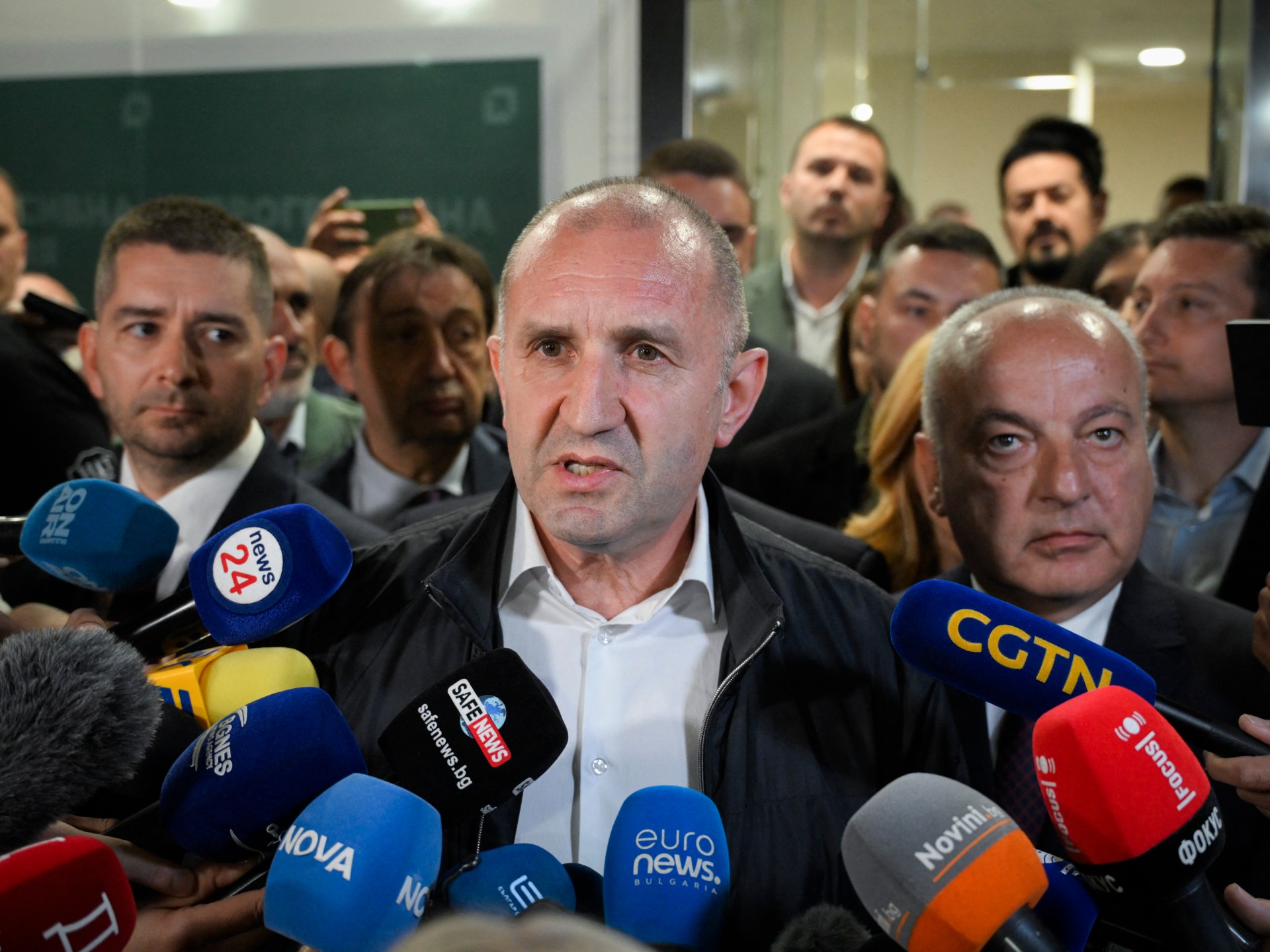
Bulgaria’s Parliamentary Election: Radev’s Progressive Bulgaria Commands Majority Support
Bulgaria has witnessed a significant political shift, with exit polls predicting that former President Rumen Radev’s centre-left Progressive Bulgaria party is likely to win approximately 38.1% of the vote in the most recent parliamentary elections. This election marks the eighth time Bulgarians have cast their votes in just five years, a period characterized by instability following mass protests that led to the ousting of a conservative government in December.
The Results and Political Landscape
While the official results are yet to be published, the exit poll conducted by Alpha Research has stirred discussions across the political landscape. Following Progressive Bulgaria, the conservative GERB party, led by former Prime Minister Boyko Borissov, is projected to secure 15.9% of the vote, placing them in second position. The reformist coalition We Continue the Change-Democratic Bulgaria (PP-DB) is predicted to finish third with 14.1% of the electorate’s support.
Radev has expressed a willingness to collaborate with these parties, but he also signaled that forming a minority government could be a viable alternative. Borissov acknowledged on social media that although elections determine the leading party, negotiations play a crucial role in deciding governance.
Radev’s Political Journey
Rumen Radev, a left-leaning eurosceptic, stepped down from his position as president in January after a remarkable nine-year tenure to pursue the role of prime minister. He has been a staunch advocate for the anticorruption protests that mobilized hundreds of thousands of young Bulgarians in December. Radev’s campaign emphasizes a commitment to dismantling the “oligarchic governance model,” aiming for a robust and stable government to prevent the need for further elections, which he described as "ruinous for Bulgaria."
“We will do everything possible to ensure stable governance,” Radev commented following the exit poll results. “We are prepared to explore various options to secure Bulgaria’s future.”
A History of Fragmentation
Bulgaria’s recent history has seen a series of fragmented parliaments, with coalitions struggling to maintain their unity for more than a year since 2021. Radev’s electoral success could potentially herald a new chapter for the Balkan country, facilitating more stable governance moving forward.
Former Prime Minister Boyko Borissov casts his vote in a polling station in Bankya, Bulgaria, on April 19, 2026. (AP Photo/Valentina Petrova)
Foreign Policy Stance and Implications
As this election unfolds, Radev has maintained a call for renewing ties with Moscow while expressing opposition to military support for Ukraine amid its conflict with Russia. His stance has drawn criticism from various quarters, leading to accusations of being overly pro-Russian, especially following Bulgaria’s signing of a 10-year defense agreement with Ukraine in March.
Regional Context and Broader Implications
The Bulgarian election arrives on the heels of political upheaval in Hungary, where right-wing Prime Minister Viktor Orban faced defeat after 16 years in power, yielding to the center-leaning Tisza party led by Péter Magyar. This shifting political tide in Eastern Europe suggests a broader trend towards progressive governance countering established conservative regimes.
Bulgaria, having joined the European Union in 2007, recently adopted the euro as its official currency in January. This economic integration might further influence the political decisions to be made in the near future, shaping the country’s trajectory within the EU framework.
Conclusion
As the dust settles from this election, all eyes will be on Radev and his Progressive Bulgaria party, as they seek to navigate the complex political landscape and form a government that can finally bring stability to a country challenged by years of fragmentation. The implications of these elections are significant not only for Bulgaria but also for the wider regional dynamics in Eastern Europe.
For continuous updates on Bulgaria’s political scene, stay tuned to reliable sources for ongoing coverage.
