


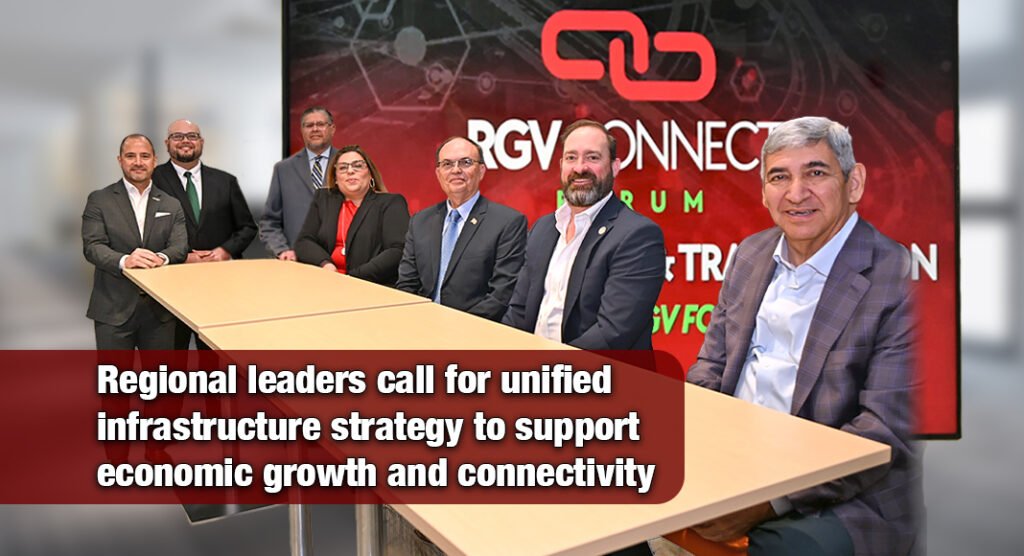
RGV Connect Forum: A Catalyst for Infrastructure Development in the Rio Grande Valley
The Rio Grande Valley (RGV) is poised for significant transformation, particularly in the realms of transportation and trade. The recent RGV Connect Forum’s inaugural Transportation and Trade Session has opened the floor for critical dialogues among regional leaders, aimed at enhancing the infrastructure that supports economic development in this vibrant region.
Key Highlights from the RGV Connect Forum
Held under the joint auspices of the Mission Economic Development Corporation and the Rio Grande Valley Partnership, this event assembled a diverse group of experts and decision-makers to discuss the pressing needs of infrastructure in the RGV. The session kicked off with opening remarks from key representatives, Teclo Garcia and Paco Sanchez, who set the stage for an enlightening discussion moderated by Ron Garza of the University of Texas Rio Grande Valley (UT-RGV).
The Infrastructure Challenge
A central theme of the forum was the pressing need for enhanced infrastructure to facilitate economic growth. Ron Garza led a panel featuring influential figures like Pete Sepulveda Jr., Cameron County Administrator; Walker Smith, Port Director and CEO of the Port of Harlingen Authority; Jesus Reyna, Interim City Manager of Donna; and Maricela Gonzales, Bridge Operations Manager for the City of Donna.
Pete Sepulveda Jr.’s Insights
Sepulveda emphasized the need for a robust infrastructure system, noting that Cameron County has a $2 billion plan designed to bolster sectors like energy, aerospace, and national security. "We are the largest metropolitan area in the United States without a complete interstate corridor," he cautioned. The completion of projects like the I-69 connector could not only remedy this but also cater to anticipated growth in essential industries.
Walker Smith on Port Infrastructure
Walker Smith pointed out that the Port of Harlingen is critical to the RGV, supplying approximately 70% of the region’s fuel. Yet, he lamented the constrained rail infrastructure that poses a challenge for logistics. "We must enhance our rail systems to connect our overweight corridors, facilitating seamless heavy cargo movement between the ports and Mexico," Smith asserted.
Expansion of Trade Corridors
Reyna and Gonzales highlighted a pivotal $80 million project aimed at expanding the Donna-Rio Bravo Bridge to accommodate full commercial traffic. "Our bridge expansion is shovel-ready," Reyna announced, while Gonzales stressed the delays caused by lack of funding for the International Bridge Trade Corridor (IBTC). "Without adequate funding, we cannot fully realize the potential of this critical infrastructure," she stated.
Connectivity as a Central Theme
Throughout the discussions, the emphasis remained on connectivity. The panel stressed the importance of developing interstate highways, linking overweight corridors, and expanding rail infrastructure to create efficient local trade corridors. As a unified region, the RGV’s four counties must collaborate to advocate for necessary state and federal support to realize these ambitious goals.
Funding and Legislative Advocacy
Funding emerged as a hot topic, with Sepulveda calling for legislative tools that would enable local agencies to establish sustainable funding sources. "We need more than just one-time appropriations; we need a structural change in how we fund these essential projects," he emphasized.
Future Trade Opportunities
Panelists also considered the upcoming review of the United States-Mexico-Canada Agreement (USMCA) and the rising trend of nearshoring, both of which are expected to spur increased trade with Mexico. These elements underscore the critical necessity for a modernized infrastructure to support anticipated growth.
Mission International Innovation District
The event concluded with Teclo Garcia introducing the Mission International Innovation District, a visionary 7,000-acre development zone aimed at fostering innovation and economic growth in South Mission. This initiative promises to be a cornerstone for future developments in the region, contributing significantly to local economic prosperity.
Launch of a New Regional Initiative
According to Paco Sanchez, president of the Rio Grande Valley Partnership, this forum marked the beginning of a new era for regional collaboration. "RGV Connect aims to promote community conversations that will influence our advocacy agenda at both state and national levels," he stated.
In conclusion, the RGV Connect Forum is not just a gathering of influential leaders; it represents a strategic initiative aimed at reshaping the economic landscape of the Rio Grande Valley. With focused discussions on infrastructure development, connectivity, and sustainable funding, the future looks promising for this vibrant region.
For further details on the mission of the Rio Grande Valley Partnership, visit their official site. Explore additional resources and news updates related to infrastructure projects and trade developments in the RGV through comprehensive platforms like Texas Border Business.
