


Alexander Lukashenko’s Landmark Visit to North Korea: Strengthening Ties with Kim Jong Un
On Wednesday, Belarusian President Alexander Lukashenko made a significant entrance into North Korea’s capital, marking the beginning of an official visit that aims to fortify the diplomatic ties between Belarus and North Korea. This visit comes at a time when both nations are exploring avenues to enhance their cooperation in various fields.
A Warm Welcome in Pyongyang
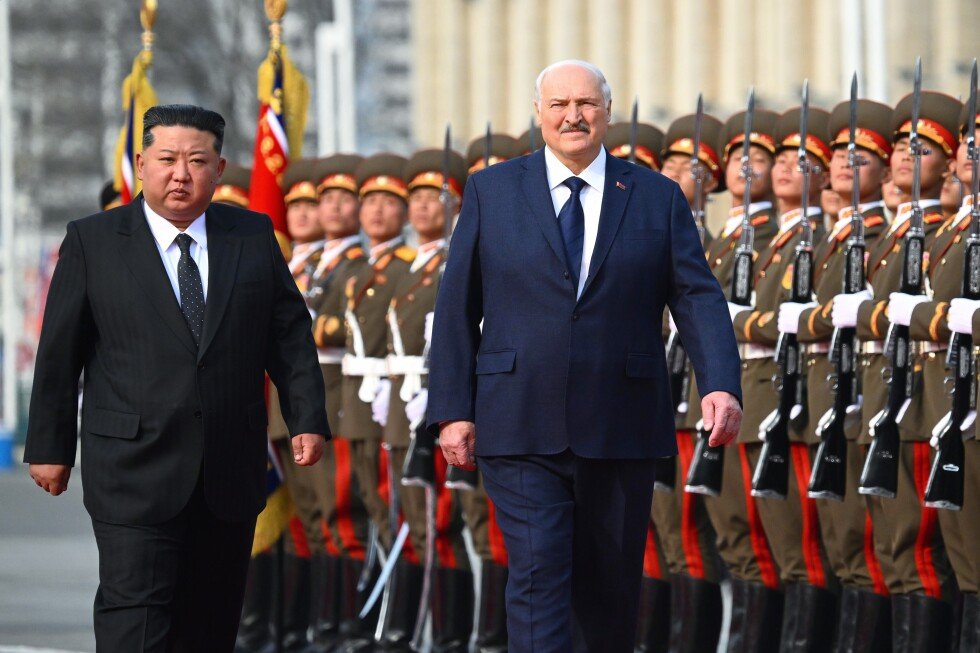
Upon his arrival at Pyongyang’s airport, Lukashenko was greeted by North Korean Vice Premier Kim Tok Hun. Later, a ceremonial reception took place at Kim Il Sung Square, where he met Kim Jong Un. This ceremonial welcoming, complete with military honors, reflects the importance of this meeting for both countries.
Paying Respects to History
One notable highlight of Lukashenko’s visit was the laying of flowers at a memorial honoring Soviet soldiers who lost their lives during the 1950–53 Korean War. This conflict saw North Korean and Chinese forces clash with South Korea and U.S.-led UN troops, with the Soviet Union playing a vital supportive role, supplying ammunition, aircraft, and pilots to North Korea.
Following this homage, Lukashenko also visited the mausoleum showcasing the embalmed bodies of Kim Il Sung and Kim Jong Il, North Korea’s first two leaders. This stop is a clear indication of the respect and acknowledgement of the country’s revolutionary history.
Political Context: Allies in Conflict
For over three decades, Lukashenko has been the autocratic leader of Belarus, closely aligning his administration with the Kremlin. His government has granted Russia the use of its territory to launch a large-scale invasion of Ukraine, which began in February 2022. The implications of this partnership also extend to military alliances, as Lukashenko has allowed Russian tactical nuclear weapons to be stationed in Belarus.
In contrast, Kim Jong Un has demonstrated a growing partnership with Russia, having sent military support, including weapons and troops, to assist President Vladimir Putin in the Ukraine conflict. This strategic alignment underscores both leaders’ goal of defying Western influence and strengthening ties with countries that oppose the United States.
Kim’s Rhetoric Against the West
In a recent speech delivered to North Korea’s parliament, Kim accused the United States of engaging in "state terrorism and aggression." He particularly referenced the ongoing conflict in the Middle East, advocating for North Korea to take a more pronounced role in uniting against perceived American imperialism. This statement reveals North Korea’s aggressive foreign policy stance amid rising global tensions.
Future Collaborations: A Treaty on the Horizon
The agenda for Lukashenko’s visit also encompasses discussions about bilateral relations between North Korea and Belarus. Belarus’ state news agency Belta noted that both leaders plan to touch on enhancing their cooperation, with a friendship and cooperation treaty envisioned for signing during this visit.
Lukashenko’s last meeting with Kim was in September 2025 in Beijing, before this significant visit. Additionally, in 2024, Belarusian Foreign Minister Maxim Ryzhenkov traveled to North Korea, highlighting ongoing diplomatic engagement between the two nations.
Conclusion: A New Chapter in Sino-Belarusian Relations
As Alexander Lukashenko and Kim Jong Un engage in discussions on future collaborations, their alliance showcases a significant shift in international diplomacy amid ongoing geopolitical battles. Both leaders aim to strengthen their positions against Western powers while fostering mutual support for their respective regimes.
As their friendship deepens, it remains to be seen how this partnership will affect regional stability and international relations. Drawing from their shared narratives of resilience in the face of Western pressure, Belarus and North Korea are aptly positioned to reclaim a powerful role in Eastern geopolitical dynamics.
For more details regarding Belarus and North Korea’s diplomatic relations, visit AP News.
