


The Impact of Texas Policies on Families of Trans Youth: A Community Under Siege
Introduction
The landscape for transgender rights and support in Texas has sharply shifted, especially for families living along the Texas-Mexico border. A retired speech therapist, Sara Parsons, has been at the forefront of this community impact after her daughter came out as transgender six years ago. Today, Parsons supports local families via a newly formed support group amidst an environment increasingly hostile toward trans individuals and their families.
Rising Concerns: Child Protective Services Investigations
Recent actions by Texas officials have heightened concerns among parents of trans children. In February, Attorney General Ken Paxton issued a controversial legal opinion suggesting that gender-affirming healthcare for minors could be construed as child abuse. This prompted Governor Greg Abbott to direct the Texas Department of Family and Protective Services (DFPS) to investigate any reports concerning such care. This directive has resulted in a palpable sense of fear within communities, particularly in the Rio Grande Valley where Parsons operates.
Parsons reports having heard firsthand about families becoming the subject of investigations by Child Protective Services (CPS) due to their support for trans identities. "I have friends here in the Valley that have already been notified by CPS… but the gist of the whole matter is that they were still investigated and they’re still under investigation," she explained.
Legal Challenges and Uncertainty
Legal actions surrounding these policies have left many confused about their implications. A Texas appeals court did reinstate an injunction against these investigations, intending to make a decision regarding their validity in July. However, Paxton quickly appealed to the Texas Supreme Court, effectively perpetuating the uncertainty for parents and CPS workers alike.
Amidst this legal fog, Parsons indicates that many parents have become wary of sharing their experiences, opting for anonymity instead. "A lot of people in our group now are just way too afraid, intimidated, to go out to show their faces," she stated, reflecting the profound anxiety felt within the community.
Civic Participation in Jeopardy
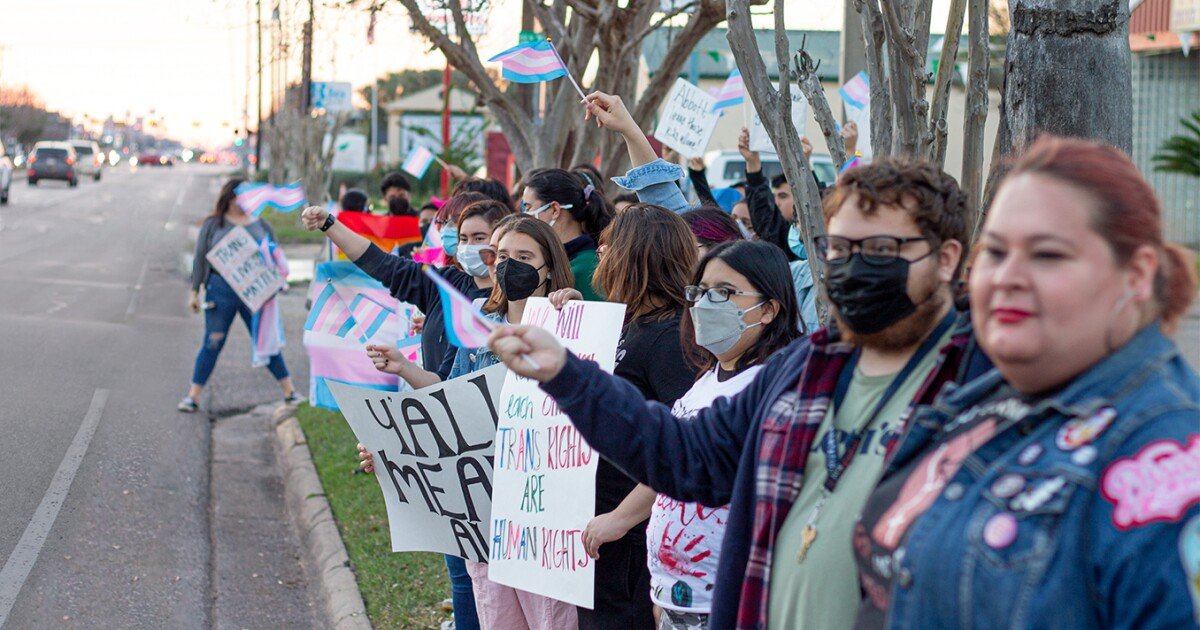
Advocates like Madeleine Croll, president of the Gender Equality Network of Texas (GENTex), highlight a chilling effect on civic engagement. "Families are so concerned that some have opted out of participating in political public events over the past few weeks," she stated. The fear of being reported simply for supporting their children has led some families to withdraw entirely from public life, undermining their opportunity to advocate for trans rights.
This environment has led Croll to feel that Abbott’s directive essentially declares an "open season" against those who love and support their children. "Now, Greg Abbott has declared open season… for loving their kids and respecting their kids for who they are," she affirms.
Broader Implications Beyond Texas
The issues discussed in Texas are not isolated. Other states with Republican-dominated legislatures are echoing these sentiments, with advocacy groups like the Human Rights Campaign (HRC) documenting 38 bills nationwide designed to limit gender-affirming care for minors. This trend indicates not just a localized effort, but a broader national strategy targeting transgender individuals and families.
The Personal Toll
While some see these activities driven by electioneering, Parsons offers a more personal interpretation. "I would love to say that it’s all political. But I don’t think that was first and foremost in [Abbott’s] mind," she argued, suggesting that societal attitudes have shifted significantly, emboldened by an environment permitting more overt discrimination. The negative experiences shared by families have led to deeper concerns about safety and acceptance.
Legal and Social Ramifications
Despite the ongoing challenging climate, Croll expressed cautious optimism regarding the recent injunction, noting, "It’s good that the courts saw they were without merit." However, the ramifications for the rights of transgender individuals extend well beyond a single community. Croll warns, "We want people to be aware that actions taken to remove the rights of transgender individuals could easily be directed against others."
Conclusion
The ongoing turbulent dynamics faced by families with trans children in Texas highlight the urgent need for advocacy and supportive frameworks. The situation is not merely a political issue but a deeply personal one, affecting the lives and mental health of families who simply wish to love and support their children. As legal battles continue, the stakes are higher than ever, with both civic freedoms and the well-being of transgender youth hanging in the balance.
For those interested in supporting trans rights, various organizations provide resources and advocacy platforms. Engaging in conversations, offering support, and staying informed can be vital in this ongoing fight for acceptance and rights.
