


Hungary’s Political Climate Heats Up Before Crucial Elections
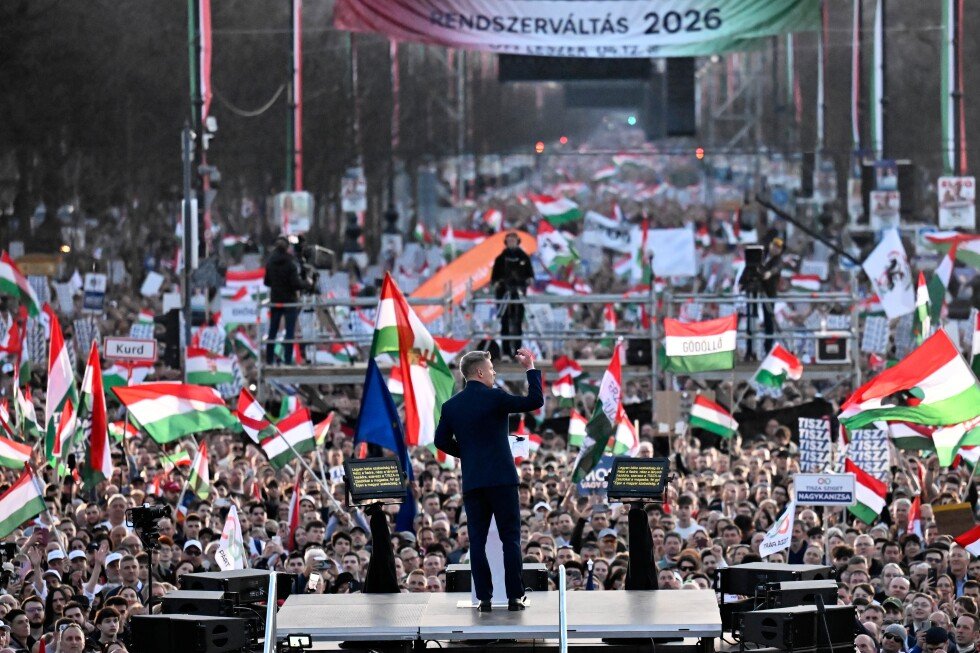
As Hungary approaches a decisive election, a palpable tension fills the air. Recent rallies in Budapest showcased not only the fervor of political supporters but also the ideological divides that could shape the nation’s future. Prime Minister Viktor Orbán, leader of the Fidesz party, and his main challenger, Péter Magyar of the Tisza party, rallied massive crowds in a show of strength just four weeks before the election.
Rally of Supporters: A Barometer of Strength
Both rallies were noteworthy for the sheer number of supporters they attracted, with Orbán’s Fidesz party hosting hundreds of thousands, while Magyar’s Tisza party also gathered significant turnout. This marks the first time in two decades that Orbán faces such strong competition, highlighting the rapid ascent of Magyar as a credible opponent. Since taking office in 2010, Orbán has enjoyed a seemingly unbreakable grip on power, but recent trends indicate a shift in public sentiment.
At Heroes’ Square, Magyar addressed a crowd of over 100,000, condemning Orbán’s administration for fostering division among Hungarians through propagandistic tactics. He emphasized Hungary’s rightful place in the Western sphere as part of NATO and the European Union.
“Our homeland is part of the West, our homeland is part of the European community," Magyar asserted. His powerful rhetoric aimed to unite citizens under a banner of democratic values, contrasting sharply with Orbán’s policies.
Orbán’s Campaign Strategy: A Focus on Anti-Ukraine Sentiment
In the lead-up to the elections, Orbán has pivoted toward an increasingly aggressive anti-Ukraine campaign. He alleges that Ukraine, the European Union, and the Tisza party are conspiring to undermine his government and drag Hungary into conflicts, potentially sending troops to the frontline of the Russia-Ukraine war. Orbán claims that the real stakes of the election could determine Hungary’s economic stability and its youth’s safety.
During a massive march across a bridge leading to Hungary’s parliament, Orbán delivered a rousing oration to thousands of supporters, who chanted slogans voicing their resistance to becoming a "Ukrainian colony." He painted a dire picture of the future, filled with risks associated with war and mass migration, but vowed to ensure Hungary remains “an island of security and tranquility.”
He termed the upcoming election a pivotal moment, suggesting it would chart the course for Hungary’s future. “We will be here even if hundreds of parachutists from Brussels fall from the sky,” he warned, likening EU’s influence to historical invasions.
Rising Support for Tisza: Polling Insights
Despite Orbán’s long-standing dominance, discontent over Hungary’s stagnating economy, poor public services, and increasing allegations of government corruption have fueled support for Tisza. Polling suggests Magyar’s party is gaining traction, with some independent surveys showing a 20-point lead among decided voters.
Magyar, a former member of Fidesz who broke away in 2024, has campaigned intensively in rural areas, focusing on restoring Hungary’s democratic institutions and fostering closer ties with Western allies as a counter to Orbán’s drift toward Russia. “On April 12, we will achieve a victory that will be seen not only from the moon but also from the Kremlin,” he declared, signaling both ambition and confidence.
Orbán’s Control of the Narrative
Despite Tisza’s polling advantage, the election outcome remains uncertain. Orbán benefits from substantial resources, including control over public broadcasters and an extensive media network, allowing him to leverage his message effectively, especially in rural areas traditionally loyal to Fidesz. His campaign includes controversial billboards depicting a digitally altered image of Ukrainian President Volodymyr Zelenskyy, further solidifying his anti-Ukrainian narrative.
Many Fidesz supporters believe that only Orbán can secure the values of "God, homeland, family," as articulated by supporter Anikó Menyhárt. “Only this government is able to secure these three things for the future,” she asserted, underscoring the party’s deep-rooted themes.
Final Thoughts
As the date for Hungary’s pivotal election approaches, the political landscape is evolving rapidly. With voter sentiment shifting and increasing competition, both Fidesz and Tisza are poised to engage in a battle for the hearts and minds of the Hungarian public. The implications of these elections extend far beyond national borders, affecting Hungary’s relationships with its neighbors and the broader European community. As tensions rise and campaigns intensify, the conversation surrounding Hungary’s future remains critical for understanding the region’s political dynamics.
