


The Impact of ICE Raids on the Construction Industry in the Rio Grande Valley
Introduction
In the Rio Grande Valley (RGV) of Texas, a significant issue looms over the construction industry: the ongoing Immigration and Customs Enforcement (ICE) raids. These operations have created a chilling effect, prompting fears among laborers and causing a workforce shortage that threatens to impact local economies profoundly. This alarming situation was underscored by a recent meeting organized by industry leaders, drawing hundreds of participants concerned about the future of construction in the region.
The Start of Concerns
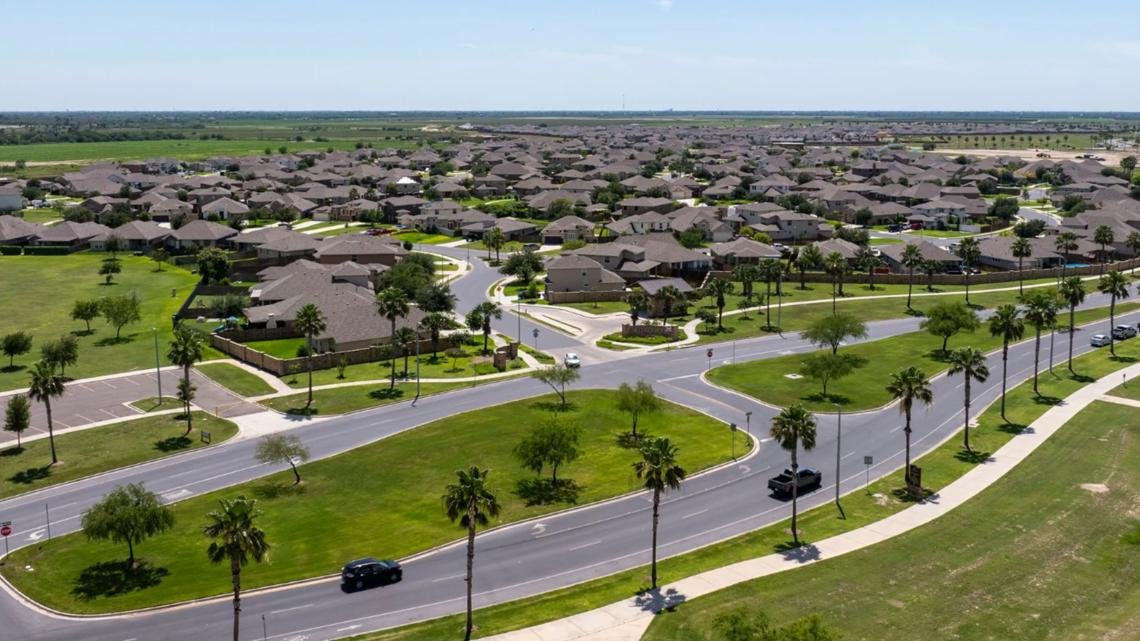
Mario Guerrero, the executive director of the South Texas Builders Association, became increasingly alarmed as he witnessed an uptick in ICE operations. In mid-November, a video surfaced showing federal agents detaining workers at a construction site in a seemingly peaceful neighborhood in McAllen. Guerrero had witnessed these events repeatedly—nearly 9,100 arrests in South Texas alone since early 2017—leading him to conclude that something had to be done to address this growing crisis.
The Ripple Effect
The fear instilled by ICE activities fosters a climate of uncertainty, causing many construction workers to stay home. This shortage has triggered a slowdown in construction projects, raising concerns about rising housing costs. Economists warn that a lack of available labor will inevitably drive prices up—a troubling contradiction to ongoing efforts by Texas officials to reduce housing costs.
Guerrero, recognizing the urgency of the situation, took to social media to rally support and called for local leaders to convene a meeting to discuss construction challenges triggered by ICE raids. “Our people are hurting, our businesses are hurting. There’s no labor,” he stated succinctly.
Gathering Industry Voices
On November 17, the meeting at the Brookhaven Event Center in Pharr attracted over 380 attendees from various sectors of the construction industry, including real estate, concrete, and lending. Elected officials also joined the discussion, which highlighted the adverse effects of fear stemming from ICE raids.
During the meeting, Ronnie Cavazos, board president of the South Texas Builders Association, highlighted the economic consequences: “If we continue on this trajectory, we will see a lot of businesses fail.” Other participants echoed similar sentiments, noting that construction activities were severely hampered due to workers fearing deportation.
Isaac Smith, co-owner of Matt’s Building Materials, pointed out that job site raids make it virtually impossible for construction projects to proceed. His own sales had plummeted by double digits, further affecting his cash flow and day-to-day operations.
The Human Cost of Raids
Attendees also emphasized the personal toll on immigrant workers. Cavazos remarked, “Nobody believes in the American dream more than them,” advocating for immigrants’ dignity and right to work. Workers like Jesus, a 42-year-old laborer, shared their struggle. He now works significantly less, bringing home roughly 60% of his prior earnings, all due to the fear of ICE raids.
Jesus lamented, “We hardly work anymore; we’re afraid to go out into the street.” His family of six now navigates financial uncertainty amid ongoing raids disrupting their livelihoods.
Economic Consequences of Labor Shortages
The labor shortages triggered by ICE’s operations threaten to exacerbate the housing crisis in Texas. Delays in construction projects could result in a shortage of available homes, inflating prices further. Historical patterns demonstrate that prior enforcement actions led to declines in labor availability, resulting in fewer new homes and increased prices.
Research indicates that similar immigration enforcement measures during prior administrations contributed to labor shortages in the construction sector, causing subsequent surges in housing costs—potentially a foreshadowing of what could occur now.
Raising Awareness
Guerrero’s comments during the meeting sparked widespread attention, prompting visits from local and federal officials, including U.S. Representative Henry Cuellar and Texas Governor Greg Abbott. As a champion for the construction community, Guerrero continues to advocate for awareness of the issues faced by workers and businesses.
He plans a follow-up meeting for January, hoping to engage more elected officials and address ongoing concerns in a community that relies heavily on construction for economic stability.
Conclusion
The situation in the Rio Grande Valley underscores a critical intersection of immigration policy and economic stability. As ICE raids continue to disrupt the construction industry, the ramifications stretch beyond individual workers, impacting families, businesses, and the overall economy. Stakeholders are urged to unite and advocate for solutions that not only protect worker rights but also support the economic fabric of the region.
For further information on the effects of ICE raids and their implications for housing costs in Texas, click here.
