


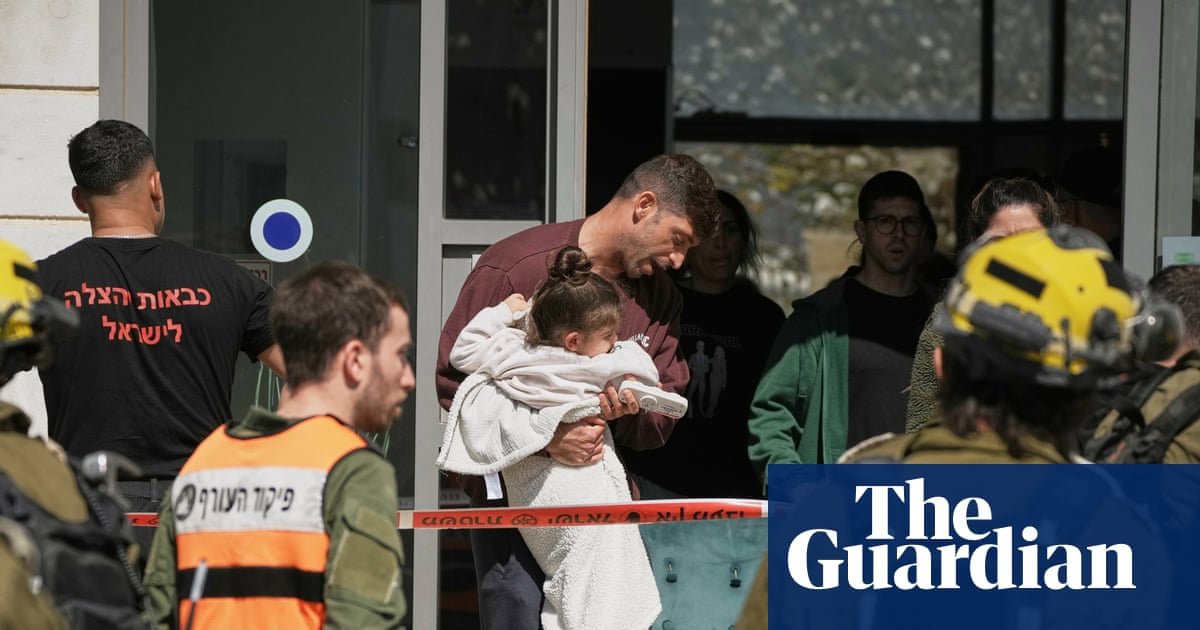
Iran Launches Missile Strikes Against Israel and US Bases: An Escalation of Tensions
In a significant escalation of regional tensions, Iran has executed a series of missile strikes targeting both Israel and US military installations across the Middle East. This aggressive response comes in retaliation to airstrikes carried out by the two nations, which Iran has condemned as blatant violations of the United Nations Charter. The Iranian government views these attacks as attempts to stifle diplomatic resolutions amid ongoing discussions regarding its nuclear program.
The Impact of Strikes on Iran
Iran’s Red Crescent has reported staggering numbers in the aftermath of the strike, stating that 201 individuals have lost their lives and 747 others have been injured. The strikes predominantly affected sites associated with the Islamic Revolutionary Guards Corps (IRGC), including their headquarters and missile launch facilities across 24 provinces. Eyewitness accounts along with satellite imagery reveal extensive damage, especially to military assets deemed crucial to Iran’s defense.
Losses Among the Iranian Leadership
Amidst the chaos, Iranian Foreign Minister Abbas Araghchi acknowledged that the country has suffered the loss of one or two senior commanders. Speculation has also arisen regarding the status of Iran’s Supreme Leader, Ayatollah Ali Khamenei, whose compound in Tehran was reportedly devastated by the airstrikes. Although Iranian officials assert that Khamenei was not present during the strikes, the destruction of his residence raises concerns about the regime’s stability.
International Reactions and Diplomatic Ramifications
Iran’s foreign ministry has appealed to both Muslim nations and non-aligned countries to denounce these military actions as violations of international law. This military engagement marks the second such incident within a year while diplomatic talks concerning Iran’s nuclear capabilities were ongoing. Under the supervision of Oman’s foreign minister, Badr Albusaidi, these negotiations aimed to establish a transparent framework preventing Iran from obtaining nuclear weapons.
Civilian Casualties and Educational Impact
Reports indicate heartbreaking civilian casualties; notably, more than 80 schoolchildren were killed in an attack on a girls’ elementary school in Minab, Hormozgan province. Witnesses described the chaos as parents arrived to pick up their children, only to be caught in a bomb strike adjacent to an IRGC facility. Such incidents amplify the humanitarian crisis and underline the significant risks faced by ordinary Iranian civilians in this escalating conflict.
The Call for National Resilience
In response to the ongoing turmoil, Iran’s national security council has issued directives to citizens in affected urban areas to evacuate. While these measures aim to prevent mass protests against the regime, the political landscape remains fraught with uncertainty. Masoud Pezeshkian, the elected president, reassured the public regarding necessary resources, emphasizing that essential goods such as food, fuel, and medicine would remain available.
Military Positioning and Future Threats
Senior Iranian military officials have vowed retribution against Israel and any associated military presence in the region. The Iranian military has confirmed that they launched drones and short-range missiles at multiple US bases in Qatar, Kuwait, the UAE, and Jordan, among others. While initial assessments suggest no major damage at these installations, continued strikes from Iran could alter the security landscape in the Gulf.
Regional Tensions and External Influences
Gulf nations like Saudi Arabia and the UAE have publicly condemned Iranian actions, which they view as infringements on their sovereignty. Although these states initially opposed US military operations, there is potential for a shift in stance if they are further impacted by Iranian aggression.
The Iranian Foreign Minister’s Defense
Iran’s foreign minister justified the missiles aimed at US bases by stating that the Gulf states have a responsibility to prevent the use of their territories for hostile acts against Iran. This reflects the broader complexity of regional alignments and antagonisms.
Conclusion: A Potential for Wider Conflict
As diplomatic discussions falter and military operations escalate, the conflict in the region is poised for a transformation into a prolonged and potentially wider confrontation. Leaders across the globe are closely monitoring the situation, as a renewed wave of anti-American sentiment could emerge, affecting the delicate geopolitical balance.
The situation remains fluid, and the potential for further violence looms large as Iran asserts its military capabilities while simultaneously advocating for national unity against perceived foreign encroachments. The international community’s ongoing response will likely influence the trajectory of this unmet conflict.
For further details regarding the ramifications of the US and Israeli strikes on Iran, visit the Guardian.
