


El Paso Airspace Closure: A Closer Look at the Underlying Causes and Impacts
On a seemingly ordinary Wednesday, air travel in El Paso, Texas, was unexpectedly tossed into chaos when the airspace was abruptly closed. Initially anticipated to last for 10 days, the restrictions were lifted just hours later. Investigations revealed that this sudden decision was linked to the Pentagon’s plan to test a laser system designed to neutralize drones associated with Mexican drug cartel activities.
What Triggered the Closure?
According to sources familiar with the matter, the Pentagon’s attempts to address the ongoing issue of drone incursions led to the swift airspace shutdown. These drone operations, primarily associated with Mexican drug cartels, pose safety risks along the U.S.-Mexico border. The Federal Aviation Administration (FAA) was involved in discussions with the Pentagon to ensure commercial flight safety, which led to the decision to temporarily restrict airspace over a city that serves as a pivotal gateway between the two nations.
Despite the multi-agency coordination, the Pentagon proceeded with its testing, prompting the FAA to act. Transportation Secretary Sean Duffy stated that the operation aimed at neutralizing threats from cartel drones, a common occurrence in the region. However, details regarding whether the laser was actually deployed remain unclear.
Impact on Travel and Local Economy
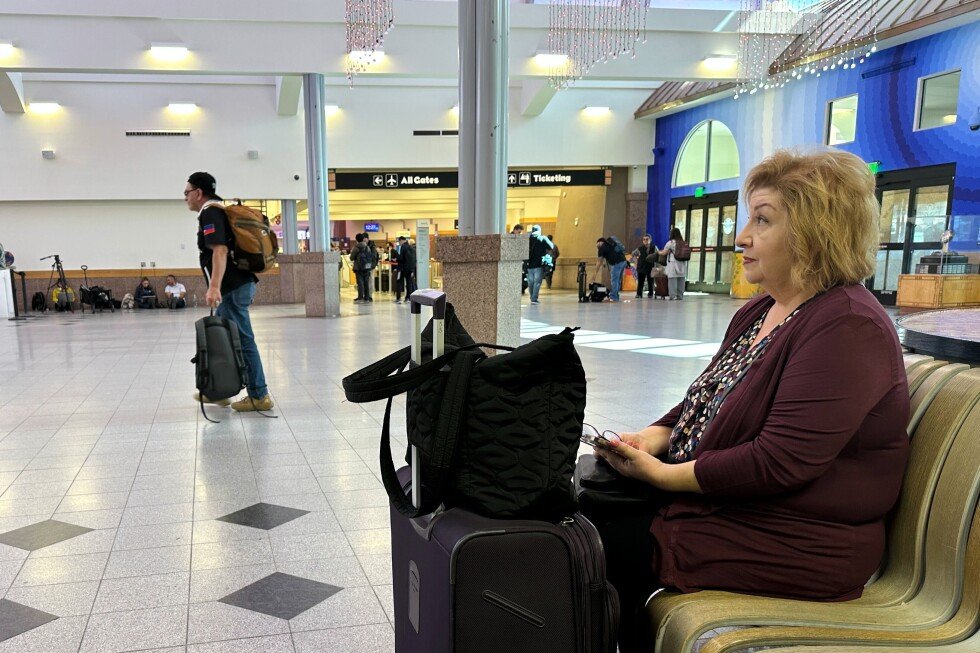
The airspace closure had immediate repercussions. Although the restrictions lasted only a couple of hours, they disrupted numerous travel plans for the nearly 700,000 residents of El Paso and surrounding areas. Seven arrivals and the same number of departures were canceled, stranding travelers who lined up at airline ticket counters in frustration. Medical evacuation flights were also rerouted, showcasing the broader implications of such sudden actions.
One traveler, Jorge Rueda from Las Cruces, New Mexico, expressed relief that the prolonged closure was avoided but lamented a lost part of a planned trip. "Ten days turned into two hours," he remarked, highlighting the confusion and uncertainty felt by many passengers.
Lack of Coordination Between Agencies
The incident has raised questions about the coordination between military and aviation authorities. A prior investigation into a tragic midair collision near Washington D.C. exposed the shortcomings in communication and safety data sharing between the FAA and the Pentagon. Critics, including U.S. Rep. Veronica Escobar, highlighted the need for better collaboration and voiced concerns over the abrupt nature of the airspace restrictions.
Escobar stated that neither her office nor local officials were informed about the airspace shut down in advance, leaving the community puzzled. She called for an explanation from the FAA regarding the chaos and confusion caused by the abrupt closure.
Drone Activity on the U.S.-Mexico Border
Drone incursions along the border are not a new phenomenon. Republican Congressman Tony Gonzales, whose district spans a significant portion of the Texas-Mexico border, remarked that drone sightings by criminal organizations have become an everyday occurrence. The Department of Homeland Security has indicated that drug cartels utilize drones regularly for drug trafficking and surveillance of border authorities.
Steven Willoughby from Homeland Security reported that in the past six months, over 27,000 drone sightings occurred within close proximity to the southern border, mostly occurring at night.
Reactions from Mexican Officials
Following the airspace closure, Mexican President Claudia Sheinbaum responded to the allegations regarding drone activity. She underscored that her administration had not received direct information about drone operations on the border and emphasized the need for better communication between U.S. and Mexican authorities. Mexican officials sought to engage in discussions with U.S. Northern Command to address these security concerns.
Community Response and Future Implications
El Paso’s Mayor Renard Johnson spoke out against the sudden closure, describing it as “a major and unnecessary disruption” that had not been witnessed since the aftermath of 9/11. The mayor emphasized that such decisions, made without notice and coordination, have ramifications that could endanger lives and create confusion.
As El Paso serves as a vital hub for commerce and travel between the U.S. and Ciudad Juárez, any disruption can have profound effects on both local economies and community relations.
Conclusion: The Need for Enhanced Communication
This incident has unveiled critical vulnerabilities in how airspace security is managed along the border. The swift closure, its subsequent lifting, and the lack of prior notification to local officials signal a need for improved collaboration among federal agencies. Enhanced communication is vital not just for ensuring air travel safety but also for maintaining the trust of communities that rely on cross-border commerce.
As U.S.-Mexico relations evolve, understanding the dynamics of airspace security will be essential for ensuring safety for travelers and mitigating the impact of illicit drone activities in the future.
For further updates and developments on air travel and border security, consider visiting the FAA and Department of Homeland Security.
