


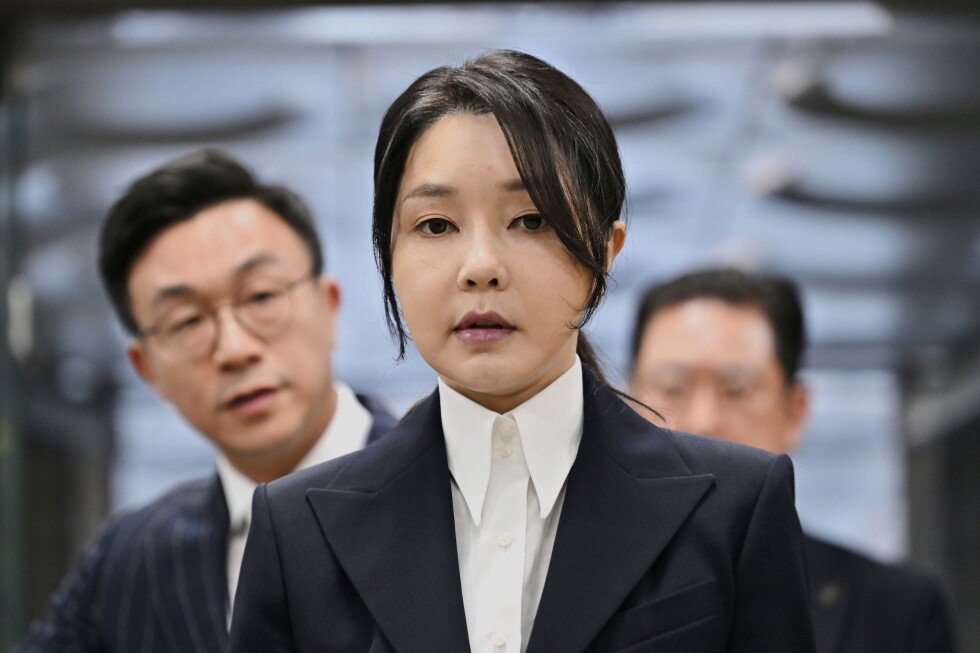
South Korea’s Former First Lady Sentenced Amid Political Turmoil
SEOUL, South Korea — In a striking development for South Korean politics, Kim Keon-hee, the wife of ousted President Yoon Suk-yeol, received a 20-month prison sentence for corruption on Wednesday. This ruling comes at a precarious time as her husband awaits a verdict on severe rebellion charges that could lead to severe penalties, including life imprisonment or even the death penalty.
A Dramatic Fall from Grace
The downfall of the presidential couple marks a significant shift in South Korea’s political landscape. Once seen as a power duo, Yoon and Kim have faced mounting scandals that have dramatically altered their public image. Yoon’s controversial decision to impose martial law in December 2024 triggered widespread outrage, leading ultimately to his impeachment and removal from office.
Both Yoon and Kim have been incarcerated separately for months as they faced criminal investigations. While Yoon stands accused of overstepping his authority with martial law, Kim’s legal troubles center around acquiring luxury gifts and favors from the Unification Church.
The Court’s Verdict on Kim Keon-hee
On Wednesday, the Seoul Central District Court revealed that Kim had accepted extravagant presents—including a Graff diamond necklace and a Chanel handbag—in exchange for political favors. In delivering the verdict, the court emphasized the influence that a first lady can wield: “Staying close to a president, a first lady can exert significant influence on him and is a symbolic figure who represents the country together with a president. But the defendant exploited her position to seek personal gains.”
This judgment came as a surprise to some observers, especially after independent counsel Min Joong-ki had recommended a 15-year prison term for Kim. However, the court found her not guilty of stock price manipulation and violations of political funding laws, citing a lack of concrete evidence.
Reactions and Next Steps
Following the ruling, Min’s team announced plans to appeal, asserting that the sentence failed to adequately address the gravity of Kim’s actions. The governing liberal Democratic Party, which played a crucial role in Yoon’s removal, criticized the verdict, suggesting it sends a dangerous message regarding the tolerance of political corruption.
Kim’s legal team expressed gratitude for the acquittals but indicated that they believe the 20-month sentence is excessive. Lawyer Choi Ji-woo stated that the investigation led by Min was influenced by political agendas.
Kim has been in detention since August, after the Seoul court authorized her arrest based on concerns she might destroy evidence. Days ahead of her arrest, she publicly apologized for the public distress caused but maintained that she would contest the allegations, framing herself as “someone insignificant.”
Upcoming Verdict for Yoon Suk-yeol
The timing of the ruling could significantly impact perceptions as the court prepares to announce its decision regarding Yoon’s rebellion charges in the coming weeks. Independent counsel Cho Eun-suk has called for the death penalty for Yoon, further heightening the political stakes involved.
During Yoon’s presidency, Kim found herself embroiled in several scandals that severely affected Yoon’s approval ratings, providing political ammunition for his adversaries. In the months leading up to the martial law declaration, speculation arose that Yoon aimed to shield Kim from potential investigations—a claim later downplayed by Cho’s team.
The Broader Implications for South Korean Politics
Yoon’s martial law decision was not simply a spur-of-the-moment action; it appears to have been part of a larger strategy to consolidate power and eliminate political opposition. The independent counsel concluded that there was no evidence linking Kim to Yoon’s military decree, dispelling allegations that she incited his controversial declaration.
As the political climate in South Korea continues to evolve, the outcomes of these legal proceedings will likely resonate far beyond the courtroom, influencing future elections and government policies. Observers and analysts will be keenly watching how these events unfold, as they may redefine the roles of power and accountability in South Korea.
For in-depth coverage of South Korea’s political landscape, stay informed on current developments.
