


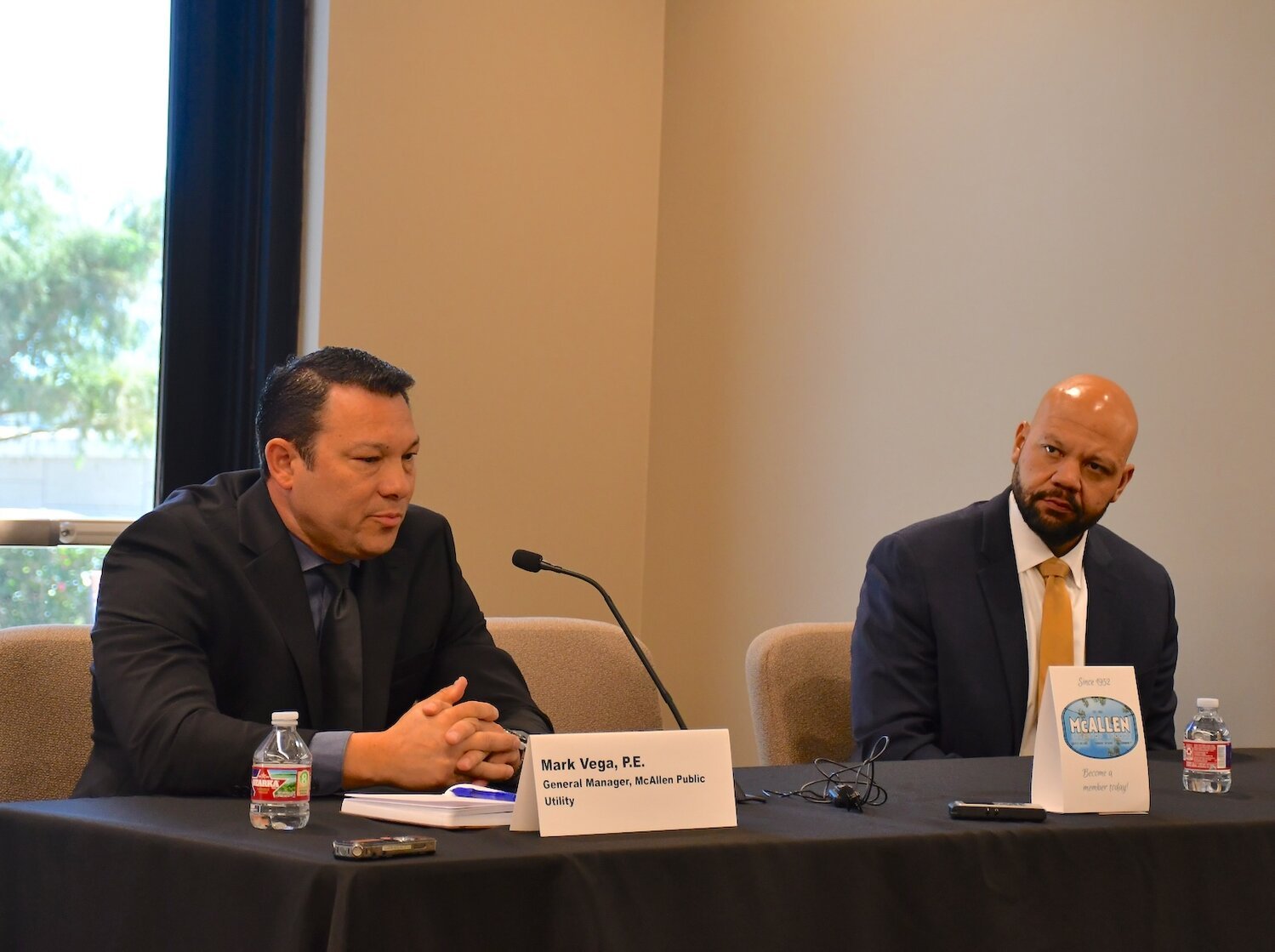
Addressing Water Challenges in the Rio Grande Valley: Key Insights from the Recent McAllen Citizens League Luncheon
On January 15, 2026, the McAllen Citizens League convened an essential networking luncheon at the Rio Bank Event Center, bringing together community leaders and experts to explore significant water resource challenges in the Rio Grande Valley. The event, aptly titled “The State of Water in the Rio Grande Valley – Challenges and Solutions,” aimed to shed light on both the immediate and long-term water issues affecting the region.
Understanding the Water Crisis
The moderator, Julian Alvarez, III, who serves as the executive vice president and director of community relations at Lone Star National Bank, guided the discussion, emphasizing the urgency of the water crisis facing the Valley. The panel featured a diverse group of experts:
- Isaac V. Sulemana, Chief of Staff for Hidalgo County Judge Richard F. Cortez
- Mark A. Vega, General Manager of McAllen Public Utility
- Brian MacManus, General Manager of East Rio Hondo Water Supply Corporation
- Sonny Hinojosa, Retired General Manager of Hidalgo County Irrigation District No. 2
- Joshua ‘Josh’ Moroles, Environmental Health and Water Literacy Advocate
These panelists provided insights into the multifaceted challenges that the region faces regarding its water resources.
Main Challenges Highlighted
Elva M. Cerda, Executive Director of the McAllen Citizens League, opened the discussion by outlining the critical issues at hand. The Valley is grappling with several significant water challenges, including:
- Drought Conditions: Persistent drought has led to reduced water availability.
- Population Growth: An increasing population puts an additional strain on water resources.
- Aging Infrastructure: Many water systems are outdated and require urgent upgrades.
- Operational Disputes: Ongoing disputes related to the 1944 U.S.–Mexico Water Treaty complicate water management efforts.
These factors have resulted in historically low reservoir levels, dry stretches of riverbed, and adverse impacts on both agriculture and municipal water systems.
Potential Solutions to Water Issues
Amidst these challenges, the panel discussed various strategies to mitigate water scarcity and promote sustainability. Key solutions proposed included:
- Water Conservation: Encouraging communities to adopt water-saving practices.
- Water Reclamation: Utilizing treated wastewater for non-potable applications to relieve demand on freshwater sources.
- Desalination Technologies: Exploring innovative technologies to convert seawater into fresh water.
- Infrastructure Investment: Funding needed to upgrade and maintain existing water systems.
- Enhanced Regional and Binational Water Management: Fostering collaboration between local, state, and international entities to ensure effective water resource management.
Conclusion
The conversations held during the luncheon highlighted the urgent need for a cohesive approach to water resource management in the Rio Grande Valley. As highlighted in the discussions, the region’s future depends on collaborative efforts and innovative solutions to overcome current challenges.
For those interested in revisiting the panel discussion, a recording of the event can be found here.
For more in-depth information about water management issues in Texas, refer to resources from the Texas Water Development Board and the U.S. Environmental Protection Agency.
This article aims to provide a comprehensive overview of the recent discussions regarding water resources in the Rio Grande Valley and highlights the crucial steps needed to secure a sustainable water future for the community.
