


U.S. Justice Department Investigates Minnesota Church Protesters Amid Immigration Tensions
The U.S. Justice Department has initiated an investigation into protesters who disrupted a Sunday service at Cities Church in St. Paul, Minnesota. The unrest stems from allegations that one of the church’s pastors is linked to Immigration and Customs Enforcement (ICE), a cornerstone in the current immigration debate. This situation has fueled an ongoing conflict surrounding immigration practices in the region.
Protests Erupt Over Pastor’s Alleged ICE Connection
On Sunday, protesters raised their voices within the church, chanting "ICE out" and calling for "Justice for Renee Good." The protests were sparked by the tragic death of Renee Good, a Minnesota resident who was fatally shot by an ICE agent earlier this month. This incident has galvanized activists in Minnesota, with many rallying against ICE presence and practices under President Donald Trump’s administration.
Civil Rights Violations and Legal Repercussions
Justice Department officials have condemned the protesters, labeling their actions as "desecrating a house of worship." U.S. Attorney General Pam Bondi emphasized that the department would exert the "full force of federal law" against those who interrupted the church service. Following Bondi’s declaration, Assistant Attorney General Harmeet Dhillon took to X, stating that federal charges will be pursued against the demonstrators.
The identified pastor at the center of the controversy is David Easterwood, reportedly linked to ICE operations. However, Easterwood was not leading the service on the day of the protest. The ACLU has also referenced an individual with the same name as the acting director of the ICE St. Paul field office.
Broader Context of Anti-ICE Sentiment
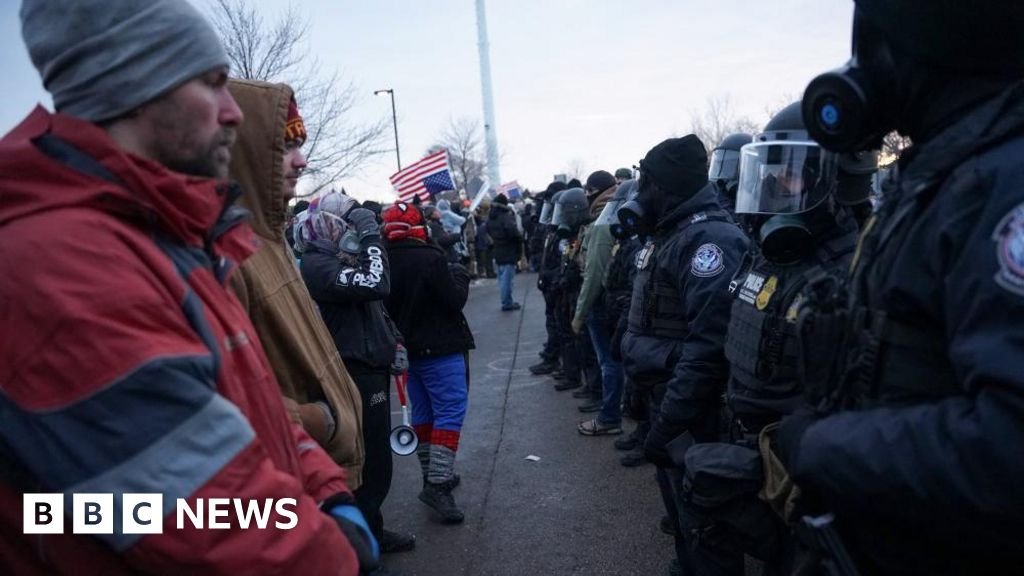
The protests are part of a larger movement against ICE throughout Minnesota, particularly post-Good’s death. Activists and community leaders have been vocal in their opposition, arguing that the handling of immigration-related issues must be addressed with sensitivity. Monique Cullars-Doty, a co-founder of Black Lives Matter Minnesota and one of the protest organizers, remarked, "We can’t sit back idly and watch people go and be led astray."
Meanwhile, tensions at the Whipple Building in Minneapolis, where federal agents operate, have led to ongoing protests, with reports of clashes between demonstrators and authorities. Since the recent deployments, local officials indicate that over 3,000 arrests have occurred in Minneapolis.
Military Presence Amidst Unrest
In a significant development, the Pentagon has placed 1,500 active-duty soldiers on standby for potential deployment to Minneapolis, with President Trump hinting at invoking the Insurrection Act in response to the protests. This 19th-century law allows for active-duty military personnel to perform law enforcement duties domestically, a measure last employed during the LA riots in 1992.
Investigations into Local Officials
In a parallel ongoing investigation, the Justice Department is also looking into Minneapolis Mayor Jacob Frey and Minnesota Governor Tim Walz for allegedly obstructing federal immigration operations. Both Frey and Walz have openly criticized ICE’s activities in their city, aligning more with community sentiment opposed to the agency’s methods.
Aftermath of Renee Good’s Death
The controversies surrounding ICE have intensified following the death of Renee Good, a U.S. citizen and mother of three. Good was reportedly shot while observing ICE activities legally. The Trump administration, however, has deemed her a “domestic terrorist,” asserting that the ICE agent acted in self-defense. This incident has heightened scrutiny on federal immigration policies and their implications for local communities.
Rising Concerns Over Immigration Detention
Recent reports highlight troubling incidents in ICE detention facilities, including another undocumented immigrant’s death under circumstances that remain under investigation. Victor Manuel Diaz, a 36-year-old from Nicaragua, died shortly after being detained by ICE agents, raising alarm over conditions in detention centers. This follows a trend, as another individual at the same facility recently died by presumed suicide.
Conclusion
The tensions in Minnesota underscore a growing discord between local communities and federal agencies amid sweeping immigration policies. As the Justice Department probes protests that shake the very foundations of discourse in places of worship, it reflects a broader national dialogue concerning immigration enforcement practices. The outcomes of these investigations and ongoing protests will likely have lasting implications on both policy and community relations in the U.S.
For more on immigration practices and community responses, visit ACLU and Department of Homeland Security.
