


The Evolving Political Landscape of the Rio Grande Valley: Insights from Local Voters
In the heart of South Texas lies the Rio Grande Valley, an area historically dominated by the Democratic Party. However, shifting sentiments among voters are reshaping the region’s political dynamics. Understanding these changes requires a closer look at local voters like Denise Sandoval, whose experiences and opinions illuminate broader trends.
A Complex Identity
Denise Sandoval embodies the profile of many voters in the Rio Grande Valley. Born in Monterrey, Mexico, and moving to Texas during her childhood, Sandoval describes herself as a conservative who voted for Donald Trump in 2020. Yet, intriguingly, she hesitates to label herself a Republican, emphasizing independence in her political beliefs.
“I’m not for one side or the other. I’m like, my own idea, right?” Sandoval explains, reflecting a growing trend among voters who prioritize individual thought over party allegiance.
Economic Concerns in the Valley
As a widow and single mother of three young children, Sandoval’s views are shaped by her daily experiences. She passionately opposes abortion but advocates for the legalization of marijuana in Texas, particularly for its potential for tax revenue. Yet despite her conservative leanings, she feels the local Republican Party is failing to support small businesses and entrepreneurs.
“Our mayor in McAllen is Republican, but at the end of the day, down here, there is no support for entrepreneurs,” she points out. This perception highlights a disconnect between party ideals and local economic realities. Sandoval’s ice cream business, a small venture, illustrates her desire for more robust support for local producers instead of large corporations.
Political Taboos and Changing Allegiances
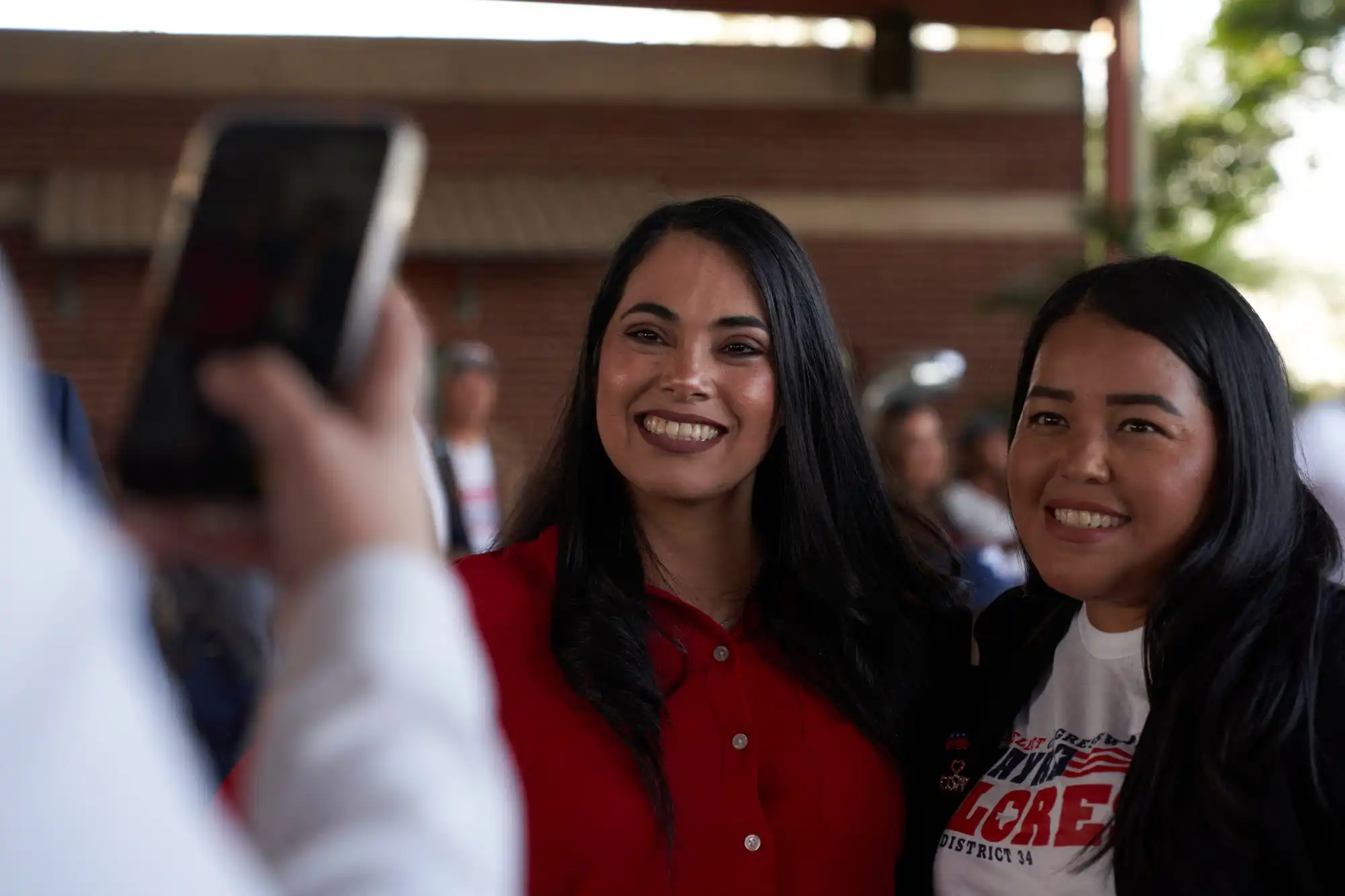
Discussing politics can be delicate in the Rio Grande Valley, a region where Republican support has historically been met with skepticism. For decades, this area maintained a strong Democratic representation in Congress. However, the election of Mayra Flores, the first Mexican-born woman to represent the district and the first Republican since the post-Civil War era, marks a significant shift. Although her election was facilitated by a special election with notably low voter turnout, it has prompted Republicans to claim a changing political landscape.
Mi-son Kim, a political science expert at the University of Texas Rio Grande Valley, notes that many young voters feel the Democratic Party has neglected their needs. “They told me that they think the Democratic Party just took our region for granted,” Kim reports, highlighting a burgeoning discontent that has led some to switch allegiances.
The Awakening of Traditional Voters
This sentiment resonates with voters like Fernando Mendoza, a self-employed musician and construction worker from McAllen. Once a staunch "yellow dog Democrat," following in his father’s footsteps, Mendoza has now shifted his identity to align with the Republican Party.
“We’ve woken up,” Mendoza remarks. “And we see that, you know, we have been neglected and we have been taken for granted.” This realization exemplifies the growing disillusionment with the Democratic Party among longtime supporters.
Attempts at Outreach: A Step Too Late?
In response to these shifting allegiances, the Texas Democratic Party has ramped up outreach efforts, hoping to regain the trust of disenchanted voters. However, Mendoza views these attempts as insufficient, noting, "It’s a little too late for that.” His perspective underscores the urgency with which parties must engage with voters to maintain their base, especially in areas experiencing political transformation.
Conclusion
The political landscape of the Rio Grande Valley is evolving, spurred by a combination of cultural identity, economic concerns, and historical allegiances. Local voters like Denise Sandoval and Fernando Mendoza reflect a broader sentiment that calls into question the longstanding dominance of the Democratic Party in the area. As these shifts continue, both parties will need to adapt to meet the needs and aspirations of voters who are no longer willing to accept neglect.
For those analyzing the future of politics in the region, keeping an ear to the ground in the Rio Grande Valley will be crucial for understanding the broader implications for Texas and the nation.
For more insights on Texas’s political landscape, explore resources on Texas Politics and the Democratic Party.
