


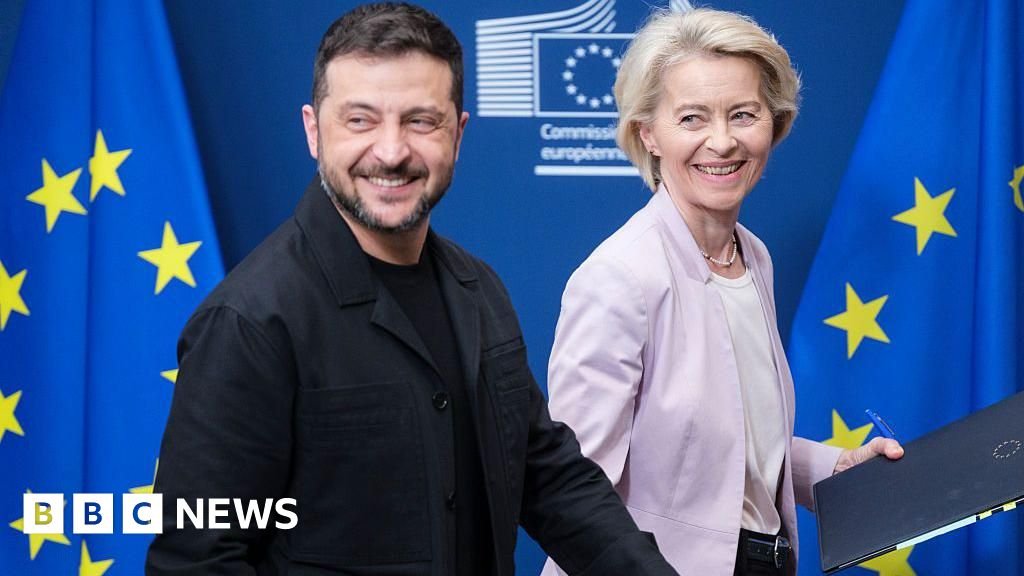
Ukraine’s Plight: The Controversial Proposal to Use Russia’s Frozen Assets
In a bold move reflecting the ongoing conflict between Ukraine and Russia, European leaders have proposed the use of Russia’s frozen assets to support Ukraine’s military and economic recovery. The financial implications of this decision are enormous, given that Ukraine is facing a staggering shortfall in its budget, estimated at €135.7 billion over the next two years.
Legal Challenge from Russia
Russia is not taking this proposal lightly. The Russian Central Bank has initiated legal proceedings against the Belgian bank Euroclear in a Moscow court, asserting that any attempt by European nations to utilize these frozen funds amounts to theft. This defiance comes amidst the backdrop of nearly four years of full-scale war, during which Ukraine’s financial reserves have dwindled alarmingly.
The Scale of Frozen Assets
Following Russia’s invasion of Ukraine in February 2022, approximately €210 billion of its assets were frozen across Europe. Of this, a significant €185 billion is held within Euroclear, a key financial institution. The European Union (EU) and Ukrainian leadership argue that this money should be earmarked for reconstruction efforts, dubbing it a "reparations loan." The EU aims to mobilize an additional €90 billion to boost Ukraine’s beleaguered economy.
Rationale Behind the Proposal
Ukrainian President Volodymyr Zelensky has made a passionate case for the use of these assets. He stated, "It’s only fair that Russia’s frozen assets should be used to rebuild what Russia has destroyed." The German Chancellor, Friedrich Merz, echoed these sentiments by asserting that these funds will fortify Ukraine’s defenses against further Russian aggressions.
Belgium’s Concerns
Despite the widespread support for Ukraine, Belgium has voiced strong reservations. Belgian Prime Minister Bart de Wever has laid down several "rational and justified" conditions that need to be met before he can endorse the reparations plan. His government fears they could be burdened with the financial repercussions should things go awry. Euroclear’s CEO, Valérie Urbain, has also warned that using these assets could destabilize the international financial system.
Belgium’s treasury is especially wary given the potential liabilities they might face. With an economy roughly valued at €565 billion, the thought of shouldering a €185 billion bill raises significant concerns among financial experts. According to Veerle Colaert, a professor at KU Leuven University, such a scenario could set a dangerous precedent.
EU’s Strategic Plan Moving Forward
Europe is racing against time to devise a plan that balances support for Ukraine while addressing Belgium’s legitimate concerns. As the leaders prepare for a summit, the EU has refrained from direct action on these assets. Instead, they have been paying "windfall profits" generated from these frozen assets to Ukraine.
Proposed Solutions
Currently, two proposals are on the table to meet Ukraine’s funding needs:
-
Capital Market Approach: This option involves raising the needed funds through capital markets, backed by guarantees from the EU budget. However, achieving a unanimous vote from all EU leaders proves to be a significant obstacle, especially with reluctance from Hungary and Slovakia.
- Loaning from Frozen Assets: The alternative is to use the Russian assets directly for loans. This method presents its own complications, as these assets are primarily held in securities that have matured into cash.
The European Commission insists that they have addressed Belgium’s concerns adequately, and plans to put mechanisms in place to safeguard Belgian interests.
Legal Safeguards Proposed
A pivotal development expected at the upcoming EU summit involves a decision to immobilize Russian central bank assets held in Europe indefinitely. This would eliminate the need for periodic renewals, which have posed legal risks for Belgium.
Pressures from Surrounding Nations
Seven EU member states, particularly those geographically close to Russia such as the Baltics, Finland, and Poland, view the frozen assets plan as a financially feasible and politically viable option. Pressure is mounting as European leaders accelerate efforts to reach a consensus in the upcoming summit.
In light of deteriorating international military support for Ukraine, the EU’s success in this venture will be critical for Kyiv’s survival and independence from Russian dominance.
The Broader Implications
With mounting fears that the U.S. has its own agenda regarding the use of Russia’s frozen assets, European leaders are keenly aware that time is of the essence. The implications of these decisions extend beyond immediate funding considerations; they could reshape future diplomatic engagements between Europe, the U.S., and Russia.
While discussions continue, President Zelensky remains focused on collaboration, expressing the need for a united front in rebuilding efforts. As negotiations progress, the world watches closely to see how this high-stakes financial chess game will unfold.
For more information on the evolving geopolitical dynamics in Europe, you can refer to Euronews and BBC News.
Conclusion
The road ahead is fraught with legal, financial, and diplomatic hurdles. However, the urgent necessity of supporting Ukraine in its time of need has prompted European leaders to consider all available options, including tapping into Russia’s frozen assets. The outcome of these discussions will undoubtedly set the stage for future interactions between these nations, potentially altering the landscape of European geopolitical relations for years to come.
