


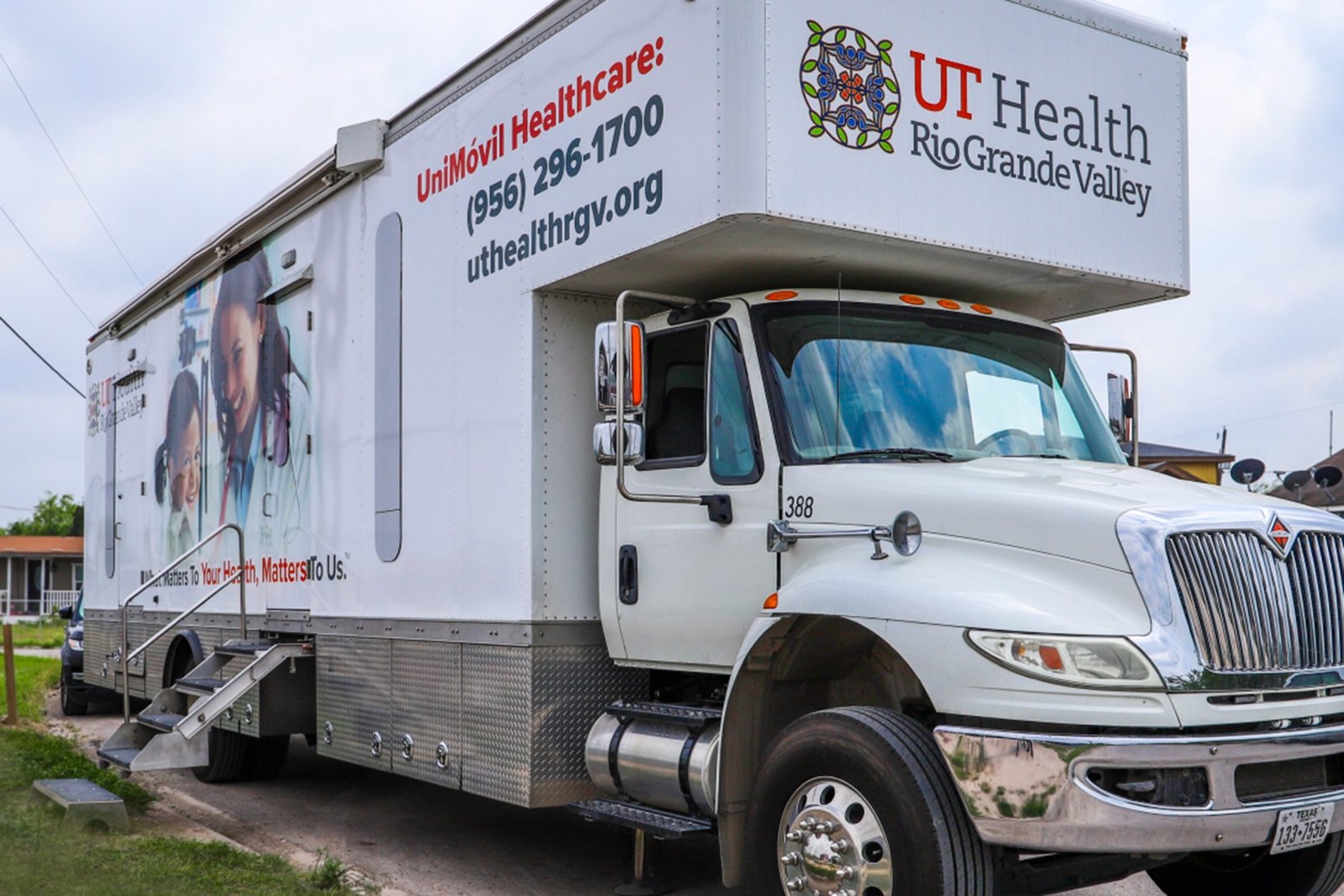
Mobile Women’s Health Clinics: Bridging the Gap in Rural Texas
With health care disparities becoming increasingly apparent, innovative solutions are emerging to ensure that women in rural areas receive essential medical services. In Texas, the UniMóvil, a mobile clinic that spans 40 feet, is making strides in delivering women’s health care directly to underserved communities in the Rio Grande Valley. This initiative, part of the Healthy Mujeres program offered by the University of Texas Rio Grande Valley School of Medicine, aims to provide critical services such as birth control and reproductive health education to women who often face barriers in accessing traditional medical facilities.
Addressing Women’s Health Needs
In the United States, there are approximately 3,000 mobile health programs, yet few focus specifically on women’s health. Dr. Saul Rivas, an OB-GYN involved in launching the Healthy Mujeres initiative in 2017, noted that the demand for targeted women’s health services persists, particularly in rural landscapes where access to OB-GYNs is limited. This demographic faces challenges in obtaining long-acting reversible contraception (LARC), such as intrauterine devices (IUDs) and hormonal implants, which are pivotal for preventing unintended pregnancies.
The Challenge of Rural Healthcare
Women’s health in rural areas is often compromised due to the limited availability of healthcare providers. Rural clinics may lack the necessary resources to stock LARC methods and may not have practitioners trained to insert or remove them. To combat these difficulties, mobile clinics like UniMóvil play a crucial role in enhancing access to women’s health services.
Mobile clinics are particularly crucial in areas where traditional healthcare options may be limited or nonexistent. However, operating these units comes with challenges. According to Elizabeth Jones from the National Family Planning & Reproductive Health Association, funding remains one of the largest obstacles, with the Texas program costing up to $400,000 annually. A 2020 study found that mobile clinics typically average around $630,000 per year to operate.
Creating Access and Building Trust
Real-Life Impact: Maria Briones’ Story
Maria Briones, a 41-year-old daycare worker, exemplifies the positive impact of the Healthy Mujeres program. After experiencing irregular menstrual cycles with her IUD, she contemplated traveling to Mexico for removal due to a lack of accepting doctors in the U.S. However, upon learning that UniMóvil would be in her vicinity, she received care and reassurance about the normalcy of her situation without incurring costs. Briones expressed gratitude for the clinic’s approachability and willingness to answer all her questions.
Collaboration with Community Resources
The UniMóvil clinic collaborates with local resources, including trusted institutions like food pantries and community colleges, to set up operations and reach women effectively. This partnership is vital for community acceptance and trust. Community health workers—known as promotoras in Spanish-speaking regions—play key roles in connecting women to a myriad of services beyond medical care, including assistance with food, transportation, and other essential resources.
Education Over Pressure
While the effectiveness of LARC is undisputed, there exists concern regarding pressure to utilize these methods. A recent investigation highlighted that certain demographics, including young and low-income women, face undue pressure from healthcare providers to opt for long-acting contraceptives. Dr. Rivas emphasizes that the mission of Healthy Mujeres extends beyond merely placing devices; it is about empowering women through education, enabling them to make informed choices regarding their reproductive health.
Expanding Services and Improving Outcomes
Initially focused on contraception, Healthy Mujeres has broadened its scope to include services like ultrasounds, cervical cancer screenings, and testing for sexually transmitted infections. Although both the Texas and Arkansas mobile health programs accept insurance, they are consciously designed to assist uninsured individuals, highlighting their commitment to meeting the needs of all women in rural areas.
Legislative Challenges
State laws significantly influence the accessibility of contraception. In contrast to Arkansas, where minors can receive birth control without parental consent, Texas laws generally require consent, posing additional hurdles for young women seeking reproductive health services.
Potential for Change
Advocates believe that programs like Healthy Mujeres could substantially reduce rates of unintended pregnancies and teen pregnancies, which remain higher than the national average in both Texas and Arkansas. While these initiatives face significant operational and financial challenges, the social impact they create transcends statistical metrics.
Building Community Trust
As these mobile health initiatives grow, fostering community trust is of paramount importance. The ability to provide education about reproductive health and contraception empowers women to take charge of their health decisions. Understanding the intricate dynamics of healthcare in rural America is vital in ensuring that all women have access to the services they deserve.
In conclusion, the UniMóvil serves as a pioneering example of how innovative approaches in healthcare can dismantle barriers to access, particularly for women in rural areas of Texas. The ongoing commitment to educating and empowering women reinforces the importance of addressing healthcare needs through community-focused solutions.
